
Social Emotional Learning Activities for Elementary Students: 25 Ideas by CASEL Competency
25 quick, classroom-tested social-emotional learning (SEL) activities for elementary students, sorted by the five CASEL competencies. Most take 5 to 15 minutes, many need no prep, and every section links to free printables you can use tomorrow.
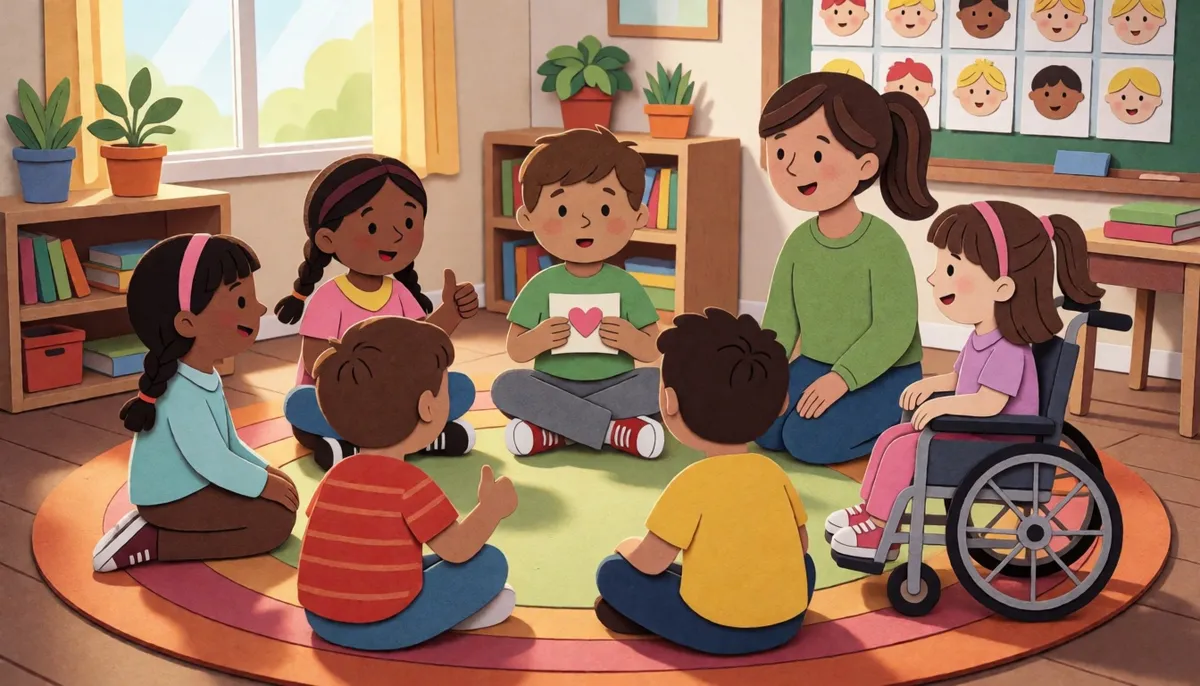
Social-emotional learning (SEL) doesn’t need a big program or a free afternoon. The skills grow in small, regular moments: a two-minute check-in, a role play before recess, a quick brain break after math. Below are 25 SEL activities for elementary students that fit those moments, five for each CASEL competency. Each one says how long it takes and which grades it suits, and most link to a free printable so you can start tomorrow.
What are social emotional learning activities?
Social emotional learning activities are short, structured ways for students to practice the skills behind getting along, managing feelings and making good choices. They work best when they’re quick, repeated and tied to real classroom life, not saved for a special lesson once a month.
Most schools organize SEL around the five CASEL competencies, and this list does too:
- Self-awareness: noticing and naming your feelings, strengths and values.
- Self-management: handling big feelings, staying focused and working toward goals.
- Social awareness: understanding how others feel and seeing things from their side.
- Relationship skills: listening, cooperating, solving conflicts and making friends.
- Responsible decision-making: stopping to think, weighing choices and owning the results.
Want to see how each skill builds from grade to grade? The SELcurve Standards Framework maps 30 core SEL skills across the five competencies for grades 2–5.
Self-awareness activities
Self-awareness comes first because every other skill depends on it. A student who can say “I’m frustrated” has already taken the first step toward calming down.
1. Feelings check-in
At morning meeting, each student says one feeling word and, if they want, why. Keep a feelings chart nearby so younger students can point instead of searching for words. Take 3 to 5 minutes, any grade. Over time, push for more exact words: “nervous” or “excited” instead of “good.”
2. Body clues detective
Ask “Where do you feel worry in your body?” and let students point: a tight stomach, a hot face, fast breathing. Noticing body signals early gives students time to act before a feeling gets big. Takes 5 minutes, grades K–5. The free self-awareness task cards include body-clue prompts for grades 2–5.
3. “I feel… because…” journal
Give one sentence starter a day: “I feel ___ because ___.” Students write or draw for three minutes. The “because” is the important part: it links the feeling to what caused it. Works for grades 1–5 (drawing for younger students).
4. Strengths spotlight
Each day, one student names a specific strength (“I’m good at explaining math to a partner”) and a classmate adds an example they’ve seen. Keep strengths specific and owned, not “I’m the best at…” comparisons. Takes 5 minutes, grades 2–5.
5. Move to show how you feel
Read a short situation aloud, and students answer with a movement: arms high for excited, a slow crouch for disappointed, hands on cheeks for surprised. It’s a brain break and a feelings lesson in one. Takes 5 to 10 minutes. The free Self-Awareness Brain Breaks come with 60 cards, a teacher script and a poster, in a K–2 version and a 3–5 version.
Free self-awareness printables
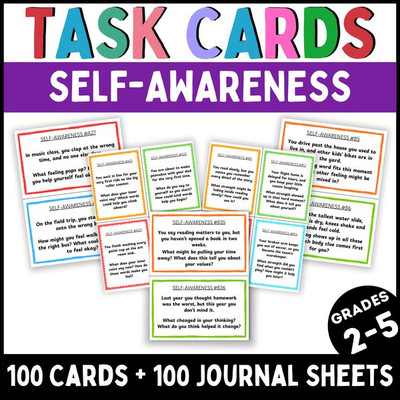 Free Self-Awareness Task Cards — Printable & DigitalGrades 2–5 · Print + digitalFREE
 Free Self-Awareness Worksheets — Multiple-Choice ScenariosGrades 2–5 · Print + digitalFREE
 Free Self-Awareness Role Play ScenariosGrades 2–5 · PrintFREE
 Free Self-Awareness Conversation Cards — Morning Meeting QuestionsGrades 2–8 · Print + digitalFREE
 Free Self-Awareness Scenario Cards — Printable & DigitalGrades 2–6 · Print + digitalFREE
 Free Self-Awareness What Would You Do? Cards — Think, Choose, ActGrades 2–5 · Print + digitalFREE
Browse all free SEL resources.
Self-management activities
Self-management isn’t about making feelings go away. It’s about choosing what to do with them. These activities give students a few tools they can reach for on their own.
6. Balloon breathing
Students put their hands on their bellies, breathe in through the nose for four counts as the “balloon” fills, then breathe out slowly for four. Three rounds is enough. Practice it when everyone is calm, so it’s ready when someone isn’t. Takes 2 minutes, grades K–5.
7. Pause, breathe, choose
Teach a three-step routine for big feelings: pause (stop what you’re doing), breathe (one slow breath), choose (pick a next step). Post the steps and practice with made-up situations before students need it for real. Takes 10 minutes to teach, seconds to use. The free self-management worksheets give grades 2–5 situations about big feelings, worry and focus to practice with.
8. Goal ladder
Students pick one small goal (finish a chapter book, remember homework every day this week) and draw a ladder with three steps toward it. Check in on Friday: which step did you reach, and what helped? Takes 10 minutes, grades 2–5.
9. Focus challenge
Set a timer for a short work sprint (5 minutes for younger students, 10 to 15 for older). Afterward, students note one thing that pulled their attention away and one thing that helped them come back. Grades 2–5.
10. Calm-and-move brain break
Alternate an energizing move with a calming one: shake out your arms, then freeze and take a slow breath. Students feel the difference between “wound up” and “settled” in their own bodies. Takes 5 minutes. The free Self-Management Brain Breaks have a K–2 version and a 3–5 version.
Free self-management printables
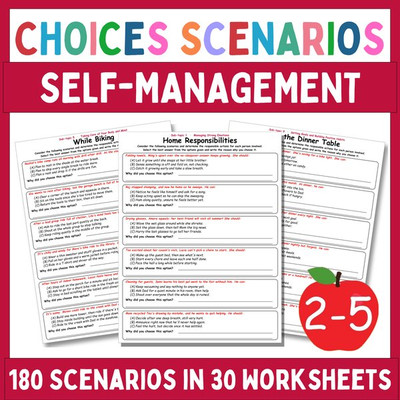 Free Self-Management Worksheets — Multiple-Choice ScenariosGrades 2–5 · Print + digitalFREE
 Free Self-Management Role Play ScenariosGrades 2–5 · PrintFREE
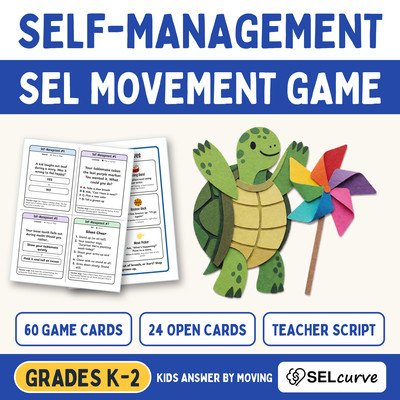 Self-Management Brain Breaks — SEL Movement Game (Grades K–2)Grades K–2 · PrintFREE
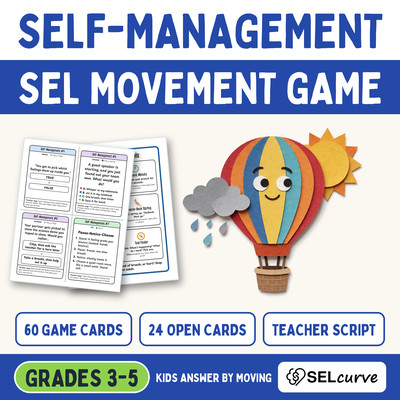 Self-Management Brain Breaks — SEL Movement Game (Grades 3–5)Grades 3–5 · PrintFREE
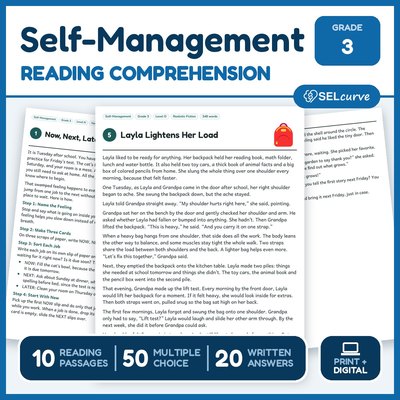 Free Self-Management Reading Comprehension Passages — Grade 3Grade 3 · Print + digitalFREE
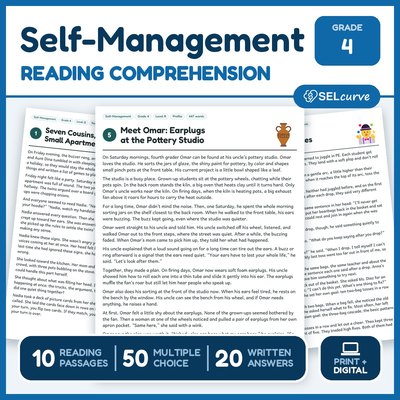 Free Self-Management Reading Comprehension Passages — Grade 4Grade 4 · Print + digitalFREE
Browse all free SEL resources.
Short on time? Movement is the easiest way to fit SEL into a packed day. A five-minute brain break between subjects resets the room and practices a skill. That’s why there’s a free movement game for every competency in this list.
Social awareness activities
Social awareness is the “noticing others” skill: reading faces and body language, imagining how someone else feels, and caring about it.
11. Feelings detectives
Show a picture or read a short scene, then ask: “How do you think this person feels? What clues tell you?” Students point to faces, posture and what just happened. Takes 5 minutes, grades K–5. The free social awareness scenario cards give grades 2–6 sixty ready-made moments to discuss.
12. Kindness detectives
Secretly assign each student a “detective” day: their job is to notice kind acts and report two at closing circle. It shifts the class from doing kindness to seeing it everywhere. Takes 5 minutes a day, grades K–5. More ideas like this are in our World Kindness Day activities.
13. What would you do?
Read a situation (“A new student is eating lunch alone”) and have students choose and explain a response. The discussion matters more than the answer: hearing why classmates chose differently is perspective-taking in action. Takes 10 minutes. Try the free social awareness What Would You Do? cards (grades 2–5).
14. Gratitude circle
Each student thanks one person for one specific thing: “Thanks, Maya, for helping me find my glue stick.” Specific thanks feel real; general thanks feel like a script. Takes 5 minutes, any grade, and it’s a great Friday closer.
15. Empathy morning question
Start the day with one question that asks students to think about others: “When is a time someone understood how you felt without you saying anything?” Pair-share, then take two or three answers. Takes 5 minutes. The free social awareness conversation cards include 102 morning meeting questions.
Free social awareness printables
 Free Social Awareness Scenario Cards — Printable & DigitalGrades 2–6 · Print + digitalFREE
 Free Social Awareness Conversation Cards — Morning Meeting QuestionsGrades 2–8 · Print + digitalFREE
 Free Social Awareness What Would You Do? Cards — Think, Choose, ActGrades 2–5 · Print + digitalFREE
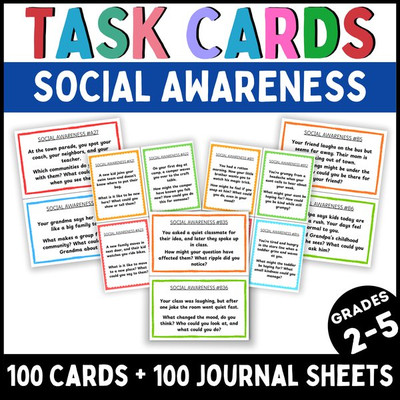 Free Social Awareness Task Cards — Printable & DigitalGrades 2–5 · Print + digitalFREE
 Free Social Awareness Role Play ScenariosGrades 2–5 · PrintFREE
 Social Awareness Brain Breaks — SEL Movement Game (Grades K–2)Grades K–2 · PrintFREE
Browse all free SEL resources.
Relationship skills activities
Relationship skills are the ones teachers see every day at recess and during group work. Conflict will happen; the goal is giving students words and steps to work through it.
16. Partner talk with a follow-up
Partners take turns answering a question, but the listener must ask one follow-up question before switching. It turns “taking turns talking” into real conversation. Takes 5 to 10 minutes, grades 2–5. The free relationship skills conversation cards have 102 questions on teamwork, conflict and boundaries.
17. Echo listening
One student shares something short; their partner repeats it back in their own words: “So you’re saying…” Then they switch. Students quickly find out how often they half-listen. Takes 5 minutes, grades 1–5.
18. Conflict role plays
Act out a common conflict (two students want the same ball) and practice an “I” statement: “I feel ___ when ___. Can we ___?” Run it twice so students see more than one good ending. Takes 10 to 15 minutes. The free relationship skills role play scenarios include 20 scripted scenes, discussion cards and a teacher script for grades 2–5.
19. Teamwork challenge
Give small groups a simple build with limited supplies, like the tallest tower from 20 index cards. Afterward, talk about the teamwork, not the tower: Who shared an idea? How did you decide? Takes 15 minutes, grades K–5.
20. Friendship task card rotation
Set out task cards at a center or pass them around the circle; each student answers one prompt about listening, friendship or solving a problem. Easy to use for early finishers too. Grades 2–5, with the free relationship skills task cards (100 cards plus journal pages).
Free relationship skills printables
 Free Relationship Skills Role Play ScenariosGrades 2–5 · PrintFREE
 Free Relationship Skills Conversation Cards — Morning Meeting QuestionsGrades 2–8 · Print + digitalFREE
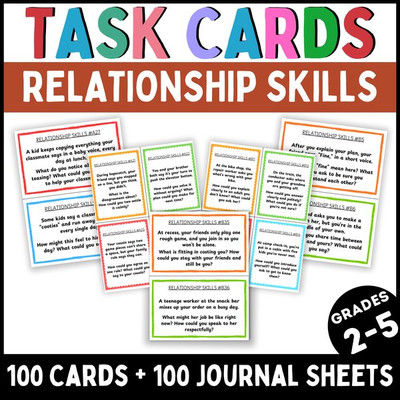 Free Relationship Skills Task Cards — Printable & DigitalGrades 2–5 · Print + digitalFREE
 Free Relationship Skills Scenario Cards — Printable & DigitalGrades 2–6 · Print + digitalFREE
 Free Relationship Skills What Would You Do? Cards — Think, Choose, ActGrades 2–5 · Print + digitalFREE
 Relationship Skills Brain Breaks — SEL Movement Game (Grades 3–5)Grades 3–5 · PrintFREE
Browse all free SEL resources.
Responsible decision-making activities
Good decisions don’t come from knowing the “right answer.” They come from a habit of slowing down and thinking it through. These activities build that habit.
21. Stop, Think, Act
Teach three steps for tricky moments: stop before reacting, think about the choices and what each could lead to, then act on the best one. Practice with quick scenarios until students can run it in their heads. Takes 10 minutes, grades 2–5. Try the free Stop Think Act cards sample.
22. Consequence chain
Start with a choice (“Leo copies a friend’s homework”) and ask “What happens next?” three times in a row. Students see how one choice leads to another, for better or worse. Takes 5 to 10 minutes, grades 2–5.
23. Problem-solving steps
Name the problem, brainstorm three solutions, pick one, try it, and check how it went. Use a real class problem, like a messy classroom library, so the steps feel useful. Takes 15 minutes, grades 1–5. The free decision-making worksheets add practice on consequences, honesty and asking for help.
24. Decision role plays
Students act out a choice point (a friend asks you to keep a secret that worries you) and pause the scene to discuss options before finishing it. Takes 10 to 15 minutes. Use the free decision-making role play scenarios for grades 2–5.
25. Move to choose
Read a situation with two choices and have students show their answer by moving to one side of the room or doing a movement. Then ask a few students why. Takes 5 to 10 minutes. The free Decision-Making Brain Breaks come in a K–2 version and a 3–5 version.
Free decision-making printables
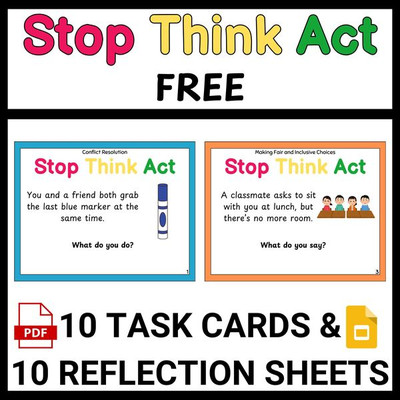 Stop Think Act Cards — Free Printable & Digital SampleGrades 2–5 · Print + digitalFREE
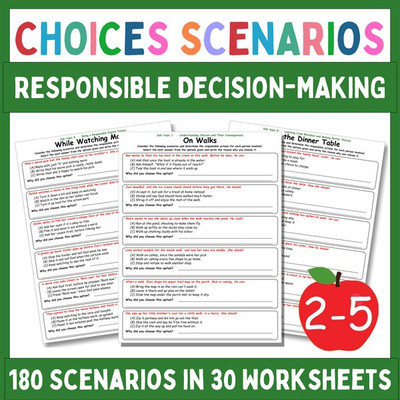 Free Decision-Making Worksheets — Multiple-Choice ScenariosGrades 2–5 · Print + digitalFREE
 Free Decision-Making Role Play ScenariosGrades 2–5 · PrintFREE
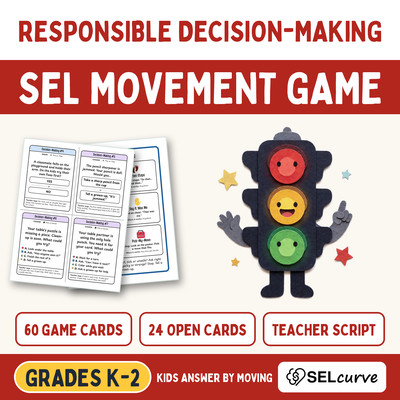 Decision-Making Brain Breaks — SEL Movement Game (Grades K–2)Grades K–2 · PrintFREE
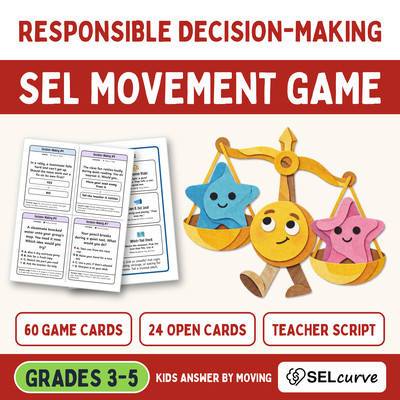 Decision-Making Brain Breaks — SEL Movement Game (Grades 3–5)Grades 3–5 · PrintFREE
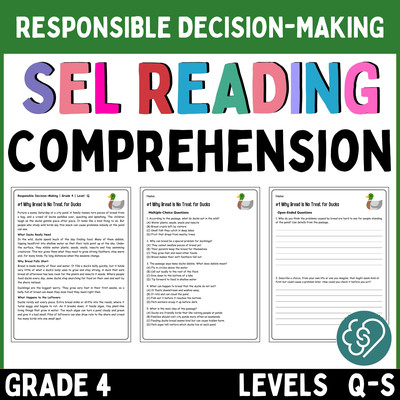 Free Decision-Making Reading Comprehension Passages — Grade 4Grade 4 · Print + digitalFREE
Browse all free SEL resources.
How to fit SEL activities into your week
You don’t need a separate SEL block. Most teachers get further with 5 to 15 minutes a day tucked into routines they already have:
| When | Time | Try |
|---|---|---|
| Morning meeting | 5–10 min | Feelings check-in, empathy question, partner talk |
| Between subjects | 5 min | A movement brain break, balloon breathing |
| Before recess or group work | 10 min | Conflict role play, Stop Think Act practice |
| Literacy block | 15 min | An SEL reading passage, an “I feel… because…” journal |
| Closing circle | 5 min | Gratitude circle, kindness detectives report |
Short on literacy time? Every competency also has free SEL reading comprehension passages for grades 2–5, like these grade 3 self-management passages, so students practice reading and SEL at the same time.
SEL activities by grade
Kindergarten to 2nd grade
Keep it concrete and physical. Younger students learn feelings through faces, bodies and movement, so lean on check-ins with a feelings chart, balloon breathing, feelings detectives with pictures and the K–2 brain breaks. Keep activities to 5 to 10 minutes and model every step first.
3rd to 5th grade
Older students are ready for “why” and “what if.” Add more discussion, journaling and role play: What Would You Do? scenarios, consequence chains, goal ladders and conflict role plays with “I” statements. They can also lead activities themselves, which builds ownership.
Frequently asked questions
What are examples of SEL activities for elementary students?
Popular examples include feelings check-ins, balloon breathing, kindness detectives, partner conversations, conflict role plays and the Stop, Think, Act routine. The best ones are short, repeated often and tied to real classroom moments.
What are the 5 SEL competencies?
The five CASEL competencies are self-awareness, self-management, social awareness, relationship skills and responsible decision-making. This list includes five activities for each.
How long should an SEL activity take?
Most work well in 5 to 15 minutes. A short daily activity usually builds skills faster than a long lesson once a week.
How do you teach SEL in the classroom every day?
Fold it into routines you already have: a check-in at morning meeting, a brain break between subjects, a role play before recess and a gratitude circle at the end of the day.
Are there free SEL activities for elementary students?
Yes. Every activity in this post works without materials, and SELcurve has free printables for every CASEL competency, including worksheets, role plays, reading passages and movement brain breaks. They’re free with a free account.
More SEL ideas
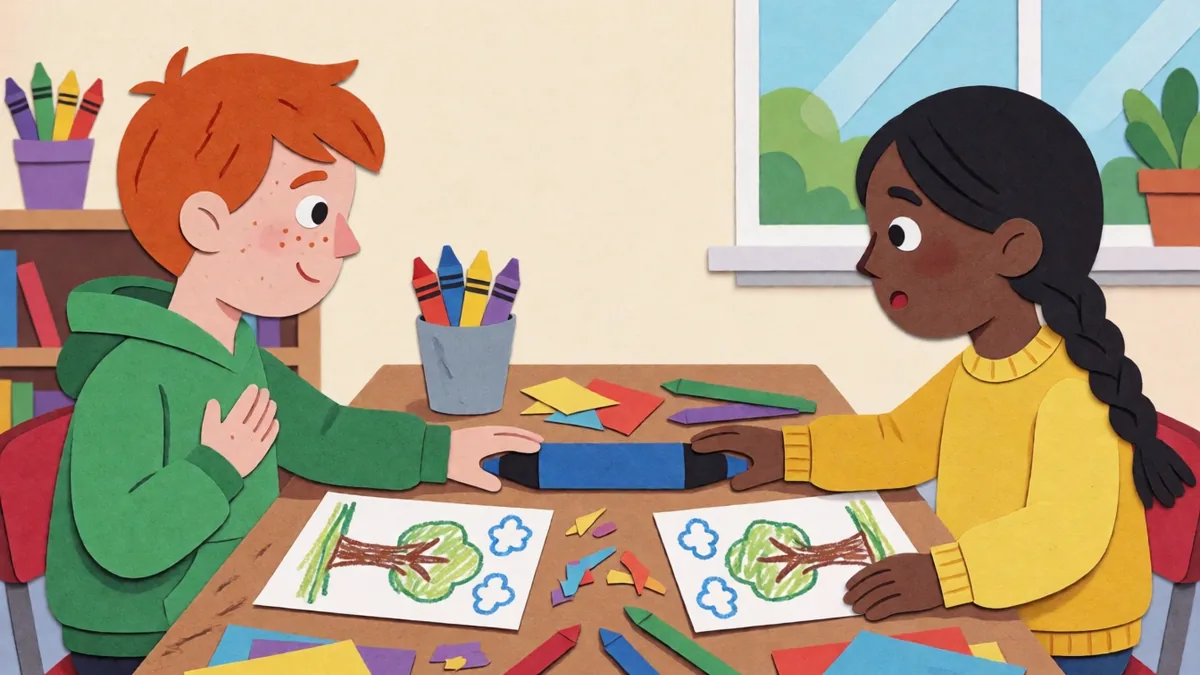 Responsible Decision-MakingStop, Think, Act for Kids: How to Teach the Strategy (+ 10 Free Cards)
 Relationship SkillsTeasing vs. Bullying: How to Teach Kids the Difference (+ 4 Upstander Steps and Free Scenario Cards)
 Relationship SkillsHow to Say No to Peer Pressure: A 4-Step Plan to Teach Kids, 10 Practice Games + Free Scenario Cards


