
Flexible Thinking Worksheets — Multiple-Choice Scenarios
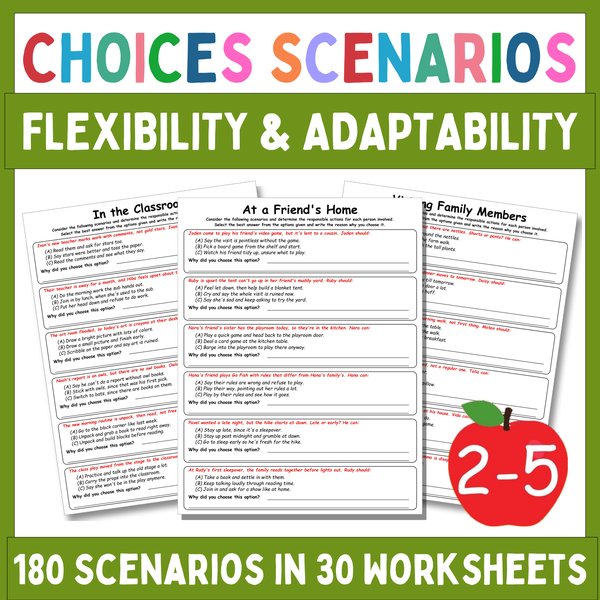
Breakfast for dinner. A bus pickup moved to the back door. A burger on a seeded bun. These flexible thinking worksheets give Grades 2–5 180 changes, big and small, to practice rolling with.
This resource is in the full SEL Resource Library. See what’s included or start with 10 free resources. Have an account? Log in.
About this resource
Breakfast for dinner. A bus pickup moved to the back door. A burger on a seeded bun. These flexible thinking worksheets give Grades 2–5 180 changes, big and small, to practice rolling with. Each scenario offers three responses; students choose A, B or C and write why, which makes the thinking behind going along with a new plan visible. It’s Self-Management practice for change days.
What students practice
- Going along when plans change
- Making the best of a new plan
- Changing my mind when I learn something new
- Settling into new places and routines
- Handling big feelings about change
- Being okay when things are done differently
What’s inside
- 30 printable worksheets, each in one everyday place, including On the School Bus, Pet Care and Using Public Restrooms
- 180 multiple choice scenarios, 6 to a page, each with a “Why did you choose this option?” line
- Changes at home, at school and around town: new routines, canceled trips, unfamiliar food, a new coach
- 4 teacher pages
- 35 pages
A look inside
- On the School Bus: “Road work means the bus goes a much longer way today. Hector should:” (A) Ride along, counting the minutes on the long route. (B) Sit back and enjoy the long ride with his book. (C) Keep asking the driver to go the usual way.
- At a Restaurant: Mei’s burger comes on a seeded bun, not the plain kind she knows. Best: “Take a bite and give the bun a fair try.”
- Using Public Restrooms: the sink turns on with a foot pedal, which is new to Ruth.
How to use these flexible thinking worksheets
- Morning meeting on a day with a schedule change: read Hector’s scenario first
- Small groups: why is counting the minutes weaker than enjoying the ride, when Hector goes along either way?
- Sub plans: In the Classroom includes Hiba, upset that her teacher is away for a month
Grade fit
The changes are concrete (a potluck because Grandma’s oven is small, a scavenger list instead of a bird walk), and each option is one line. Grade 2 can talk them through; Grades 4–5 can write about going along versus going along grudgingly.
Digital version
The interactive digital version shares as one link: students pick A, B or C and type their reason, or just pick if you choose the choices-only format, on any device with no student logins. At the end they download an answer sheet to hand in.
Good to know
From the scoring note: the strongest choice goes along with the change and starts the new plan, even with a big feeling; going along slowly, partly or while asking for the old plan is weaker. The feeling is fine; in this SEL set, the choice is what students weigh.
Pairs well with
For a version with action cards, see the Flexible Thinking What Would You Do? Cards; for open discussion, the Flexible Thinking Scenario Cards.
Questions teachers ask
Is it okay if a student says they’d feel upset?
Yes. Several scenarios name the feeling (let down, nervous, upset). The strongest choices go along with the change while still having that feeling.
Is there an answer key?
No. The discussion page gives a scoring note on stronger and weaker ways to handle a change.
Do students need logins for the digital version?
No. Share one link, and it opens on any device.
More for Self-Management
See all in the library →

Every resource, one library.
572 SEL resources for elementary classrooms — printables, digital activities and answer sheets, and every new one we add.

