
Bullying Prevention Scenario Cards — Printable & Digital
Spotting bullying in a definition is easy; spotting it in the moment is harder.
This resource is in the full SEL Resource Library. See what’s included or start with 10 free resources. Have an account? Log in.
About this resource
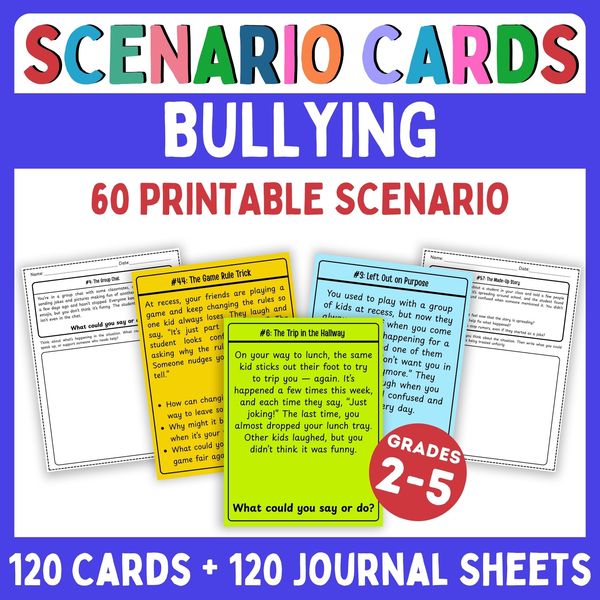
Spotting bullying in a definition is easy; spotting it in the moment is harder. These bullying prevention scenario cards put students for Grades 2–6 inside 60 realistic situations, including ones where it is happening to a friend, before they face one for real. The set builds Social Awareness and Relationship Skills.
What students practice
- Recognizing verbal, physical, social and online bullying
- Acting as an upstander
- Getting help from adults
- Handling peer pressure to join in
- Repairing things after a mistake
What’s inside
- 60 scenarios in five themes: recognizing bullying, being an upstander, getting help from adults, handling peer pressure, and repair and responsibility
- 60 open-ended scenario cards, 4 per page, each with the prompt “What could you say or do?”
- 60 guided scenario cards: the same scenarios, each with 3 questions on recognizing, responding to and repairing bullying situations
- 120 journal pages, one open-ended and one guided page per scenario, for written reflection and restorative follow-up
- 160 pages in all
A look inside
- The Whisper Game: “A group of kids starts whispering and giggling every time a certain classmate walks by.”
- The Mean Group Chat: “You’re in a group chat where some students are sending mean messages about a kid from school.”
- The Comment on Your Post: “You posted a picture of your art project, and later someone from school commented, “That looks awful.””
How to use these bullying prevention scenario cards
- SEL lessons and units on bullying prevention and intervention
- Restorative circles and reflection conversations after an incident
- Counseling groups and RTI/MTSS Tier 2–3 behavior support
- Journal pages for writing reflection, choosing the open-ended or guided page for each student
- Use them as what would you do scenarios, with students answering the prompt “What could you say or do?”
Grade fit
The scenarios run from The Same Name Every Day to The Phone Picture, so second graders meet teasing and exclusion while fifth and sixth graders can dig into group chats and peer pressure. The guided page adds structure where students need it.
Digital version
The printable and digital scenario cards work together: share one link, pick the open-ended or guided format, and students respond on any device with no student logins. At the end they download an answer sheet to hand in.
Pairs well with
Add Bullying Prevention Task Cards for 100 leveled upstander prompts, or start a discussion with Bullying Prevention Conversation Cards.
Questions teachers ask
What do the guided questions ask?
They cover how the people involved might feel, what an upstander could do, and how to stay safe or get help.
Do the scenarios include online bullying?
Yes. Physical, verbal, social and online situations all appear, such as The Mean Group Chat.
More for Social Awareness
See all in the library →


Every resource, one library.
572 SEL resources for elementary classrooms — printables, digital activities and answer sheets, and every new one we add.

