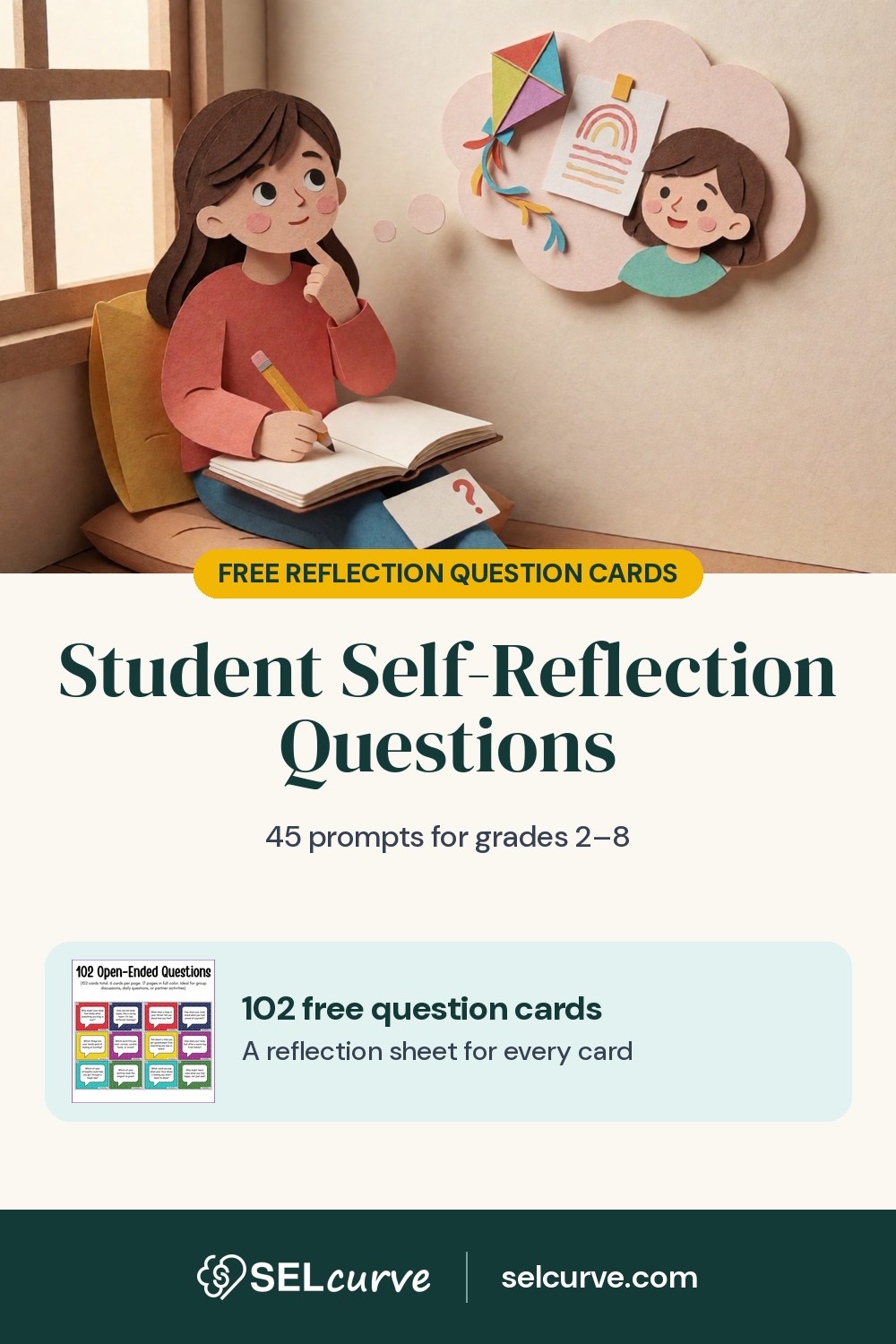
Student Self-Reflection Questions: 45 Prompts for Grades 2–8
"How did today go?" gets a shrug. A better question gets a real answer. These student self-reflection questions help kids look at how they learn, what they feel and who they are becoming, in a few minutes at a time.
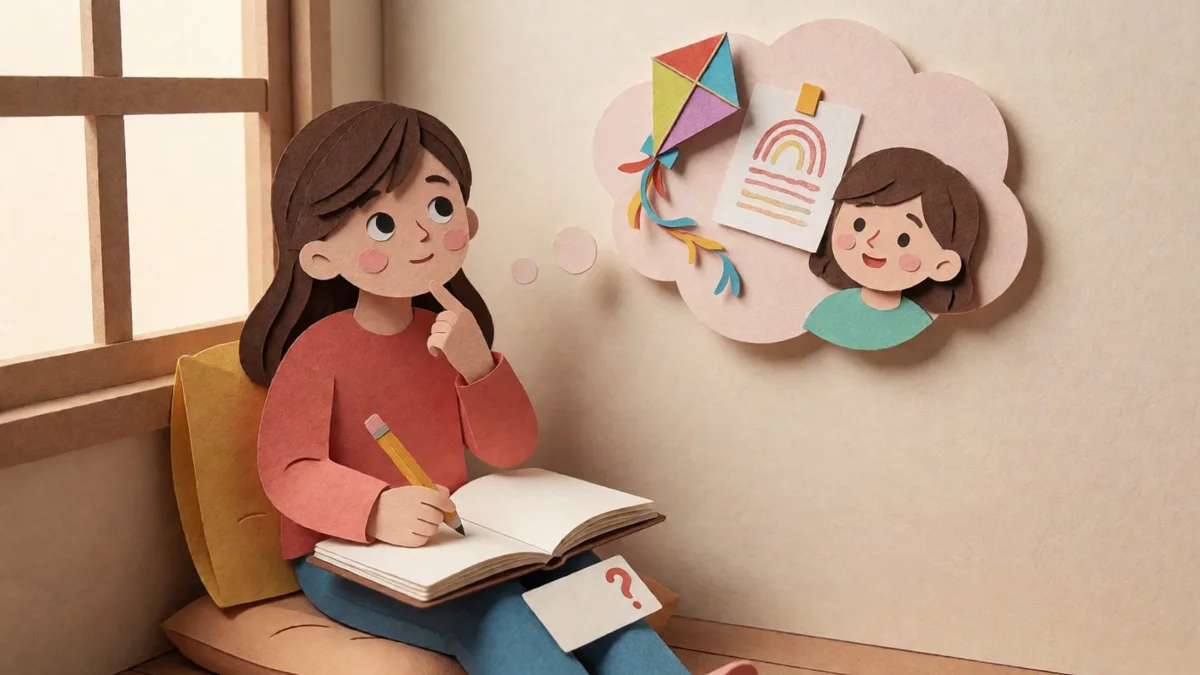
Reflection is how students turn an experience into something they’ve learned from. Most kids don’t do it on their own; they need a question that points them somewhere. Good student self-reflection questions are short, specific and impossible to answer with “fine.” Below are 45 of them, grouped by what you want students to think about, plus simple ways to use them in a few minutes a day. They work from second grade through eighth, and the last group is written with older students in mind.
Why self-reflection is worth the class time
A student who stops to ask “What helped me?” or “What would I do differently?” is building the habit behind almost every other skill: noticing, naming and adjusting. Reflection also tells you things a quiz never will, like which part of a lesson felt confusing or which group work felt unfair. A short question at the end of a lesson does the job; what matters is doing it often, not writing long essays.
How to use self-reflection questions for students
- One question, not five. A single focused question gets deeper answers than a long form. focus
- Think, then talk or write. Give 30 seconds of quiet first. Then partners share, or students write two sentences. processing
- Answer it yourself sometimes. When you share your own short answer, students see that reflection is for everyone. modeling
- Look back later. Every few weeks, students reread old answers and notice what changed. growth
Student self-reflection questions about learning
- What was the hardest part of today’s work, and what did you do when you got there?
- What is one thing you understand now that you didn’t this morning?
- Which mistake taught you the most this week?
- When did you feel most focused today? What helped?
- What question do you still have about this lesson?
- If you could redo one assignment, which would it be and why?
- What strategy will you try next time you get stuck?
- Who helped you learn something today?
- What are you proud of in this piece of work?
- How would you explain today’s lesson to a younger student?
Reflection questions about feelings and thinking
- Which feeling showed up most for you today?
- What did your body tell you before you got upset or excited?
- When did you change your mind about something this week?
- What helps you calm your thoughts when your head feels busy?
- What thought kept coming back to you today?
- How did you feel at the start of the day compared to now?
- What is something you worried about that turned out okay?
- When do you do your best thinking?
Reflection questions about friends and others
- How did you help someone today, even in a small way?
- What did you notice about how a classmate was feeling?
- When did you listen well today? When was it hard?
- Is there something you said that you wish you could say differently?
- How did your group work together, and what was your part?
- Who would you like to get to know better, and why?
- What could you do tomorrow to make someone’s day easier?
End-of-week reflection questions
- What was the best moment of your week?
- What was one challenge, and how did you handle it?
- What did you learn about yourself this week?
- What goal will you work on next week?
- Which day felt the longest, and why?
- What would you tell yourself on Monday if you could?
- What are you looking forward to?
- What is one thing you want to remember about this week?
- Who made your week better?
- Give this week a title. What would it be?
Self-reflection questions for teens and middle schoolers
Older students want questions that take them seriously. These work well in grades 6 to 8:
- What do you care about now that you didn’t care about two years ago?
- Which of your habits helps you most? Which one gets in your way?
- When do you feel most like yourself?
- How do you make decisions when your friends disagree with you?
- What would you like people to understand about you without having to explain it?
- What is something you used to believe that you see differently now?
- What kind of person are you trying to become?
- Where do you go, in your head or in real life, when you need to think?
- What did a recent setback teach you?
- How do you know when you need a break?
Free printable self-reflection cards
If you’d rather print than copy questions onto the board, the free Self-Awareness Conversation Cards come as a printable PDF with 102 questions. They help students name their feelings, read their body’s signals, spot their strengths, talk to themselves kindly, learn from mistakes and explore their values. One group of cards is all about looking back on how you think and what you’ve lived:
Each card has a matching reflection sheet with lines for writing, so the cards double as journal prompts. There is also a digital version: students type their answers on any device, with no accounts to set up.


For printables on other skills, head to the free SEL resource library.
More free self-awareness resources
 Free Self-Awareness Worksheets — Multiple-Choice ScenariosGrades 2–5 · Print + digitalFREE
 Free Self-Awareness Scenario Cards — Printable & DigitalGrades 2–6 · Print + digitalFREE
 Free Self-Awareness Reading Comprehension Passages — Grade 3Grade 3 · Print + digitalFREE
Browse all free SEL resources.
Frequently asked questions
What are good self-reflection questions for students?
Short, specific questions that can’t be answered with “fine”: “Which mistake taught you the most this week?”, “When did you change your mind about something?” or “What would you tell yourself on Monday?”
How often should students reflect?
Short and often beats long and rare. A quick question at the end of a lesson or on Friday afternoon is plenty.
Should reflections be written or spoken?
Both work. Partner talk is quicker and builds confidence; writing gives students a record they can look back on. Many teachers alternate. For partner talk about effort and trying again, these growth mindset conversation cards give students a ready question.
Is there a free printable PDF of self-reflection questions?
Yes. You can print the Self-Awareness Conversation Cards at no cost. The PDF holds 102 question cards and a reflection sheet for every one, and students who prefer typing can use the online version instead.
More SEL ideas