Self-Esteem Games for Kids: 6 Confidence Games Built on Role Play
Confidence grows when kids practice saying true things about themselves out loud. These self-esteem games turn that practice into play, with three short role plays to act out first.
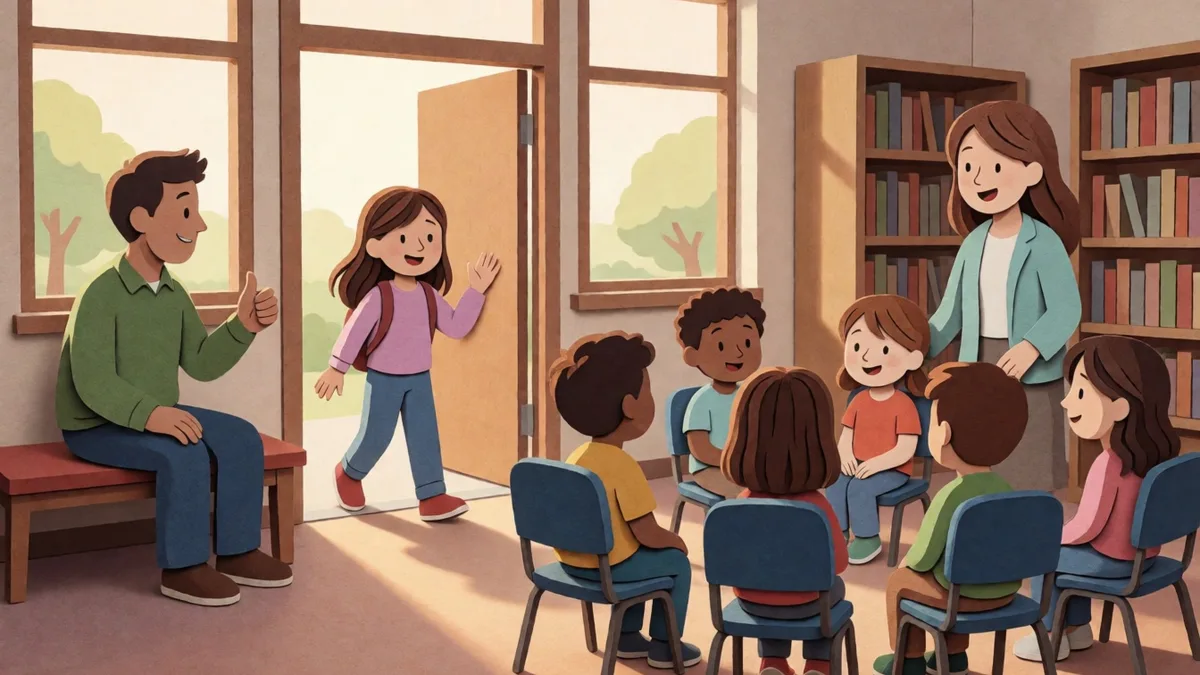
You can’t hand a child confidence. You can give them practice: saying something true about themselves out loud, walking into a room on their own, catching an unkind thought and trying a kinder one. The self-esteem games below turn that practice into something playful. They work for a whole class, take ten minutes or less, and need nothing more than a few chairs and a little space. Start with the role plays, then use the games to keep the skills going all week.
Why games work for confidence
Kids rarely build self-esteem from being told they’re great. They build it from noticing what they can actually do, and from hearing their own voice say it. A game lowers the stakes. When it’s “just a game,” a quiet student can try a sentence like “I’m good at fixing things” without it feeling like bragging, and a classmate can hear what that sounds like.
The best confidence games share three features: every student gets a turn, the words are true rather than over the top, and nobody is ranked against anyone else.
6 self-esteem games for elementary students
- Not Just One Word. Say a one-word label about yourself, like “the youngest” or “the new kid.” Your partner asks, “And what else?” Add two more true things. describing yourself
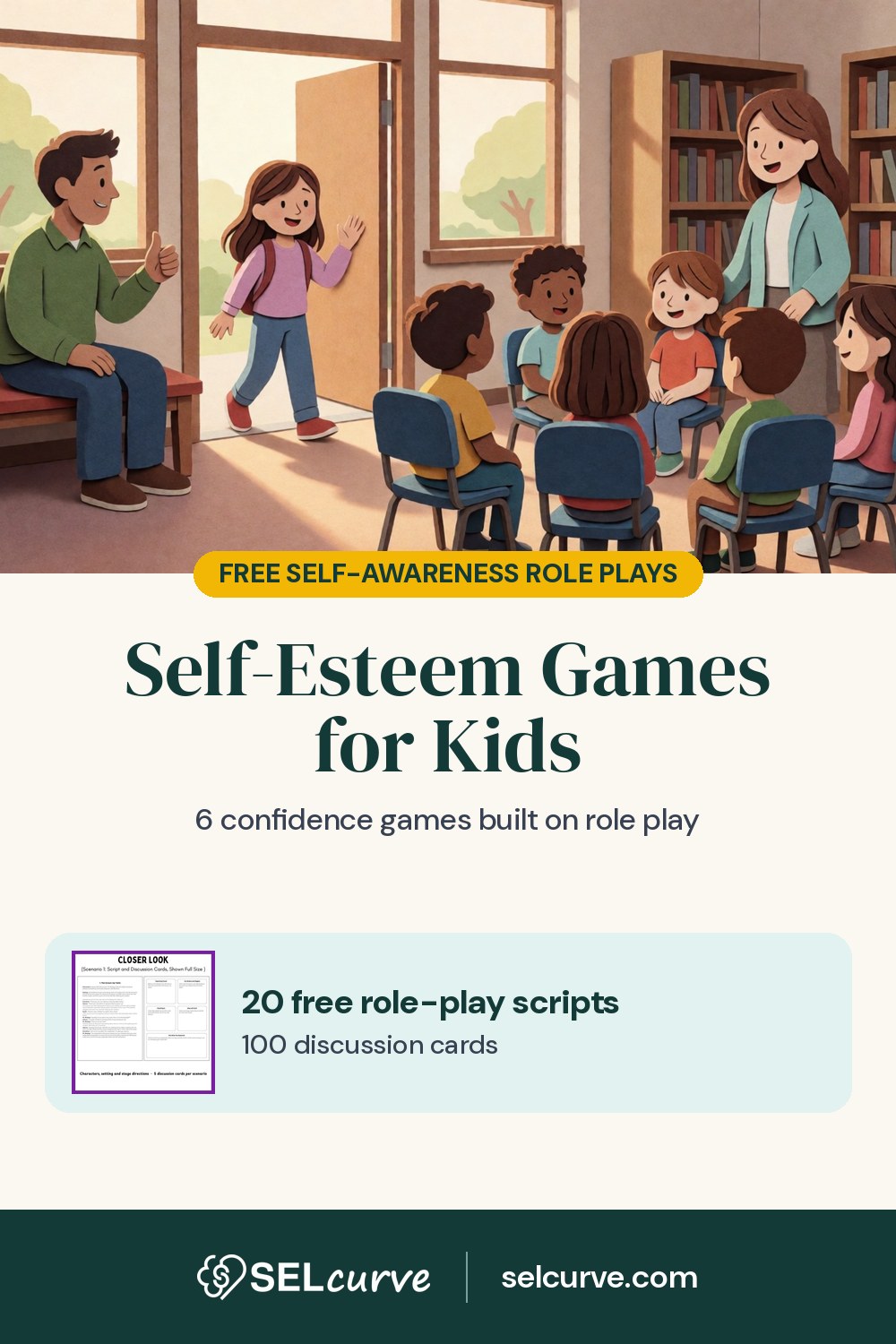
- Walk-In Rehearsal. One student steps out, then walks back in as if arriving somewhere new alone, says hello and their name. The class cheers the walk, not the words. courage
- Copycat Words. A partner repeats something you might mutter when a task is hard, in your exact voice. Hearing it from someone else, you rewrite it into something kind and true. self-talk
- Strength Spotter. Pull a classmate’s name from a jar and name one thing you’ve seen them do well this week. They say “thank you” and nothing else. noticing strengths
- Still Learning Relay. Teams turn “I can’t” sentences into “I’m still learning” sentences, one runner at a time, until the list is done. growth
- Proud Moment Pass. Toss a soft ball around the circle. Whoever catches it shares one thing they did that took effort, big or small. self-recognition
Positive self-talk examples kids can practice
The Copycat Words game works best with a few swaps ready on the board. Keep them true. “I’m the best at everything” isn’t kind self-talk; it’s just a different kind of untrue.
- “I’m so bad at this.” → “I’m still learning this.”
- “I can’t do it.” → “I can’t do it yet. What’s one small part I can try?”
- “Everyone is better than me.” → “I’m working on this, and I’m good at other things.”
- “I messed it up again.” → “That part was tricky. I’ll try it a different way.”
- “I’m too shy to go in.” → “I love this, and I can go in on my own.”
Self-esteem role play scenarios to start with
Role plays are the warm-up for the games: students watch a character find the words first, then try them in a game. All three are taken from a free self-awareness set.
| Scene | The moment | What the character does |
|---|---|---|
| 7. Not Just the Little One | Mom introduces Molly to a new neighbor as “our little one.” | Molly agrees she’s the youngest, then adds that she’s the family’s fix-it helper. |
| 8. Signing On My Own | Deepti’s best friend is away, and she wants to skip sign language class. | She remembers she picked the class because she loves signing, and walks in alone. |
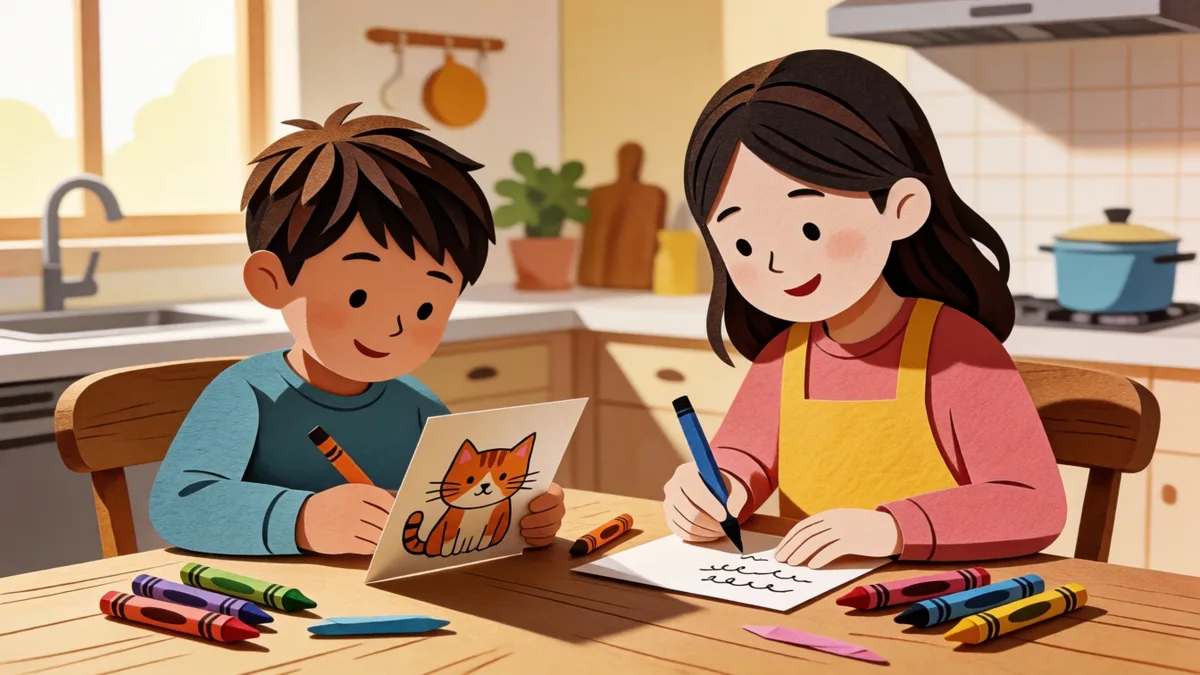
| 9. The Copycat Words | Adongo’s little sister copies her “I’m so bad at this” while cracking eggs. | Adongo hears how unkind it sounds and swaps it for “I’m still learning.” |
Each scene ends with five discussion cards, and the last one always turns the question to the student. Three of them:
Inside the free self-awareness role plays
The free Self-Awareness Role Play Scenarios cover twenty everyday moments for grades 3–5, from a foot that has fallen asleep and a red hoodie in the white laundry to a butterfly release that brings unexpected tears. Each scene is written out with characters, a setting and lines, then followed by five discussion cards. The teacher pages offer both a word-for-word script and a quick outline, and the materials list keeps props simple.


Need something for another part of SEL? Every free printable is sorted by skill.
More free self-awareness resources
 Free Self-Awareness Worksheets — Multiple-Choice ScenariosGrades 2–5 · Print + digitalFREE
 Free Self-Awareness Scenario Cards — Printable & DigitalGrades 2–6 · Print + digitalFREE
 Free Self-Awareness Reading Comprehension Passages — Grade 3Grade 3 · Print + digitalFREE
Browse all free SEL resources.
Frequently asked questions
What are good self-esteem games for kids?
Games where every child says something true about themselves out loud: describing yourself beyond one label, rewriting unkind self-talk, naming a classmate’s strength, or sharing one thing that took effort. Short role plays make a strong warm-up.
How do you build self-esteem in the classroom?
Give students regular, low-stakes chances to notice their strengths, practice kind and true self-talk, and try brave steps like walking in on their own. Praise specific actions rather than labels.
What is an example of positive self-talk for kids?
Swapping “I’m so bad at this” for “I’m still learning this,” or “I can’t do it” for “I can’t do it yet. What’s one small part I can try?”
Can I get the self-awareness scripts free?
You can. Print as many copies as your class needs; the set includes every scene, card and teacher page at no cost.
More SEL ideas