Self Awareness Examples for Kids: What It Looks Like at School, at Home and With Friends
Self-awareness can sound abstract until you see it in a real moment: a student who says "I'm great with animal facts, so I'll take that round." Here's what it looks like in grades 2–5, with examples, scenarios and questions to practice it.
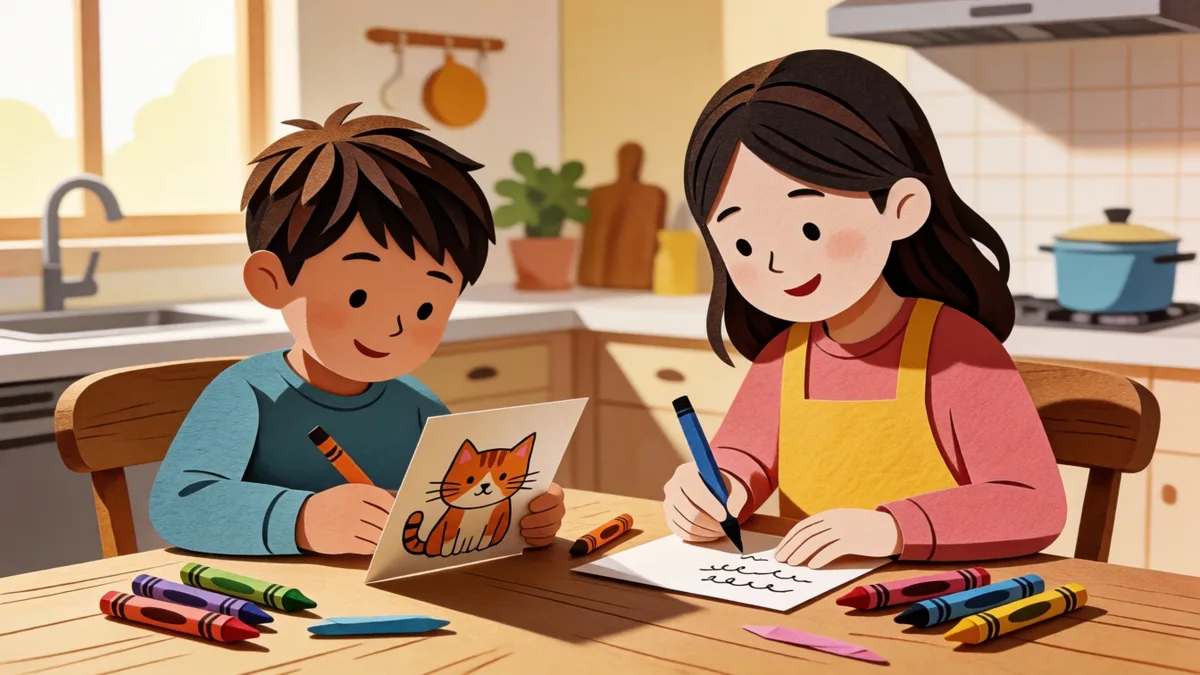
“Know yourself” is easy to say and hard to picture, especially for an eight-year-old. Self-awareness gets clearer when students can see it in action: a kid who notices her legs are wobbly before rolling onto the rink, or one who says, “I’m fast at adding, so I’ll handle the money box.” The self awareness examples below are grouped into three parts students can remember, followed by four scenarios to practice with and questions that keep the conversation going.
What self-awareness means for kids
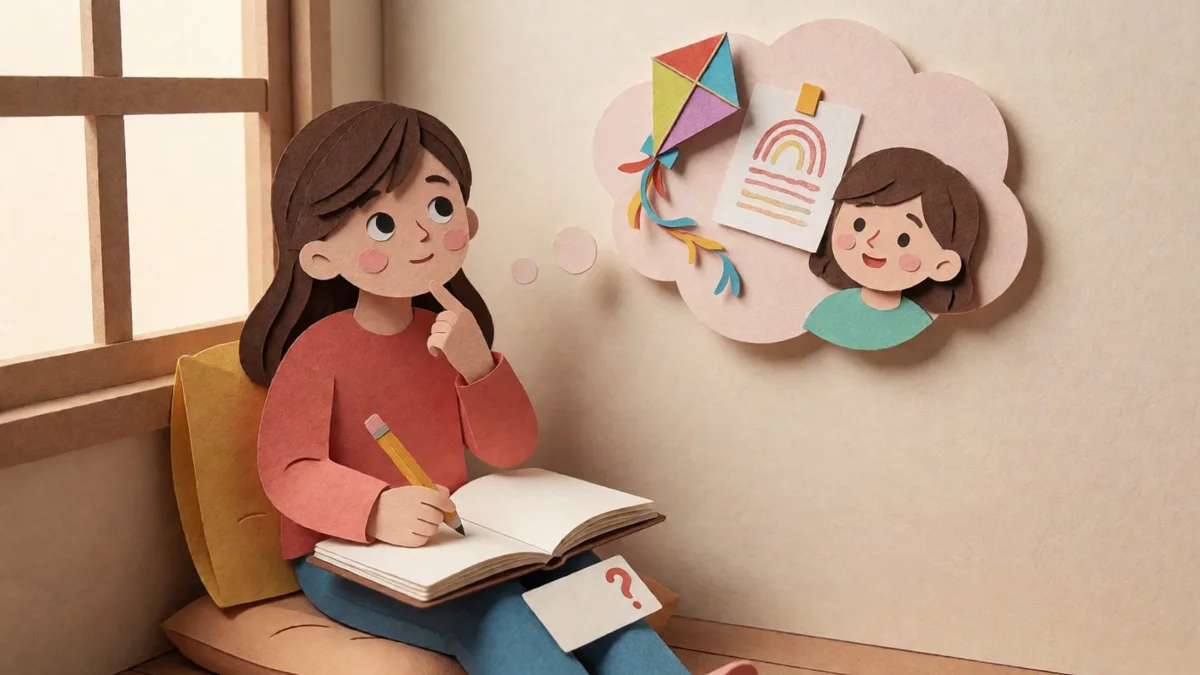
A kid-friendly definition: self-awareness is noticing what is going on inside you, so you can use it to make good choices. In grades 2–5 it has three parts:
- My feelings. Naming what I feel and noticing where I feel it in my body. feelings
- My strengths. Knowing what I do well and what is still hard for me, without comparing myself to anyone. strengths
- What matters to me. Knowing what I care about and what helps me feel like myself. values
12 self awareness examples for students
Feelings
- Saying “I’m frustrated,” not just “I’m mad,” when a puzzle won’t come together.
- Noticing a pounding heart and shaky hands before a big test.
- Realizing you’re grumpy because you’re hungry, not because of your friend.
- Telling a grown-up “I need a minute” before a feeling gets too big.
Strengths
- Choosing the quiz round you know best and letting a teammate take the one they love.
- Saying “Reading aloud is still hard for me, so I’d like to practice with a partner first.”
- Offering to draw the poster because drawing is something you do well.
- Asking for help early in the part you know you find tricky.
What matters to you
- Speaking up kindly when the group gets a fact wrong that you know is right.
- Picking something meaningful, not just the first thing in reach, when you choose what to keep or share.
- Noticing what lifts your mood, like a favorite smell or song, and using it on a long day.
- Knowing you’d rather play with one friend than in a big group, and saying so politely.
4 scenarios about knowing your strengths
Here are four from the free self-awareness scenario cards. In each one, the student is great at one thing and finds another thing still hard, and students pick from three possible actions.
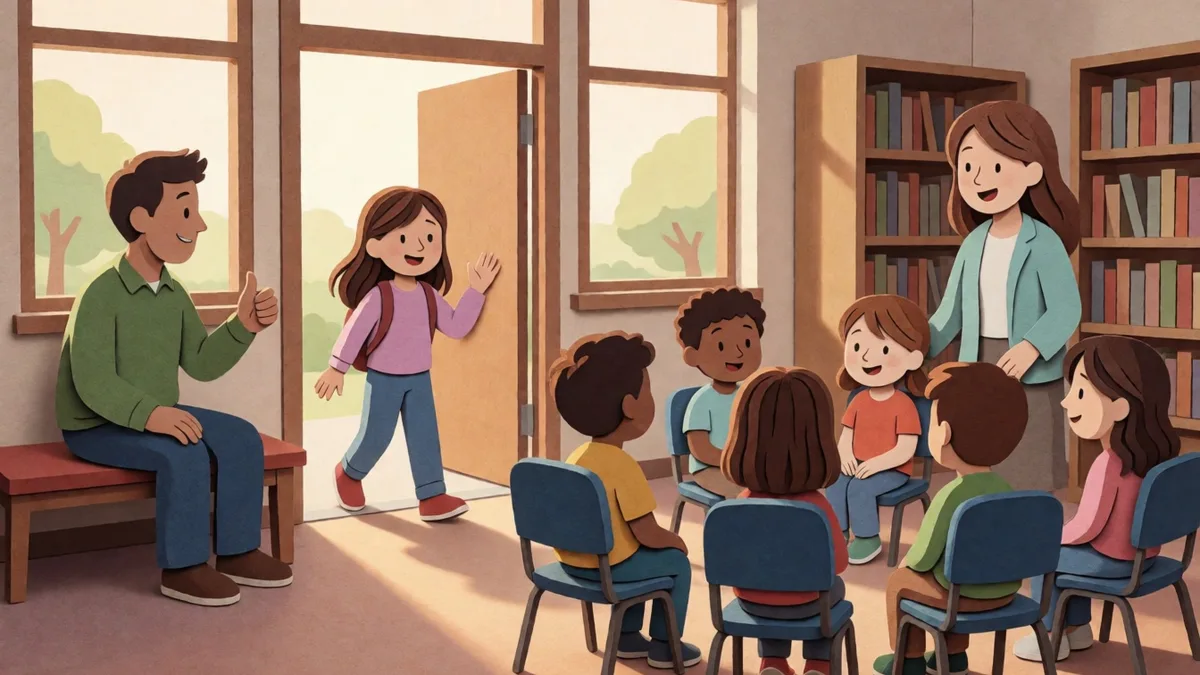
What could you say to your team about which round fits you?
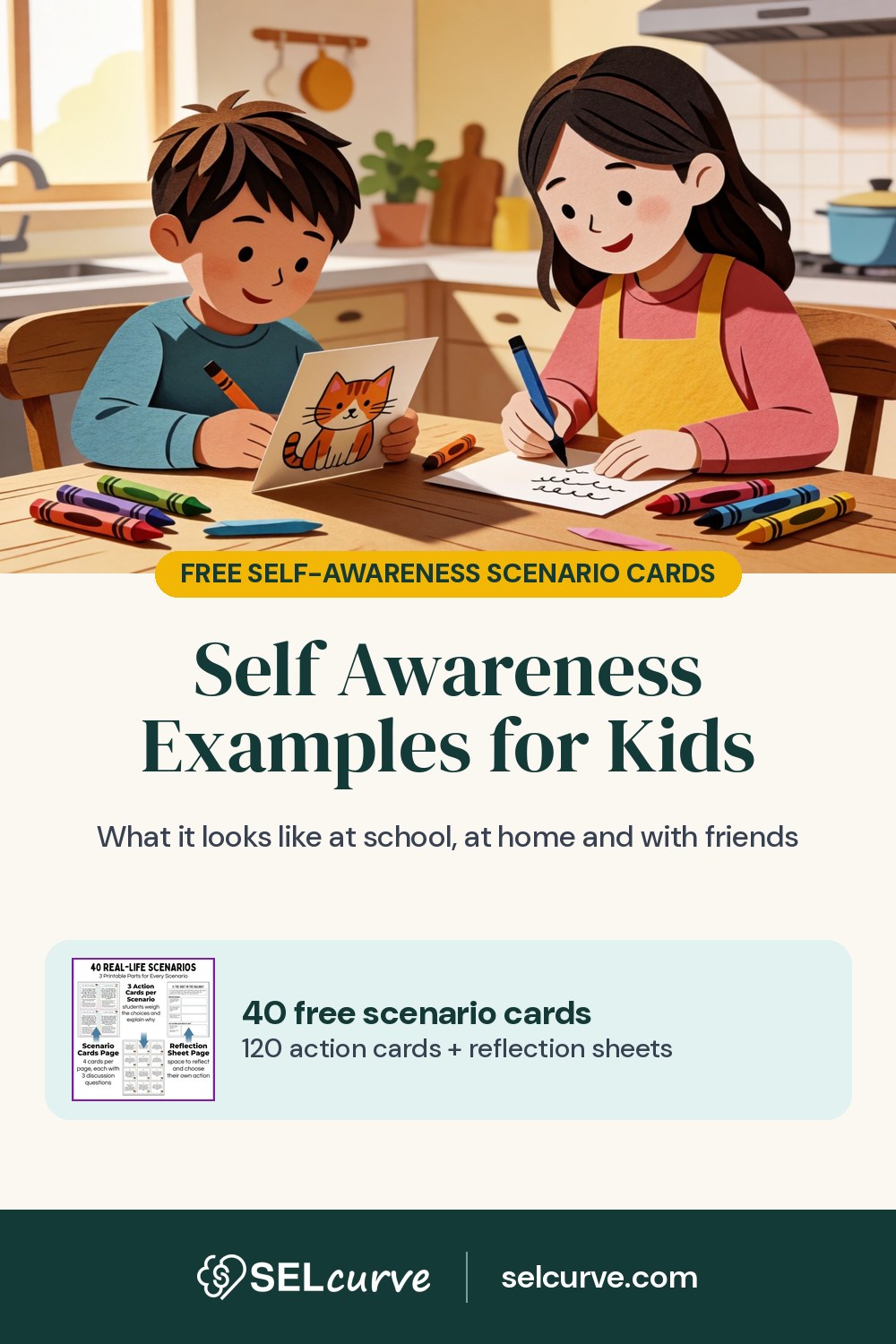
What could you suggest so the card shows what you each do well?
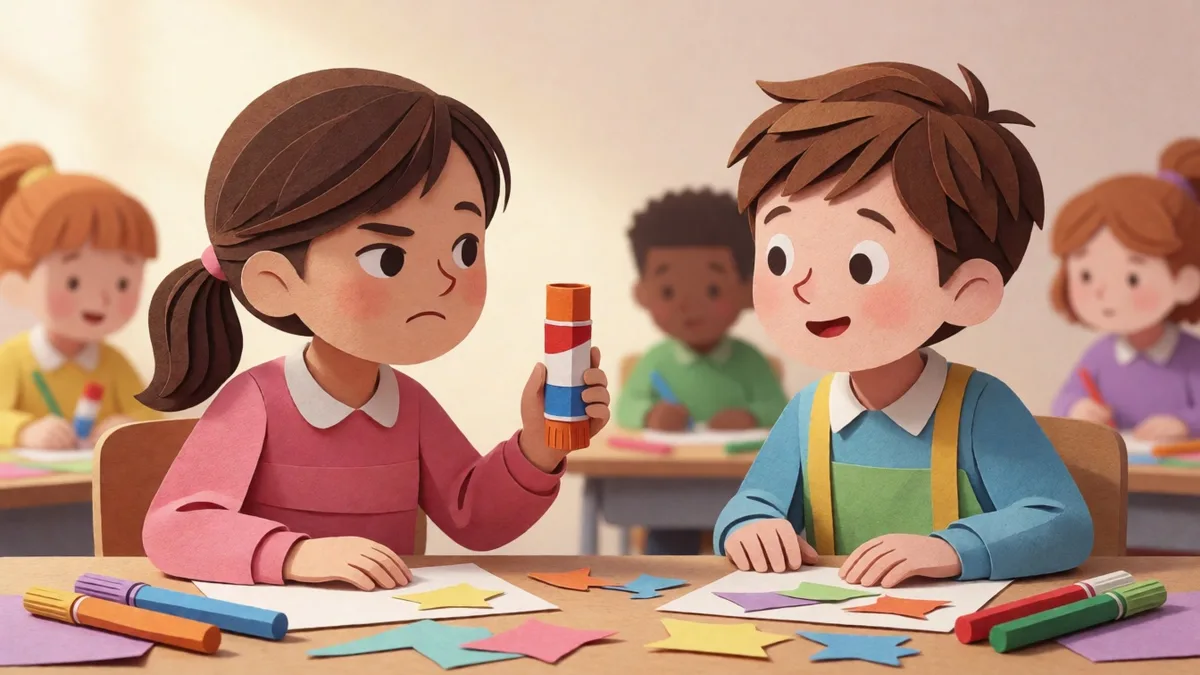
What could you say to Elena about splitting the jobs?
The fourth, “Weeds or Sprouts,” puts a student who can carry full watering cans with no trouble in a garden where every tiny plant looks the same to them. For the Grandma card, the action cards are “Split the Jobs,” “Make Two Cards” and “Do It All Yourself.” Students quickly see that knowing what you each do well makes the card better, not just easier.
Questions that build self-awareness
- What is one thing you do well that a friend might not know about?
- What is something that’s still hard for you right now?
- Where in your body do you feel it when you’re nervous?
- What helps you feel calm or cheerful after a long day?
- When did knowing what you’re good at help a group you were in?
- What do you care about that you’d stand up for kindly?
Inside the free self-awareness cards
The free Self-Awareness What Would You Do? Cards cover 40 moments, such as wobbly legs at the roller rink, a group poster with penguins at the wrong pole, a class time capsule and a bar of lavender soap after a rainy day. You also get 120 action cards, a writing page for every scenario and an online version to share with the class.


Moving on from self-awareness? The free SEL library has a free resource for every SEL competency.
More free self-awareness resources
 Free Self-Awareness Worksheets — Multiple-Choice ScenariosGrades 2–5 · Print + digitalFREE
 Free Self-Awareness Scenario Cards — Printable & DigitalGrades 2–6 · Print + digitalFREE
 Free Self-Awareness Reading Comprehension Passages — Grade 3Grade 3 · Print + digitalFREE
Browse all free SEL resources.
Frequently asked questions
What are some examples of self-awareness for kids?
Naming a feeling exactly (“frustrated,” not just “mad”), noticing a pounding heart before a test, picking the quiz round you know best, asking for help early on a part that’s still hard, and knowing what lifts your mood on a long day.
How do you explain self-awareness to a child?
Say it means noticing what’s going on inside you: your feelings, what you do well, what’s still hard and what matters to you. Then give a real example, like choosing the job that fits you in a group project.
Which grades is this for?
Second to fifth grade. In the younger classes, the teacher reads each card out loud and the group discusses the choices.
Are the self-awareness cards free?
Yes. Nothing in the set costs money: the cards, the action choices, the writing pages and the screen version are all included.
More SEL ideas