Brain Breaks for Second Graders: Teamwork Movement Games for Getting Along (Free)
Second graders love to move and love to be part of a team, but working together doesn't come naturally yet. These brain breaks for second graders practice teamwork in 2 to 5 minutes, with a free printable movement game.
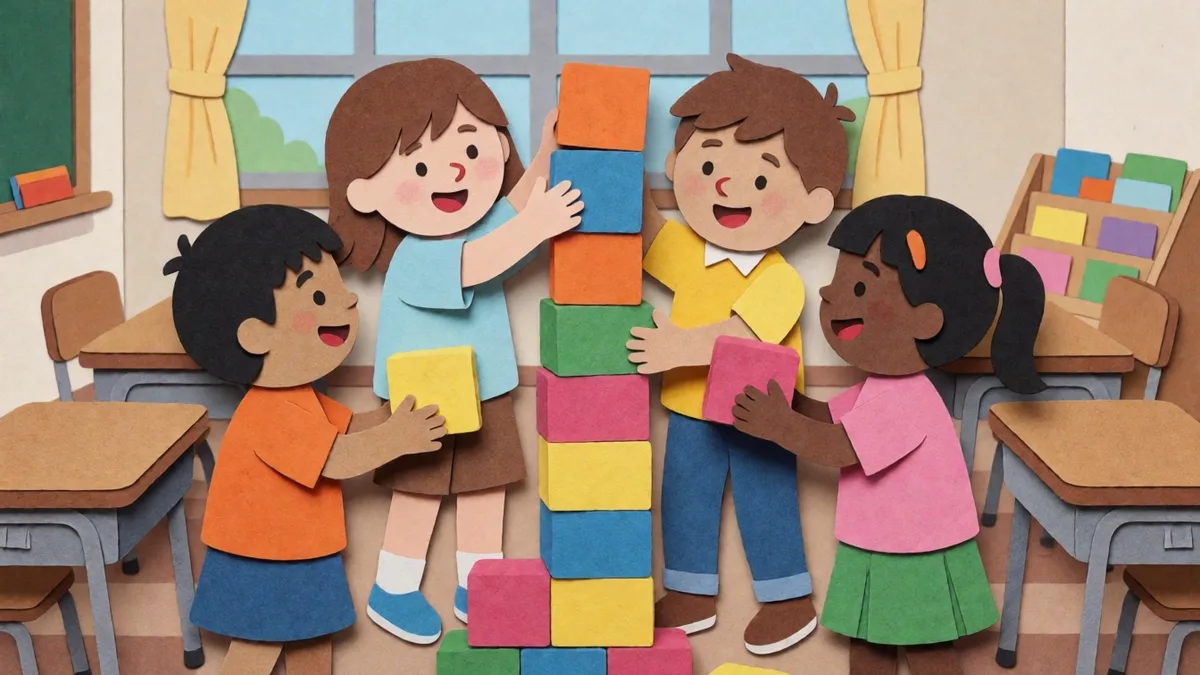
Ask a group of second graders to make one poster together and watch what happens: four kids, four different pictures, one argument about who gets the red marker. Seven- and eight-year-olds want to belong to a team, but they’re still learning how a team actually works. That makes teamwork a natural theme for brain breaks for second graders. The games below take 2 to 5 minutes, get everyone moving, and practice the two ideas behind every good team: agree on one goal, and every piece of the work counts. You’ll find the first four, with a teacher script, in a free printable social-emotional learning (SEL) game.
What teamwork means to a second grader
Adults think of teamwork as cooperation. For a seven-year-old, it helps to make it concrete:
- Find the goal. “What are we making?” A team without a goal is just kids standing near each other. shared goal
- Pick your piece. Counting, holding, drawing, cheering: there’s always a job, and the quiet jobs count too. contributing
- Notice other pieces. Telling a teammate “You did the hat part!” shows you saw how they helped. appreciation
Teach the three steps once, then let the brain breaks below practice them over and over in short bursts.
9 teamwork brain breaks for second graders
1. Goal Point
Make teams of three. Give a goal, like a snowman. Everyone reaches to one spot together and says, “That’s our goal!” Then person 1 “rolls” the bottom ball, person 2 stacks the middle, and person 3 adds a hat. Arms up: “We did it!” Takes 2 minutes. Medium energy. Seated: do the moves with your hands on the desk.
2. Name the Piece
Right after Goal Point, teams sit down. Each child turns to the kid on their left and whispers, “You did the ___ part!” (rolling, stacking or the hat). Then hands go in laps, and everyone sits still. It’s a calm finish that teaches children to notice what others added. Takes 1 minute. Calm.
3. Team Yes or No
Use two sides of the room for YES and NO. Read a team moment: “Your team makes a paper chain. One kid counts the links and says, ‘Five more!’ They never glue one. Did they help?” Children walk to a side. The answer, yes, surprises many of them: counting is a real piece of the work. Takes 2 minutes. Medium energy. Seated: thumbs up or down.
4. What Piece Could You Add?
Hang four corner signs and read a team project with four ways to help: “Your team is making a class band song. Two kids already sing. What piece could you add?” Clap the beat, sing too, shake a pretend shaker, or count “1, 2, 3, go!” Children walk to a corner and act out their piece for five seconds. Takes 3 minutes. Lively.
5. Balloon Keep-Up
Groups of four or five keep one balloon in the air together. The rule that makes it teamwork: nobody taps it twice in a row. Count taps as a group and try to beat your number. Takes 3 minutes. Lively. Use a soft balloon and a cleared space; seated groups can tap it gently from their chairs.
6. Human Machine
One child starts a simple repeated move and sound (arms pumping, “whoosh”). The next child joins with a move that connects to it, and the next, until the whole group is one moving machine. Say “power down,” and the machine slows to a stop. Takes 2 to 3 minutes. Medium energy.
7. Pass the Squeeze
Sitting in a circle and holding hands, one child gently squeezes the hand of the child next to them, who passes it on. Time how long it takes to go all the way around, then try to beat it. It’s quiet, it needs every person, and it brings the energy down. Takes 1 to 2 minutes. Calm.
8. Line Up Without Talking
Ask the class to line up by birthday month (or by shoe size) without saying a word. They’ll have to use fingers, nods and pointing. When they’re done, check together. Takes 3 minutes. Medium energy. A great one before walking to specials.
9. Team Statue
Call out something for groups of three to build with their bodies in ten seconds: a bridge, a tree, a car. Count down, then freeze. Walk around and admire each statue. Takes 2 minutes. Lively, then still.
Inside the free teamwork round
Breaks 1 to 4 come from Round 3 of the free Relationship Skills Brain Breaks for grades K–2, called “Teamwork: One goal, every piece.” Give it 15 to 20 minutes and play all 10 cards as one SEL lesson, or keep a card in your pocket for the line-up wait. You read every card aloud. Three of them:
Teacher says: Keeping a balloon up takes everyone. That’s one goal, with lots of kids helping.
Teacher says: Not yet. They agree on fish, but not on which fish. Talking it over first gives the team one goal.
The full free game also covers taking turns to talk, showing you listened, solving conflicts and respect, with a final partner-challenge round. There are also 24 open cards you can fill in for your own class.


Want a calmer game for after recess? Browse the free SEL resources for the self-management set.
More free relationship skills resources
 Free Relationship Skills Conversation Cards — Morning Meeting QuestionsGrades 2–8 · Print + digitalFREE
 Free Relationship Skills Reading Comprehension Passages — Grade 2Grade 2 · Print + digitalFREE
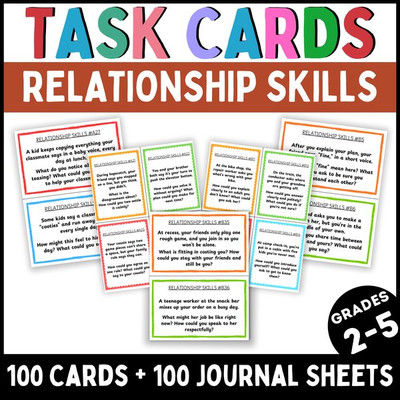 Free Relationship Skills Task Cards — Printable & DigitalGrades 2–5 · Print + digitalFREE
Browse all free SEL resources.
Frequently asked questions
What are good brain breaks for second grade?
Short games with one clear rule and a calm ending: Goal Point, Team Yes or No, Balloon Keep-Up and Pass the Squeeze all take 1 to 3 minutes. Mixing a skill like teamwork into the movement gives the two minutes a second purpose.
How do you teach teamwork to 7-year-olds?
Keep it concrete: find the goal, pick your piece, and notice other people’s pieces. Practice it in short games, then point to the same steps during real group work.
How do I stop teams from arguing during brain breaks?
Make the teams yourself, give one clear goal, and keep the game short. If a team gets stuck, ask, “What’s your goal?” Most arguments come from different goals, not bad behavior.
Do second graders need a lot of space for these?
No. Every game has a seated version or works at desks, and most need only a few steps of room.
Do I need any materials for the teamwork round?
No. Print the cards and the room signs, clear a little floor space, and play. The free set includes the script, a poster, movement cards and 24 open practice cards on top of its 60 game cards.
More SEL ideas
 Relationship SkillsFun Brain Breaks for Upper Elementary That Also Teach Students to Solve Conflicts (Free Game)
 Relationship SkillsHow to Teach Self-Advocacy to Kids: 10 Games, a 4-Step Routine + Free Scenario Cards
 Relationship SkillsHow to Teach Conflict Resolution to Kids: A 5-Step Talk-It-Out Routine, 10 Games + Free Scenario Cards