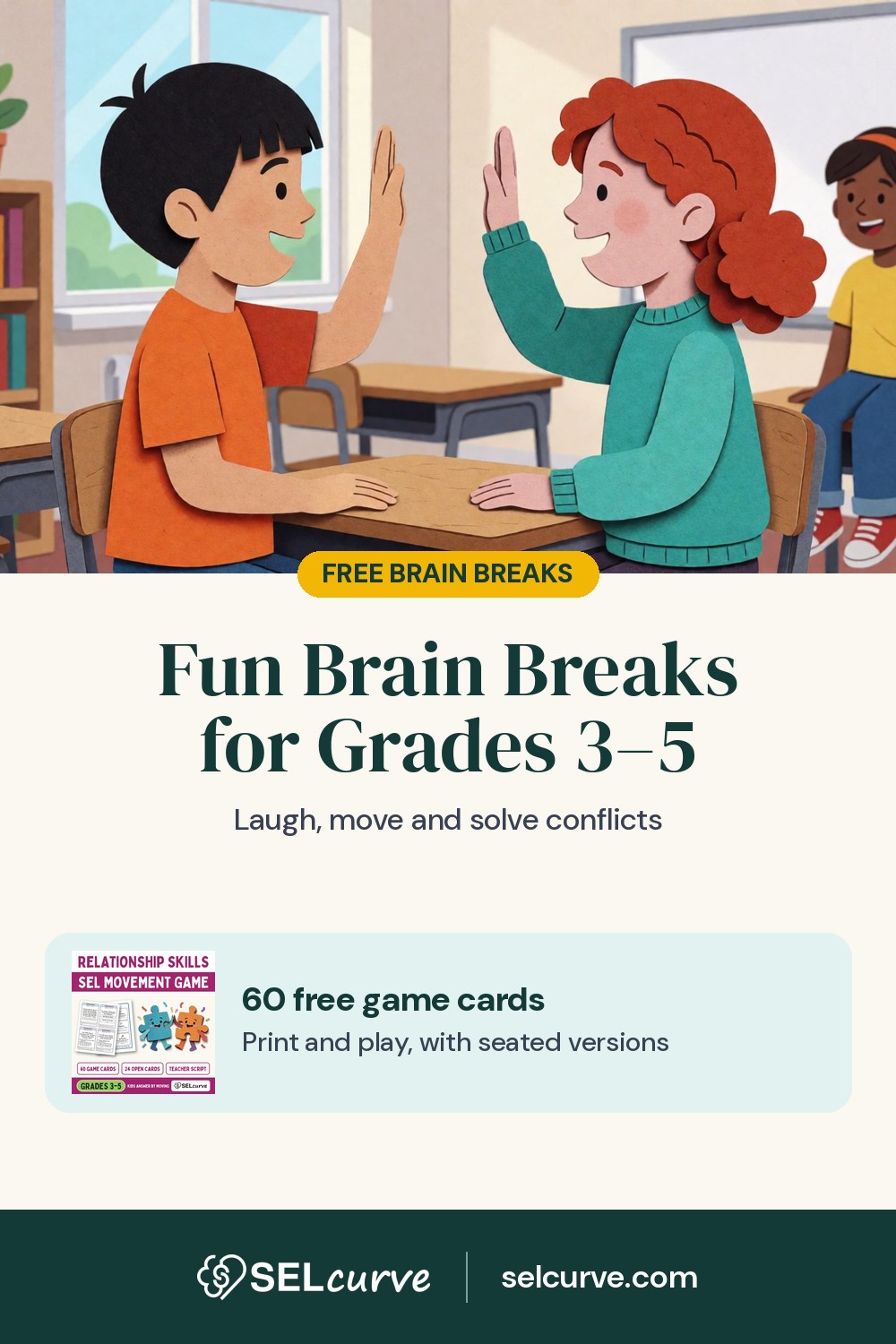
Fun Brain Breaks for Upper Elementary That Also Teach Students to Solve Conflicts (Free Game)
Fun brain breaks for grades 3–5 don't have to be silly for silly's sake. These get the class laughing and moving in 2 to 5 minutes, and several sneak in a skill older students really use: sorting out small conflicts with words that don't blame.
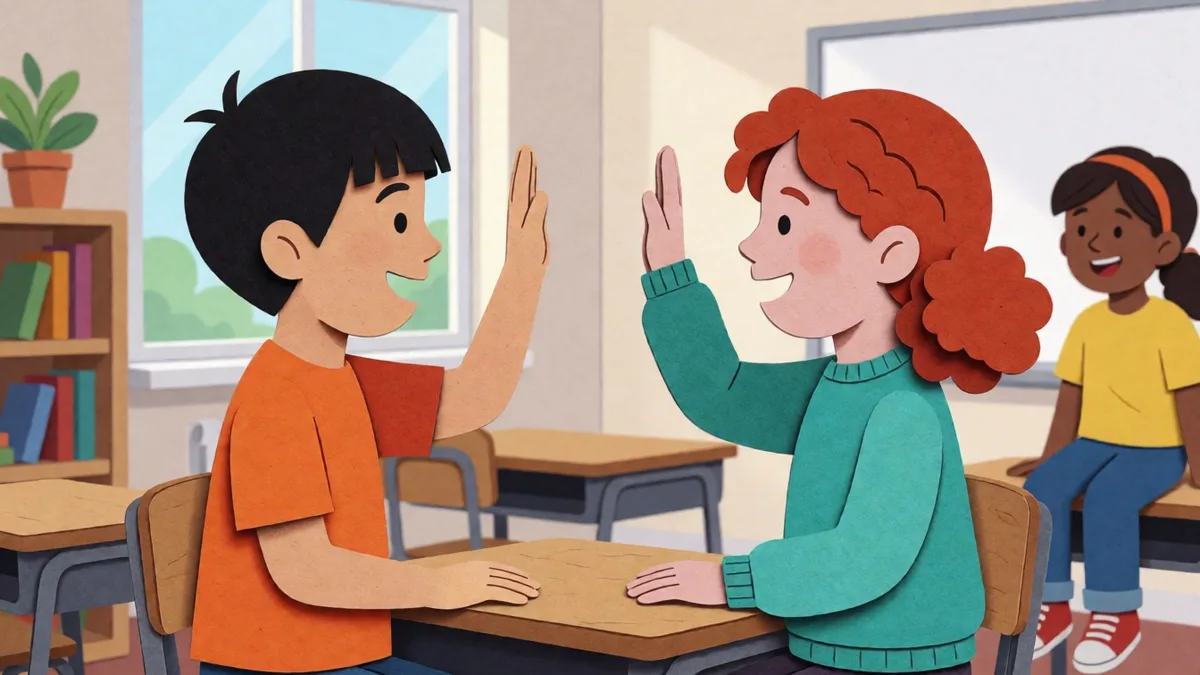
Upper elementary students still love to laugh and move. They just don’t want to look silly doing it. Fun brain breaks for grades 3–5 work best when the fun comes from a challenge, a twist or a bit of friendly competition, not from a cartoon video. The 9 below take 2 to 5 minutes and have seated versions. Several also practice a skill that pays off every recess: naming the moment, not the person, when something bugs you. Breaks 1 to 5 are from a free printable social-emotional learning (SEL) game about conflicts.
The three-part frame behind these games
Most small conflicts in grades 3–5 start in shared spaces: a table, a hook, a line, a computer. They get bigger when students use blame words (“You always…”, “You’re so rude”). A simple frame fixes a lot:
- I feel ___ (one feeling word) naming feelings
- when ___ (one exact moment, not a label) no blame
- Could we ___? (a fix to try) problem solving
Write the frame on the board before the games. Students use it in the first five, and you’ll start hearing it outside them too.
9 fun brain breaks for grades 3–5
1. I-Statement Walk
Partners start two desks apart. You name a moment (a ruler that was never returned, a lost spot in line). Partner A walks halfway and holds up one finger per part: “I feel ___ / when ___ / Could we ___?” Partner B answers with a thumbs up, “Let’s talk,” or a new idea. Switch. Takes 3 minutes. Medium energy. Seated: turn in your seats and use fingers.
2. Rewind
Students sit and picture a “You always…” sentence floating in the air. They slowly erase it with one hand, breathe in and think of the moment (“when…”), then breathe out and think the full I-statement. Hands in laps. It’s a calm game with a satisfying gesture. Takes 1 to 2 minutes. Calm.
3. True or False: Blame Words
Label two sides TRUE and FALSE and read: “Saying ‘You always’ can help someone see how often a problem happens.” Students walk to a side. (False: “always” usually starts a fight about the word.) Then: “Naming one exact moment makes a complaint easier to fix.” (True.) Takes 2 to 3 minutes. Medium energy. Seated: thumbs up or down.
4. Talk or Note?
Same two sides, a different kind of choice: “A classmate keeps hanging their backpack on your hook. Would you say an I-statement before recess, or leave a short note with one?” Both are fine. Talking gets an answer right away; a note gives them time to think. Takes 2 minutes. Medium energy.
5. “Could We…?” Corners
Hang four corner signs and read: “A teammate rewrote your part without asking. What could your ‘Could we…?’ be?” Could you ask first, could we write it together, could you tell me why, or could we ask the group? Students walk to the ask that fixes what bugs them most. Takes 3 minutes. Lively.
6. Mirror Challenge
Partners face each other. One leads slow, silly poses (a starfish, a lean, a frozen sneeze), and the other mirrors exactly. The challenge: an observer shouldn’t be able to tell who’s leading. Switch every 30 seconds. Takes 2 minutes. Medium energy. Works seated.
7. Silent Line-Up Puzzle
The class lines up by birthday (month and day) without talking. Time it, then try to beat the time another day. It needs teamwork, patience and a lot of creative pointing. Takes 3 to 4 minutes. Medium energy.
8. Rock, Paper, Scissors Cheer Chain
Students play rock, paper, scissors with anyone nearby. The one who loses becomes the winner’s cheerleader and follows them, cheering, to their next match. In a few rounds, the whole class is cheering for the last two players. Losing turns into joining. Takes 2 to 3 minutes. Lively.
9. Count to 20
The whole class tries to count to 20, one person at a time, with no order and no signals. If two people speak at once, start over at 1. It’s harder than it sounds, it’s funny, and it ends in a quiet, focused room. Takes 2 to 3 minutes. Calm.
Inside the free no-blame-words round
Breaks 1 to 5 come from Round 4 of the free Relationship Skills Brain Breaks for grades 3–5, called “Conflicts: No-blame words.” By the end of it, students can name the moment, not the person, and ask, “Could we ___?” All 10 cards fit a 15- to 20-minute SEL block, and any one of them works on its own. Three of them:
Teacher says: Most people have. Words come out fast in a conflict. A frame helps you pick them.
Teacher says: True. “When my seat was taken at lunch” can be fixed. “When you’re rude” is a label, not a moment.
Teacher says: The “Could we” part is what turns a complaint into a fix.
The rest of the free game covers joining a conversation, listening in your own words, teamwork and disagreeing respectfully, plus a final partner-challenge round. Twenty-four open cards let students write their own situations.


For calmer days, the free SEL resources include a self-management game for grades 3–5.
More free relationship skills resources
 Free Relationship Skills Reading Comprehension Passages — Grade 5Grade 5 · Print + digitalFREE
 Free Relationship Skills Conversation Cards — Morning Meeting QuestionsGrades 2–8 · Print + digitalFREE
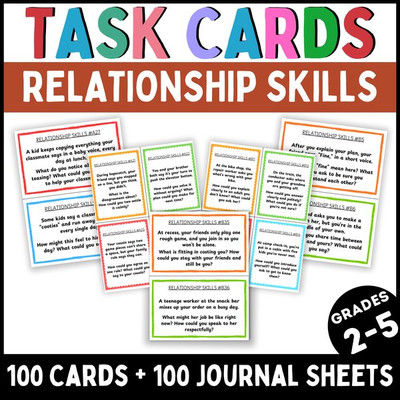 Free Relationship Skills Task Cards — Printable & DigitalGrades 2–5 · Print + digitalFREE
Browse all free SEL resources.
Frequently asked questions
What are fun brain breaks for 3rd to 5th grade?
Games with a challenge or a twist: Count to 20, Silent Line-Up, Mirror Challenge and choice games with corners and sides. Older students enjoy them more than videos because they get to think and compete.
Can a brain break teach conflict resolution?
Yes. Practicing the frame “I feel ___ when ___. Could we ___?” in a quick game, with made-up moments, makes it much easier for students to use it in a real disagreement.
What’s an I-statement for kids?
A way to describe a problem without blaming: say how you feel, name the exact moment, and ask for a fix. For example: “I feel frustrated when my ruler isn’t returned. Could we put it back after using it?”
How long should a fun brain break be?
Two to five minutes. End with something calm, like Rewind or Count to 20, so the class is ready for the next lesson.
Can students run the conflict game themselves?
After a round or two, yes. Hand the cards to student leaders and join in yourself. The free set gives them plenty to read: 60 game cards in 6 rounds and 24 open practice cards.
More SEL ideas
 Relationship SkillsBrain Breaks for Second Graders: Teamwork Movement Games for Getting Along (Free)
 Relationship SkillsHow to Teach Self-Advocacy to Kids: 10 Games, a 4-Step Routine + Free Scenario Cards
 Relationship SkillsHow to Teach Conflict Resolution to Kids: A 5-Step Talk-It-Out Routine, 10 Games + Free Scenario Cards