
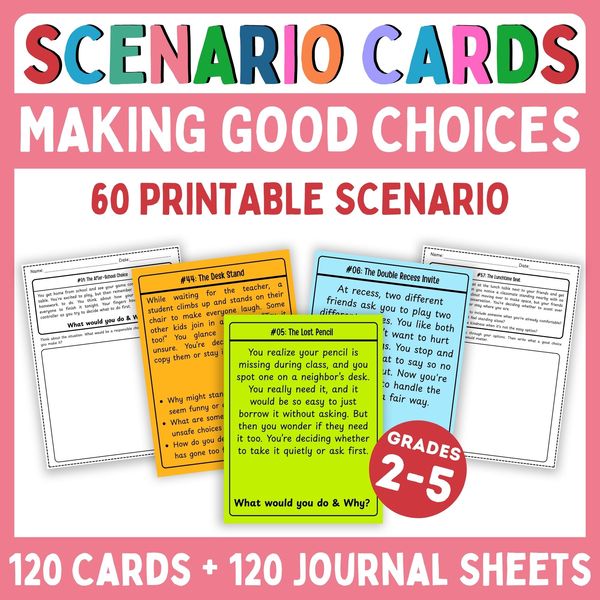
Making Good Choices Scenario Cards — Printable & Digital
Students often know the right choice and still struggle to say why it is right.
This resource is in the full SEL Resource Library. See what’s included or start with 10 free resources. Have an account? Log in.
About this resource
Students often know the right choice and still struggle to say why it is right. These making good choices scenario cards put 60 everyday moments in front of Grades 2–6, from a game console waiting after school to a pencil spotted on a neighbor’s desk, and ask what they would do and why. They build Responsible Decision-Making, the CASEL competency behind choices that hold up under pressure.
What students practice
- Explaining the reasoning behind a choice
- Weighing consequences before acting
- Thinking about how a choice affects other people
- Telling safe choices from risky ones
- Following through on responsibilities
- Standing firm when friends push the other way
What’s inside
- 60 open-ended scenario cards, 4 per page, each asking “What would you do & Why?”
- The same 60 scenarios as guided cards, each with 3 questions on reasoning, consequences and the impact on others
- Five categories: everyday decisions, peer influence and social pressure, responsibility and follow-through, safe vs. risky choices, and choices that affect others
- 120 journal pages, one open-ended and one guided page for every scenario
- 158 pages in all
A look inside
- The After-School Choice: “You get home from school and see your game console waiting on the table.”
- The Lost Pencil: “You realize your pencil is missing during class, and you spot one on a neighbor’s desk.”
- The Secret Joke: “You overhear a group of friends laughing about another student’s clothes.”
How to use these making good choices scenario cards
- SEL lesson built around one scenario, from the first read-aloud to the “why” discussion
- Morning meeting check-in on how a choice reaches other people
- Counseling sessions on decision-making, using the guided questions
- Partners or small groups who compare their reasons for the same scenario
- A journal page after the discussion for written reflection
Grade fit
As social situation cards, the scenes (a missing pencil, a loud lunch line, a team cleanup) come from school days students know, and the guided questions about values and consequences give older students more to dig into. That is why the set stretches from Grade 2 to Grade 6.
Digital version
The printable and digital scenario cards work together: share one link, pick the open-ended or guided format, and students respond on any device with no student logins. At the end they download an answer sheet to hand in.
Pairs well with
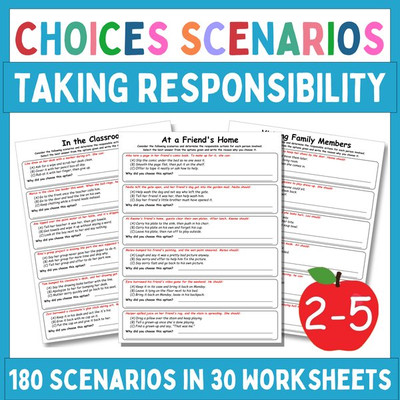
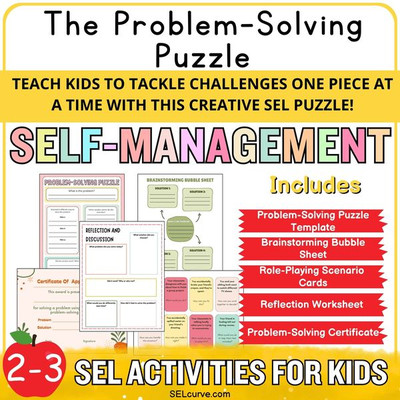
For more making good choices activities, add a quicker route in with Making Good Choices Task Cards, or open a morning meeting with Making Good Choices Conversation Cards.
Questions teachers ask
What is the difference between the open-ended and guided cards?
The open-ended card asks what the student would do and why. The guided card covers the same scenario with three questions on reasoning, consequences and the effect on others.
Do students need accounts for the digital version?
No. You share one link, and students open it on any device without logging in.
More for Responsible Decision‑Making
See all in the library →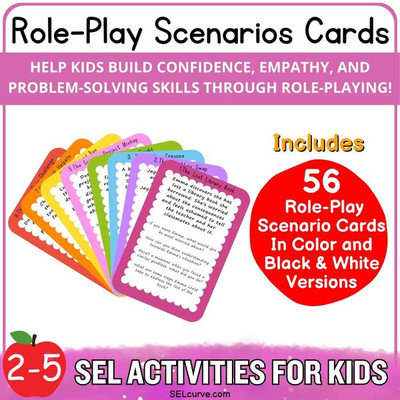
Every resource, one library.
572 SEL resources for elementary classrooms — printables, digital activities and answer sheets, and every new one we add.

