
12 Examples of Choices and Consequences for Kids (and 3 Role Plays to Act Out)
Kids hear "think about the consequences" all the time. It lands better when they can picture one: a small choice, the thing it led to, and the thing after that. Here are everyday examples to talk through, and three short role plays to act out.
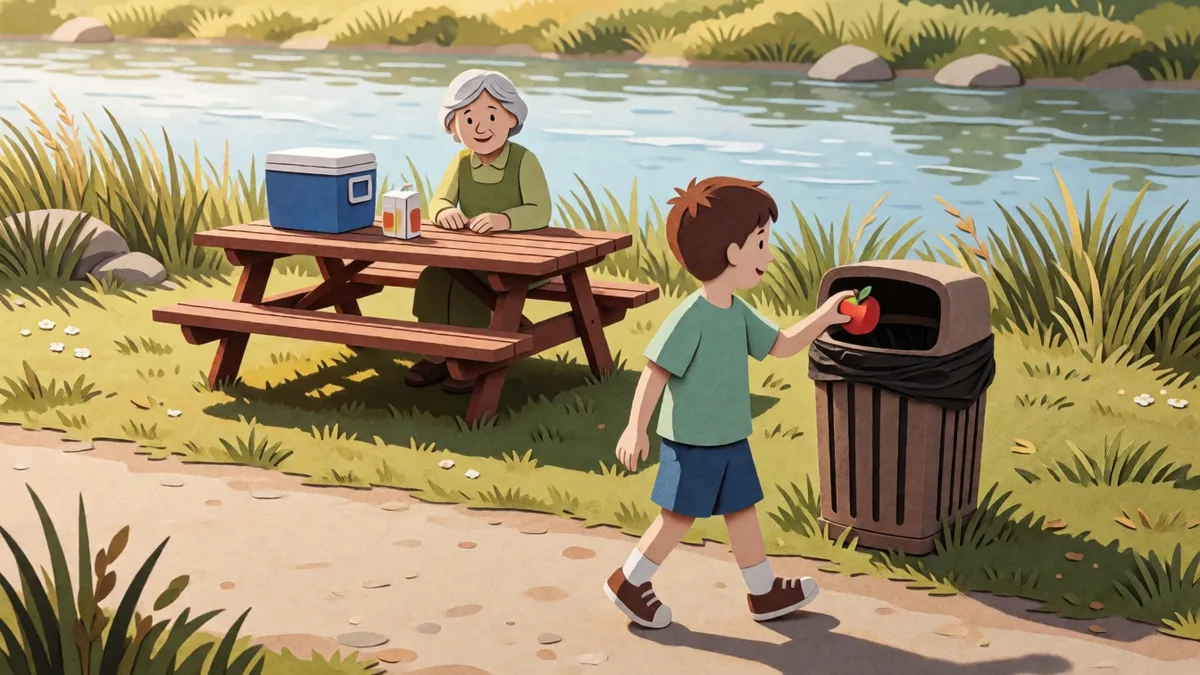
“Think about the consequences” is good advice, but to a second grader it is mostly a sound grown-ups make. What helps is a concrete picture: a small choice, the thing it caused, and the thing after that. The examples of choices and consequences below come from ordinary days at school, at home and around town. Each one is short enough to read aloud, and each one ends with a question students can answer from their own lives.
What a consequence really is
For kids, a consequence is simply what happens because of a choice. Some consequences are pleasant and some are not, and many land on other people. Three ideas make the word easier to use in class:
- Choices start chains. One choice leads to something, which leads to something else. cause and effect
- Some results are slow. A poster in the sun doesn’t fade in a day. It fades over a summer. patience
- Luck isn’t the same as a good choice. If nothing bad happened, it may only mean nothing bad happened yet. reflection
12 examples of choices and consequences for kids
| The choice | What it can lead to |
|---|---|
| Leaving a library book on the bus seat | A fine, a search, and a classmate who waits longer for that book. |
| Putting your name on your water bottle | It comes back to you when you leave it at recess. |
| Rushing through the morning job list | Plants that dry out and a teacher who has to redo the job. |
| Tossing a wrapper behind a bench | Ants or wasps, and a spot nobody wants to sit in. |
| Practicing spelling words for five minutes a night | A quiz that feels easy on Friday. |
| Hanging a drawing in the sunniest window | Colors that fade by the end of the year. |
| Saying “Can I play?” instead of grabbing the ball | A game that keeps going, with one more player. |
| Leaving a bike unlocked “just for a minute” | It might be fine. It might be gone. You can’t know ahead of time. |
| Packing your bag the night before | A calmer morning and nothing left on the kitchen table. |
| Interrupting a friend’s story | A friend who stops telling you things. |
| Wiping up a spill right away | No sticky table and no one slipping later. |
| Feeding the class pet twice because nobody checked the chart | A pet with an upset stomach and a new rule about the chart. |
Notice that most of these aren’t about being “good” or “bad.” They’re about seeing the next step. That’s the habit worth building: before a choice, picture what comes after it.
An “and then what?” routine for any example
Pick one example and walk it forward together. It takes about five minutes and works with any of the choices above:
- Name the choice. Who chose what, and where?
- Ask “And then what?” Write each answer as a link in a chain on the board.
- Ask “Who else?” Circle any link that touched someone who wasn’t part of the choice.
- Ask “What could change the chain?” Students find the earliest link where a different choice would help.
Older students in grades 4 and 5 can write their own chains as “if-then” sentences: “If I leave my bike unlocked, then…” The point isn’t to scare anyone. It’s to make the next step visible.
Choices and consequences scenarios to act out
Talking about a chain is good. Acting one out is better, because students feel the moment when the character figures it out. These three scenes come from a free set of decision-making role plays. In each one, a character traces a result back to their own choice and decides what to do differently.
| Scene | The choice | What it led to |
|---|---|---|
| 1. The Faded Poster | Tanya hung her whale poster in the sunniest spot in her room. | Months later, the whale has turned gray, except a strip the curtain covered. |
| 2. The Apple Core in the Grass | Ruben tossed his apple core into the long grass at a picnic. | Wasps came, a family moved tables, and a girl on a scooter turned back. |
| 17. Lucky This Time? | Holly rushed into story club without locking her scooter. | It was still there, but only by luck, so she moves the lock to the handlebar. |
Scene 17 is the one students argue about. Nothing went wrong, so was it a bad choice? That debate is the lesson: a choice can be risky even when it works out.
Each scene ends with five discussion cards. Three of them:
Inside the free decision-making role plays
The free Decision-Making Role Play Scenarios give you 20 scripted scenes for grades 3–5, from a birdbath that keeps emptying and a pair of sparkly mittens that aren’t yours to a fountain nobody reported. Every scene has characters, a setting and full lines, followed by five discussion cards. A detailed teacher script and a shorter outline cover the whole lesson, from the opening talk to trying a different ending.


Teaching a different SEL skill this week? Browse the full free resource library by topic.
More free decision-making resources
 Free Social Awareness Conversation Cards — Morning Meeting QuestionsGrades 2–8 · Print + digitalFREE
 Free Social Awareness Task Cards — Printable & DigitalGrades 2–5 · Print + digitalFREE
 Free Decision-Making Worksheets — Multiple-Choice ScenariosGrades 2–5 · Print + digitalFREE
Browse all free SEL resources.
Frequently asked questions
What are a few everyday examples of choices and consequences?
Leaving a bike unlocked (it might be taken), tossing a wrapper on the ground (it can bring ants or wasps), packing your bag the night before (a calmer morning) and practicing a little each night (an easier quiz on Friday).
How do you explain consequences to a child?
Say that a consequence is what happens because of a choice. Then walk one choice forward together by asking “And then what?” until the chain is clear, and ask who else it touched.
Are consequences always bad?
No. Many consequences are pleasant, like an easy quiz after practicing. Talking about both kinds helps students see that choices shape what happens next, not only what goes wrong.
Do the decision-making scripts cost anything?
No. The whole set is free: twenty scenes, a hundred discussion cards and the teacher guide, ready to print.
More SEL ideas
 Responsible Decision-MakingDecision Making Scenarios for Kids: 4 Everyday Choices and a Routine to Talk Them Through
 Responsible Decision-MakingHonesty Games for Kids: 6 Classroom Games That Make Telling the Truth Easier
 Responsible Decision-MakingGood Choices and Bad Choices: How to Help Kids Think Before They Choose


