
Decision Making Scenarios for Kids: 4 Everyday Choices and a Routine to Talk Them Through
Most choices kids make are small: water the plant now or later, use the stickers today or save them. Small choices are the best place to practice thinking ahead, because the results show up fast and the stakes stay low.
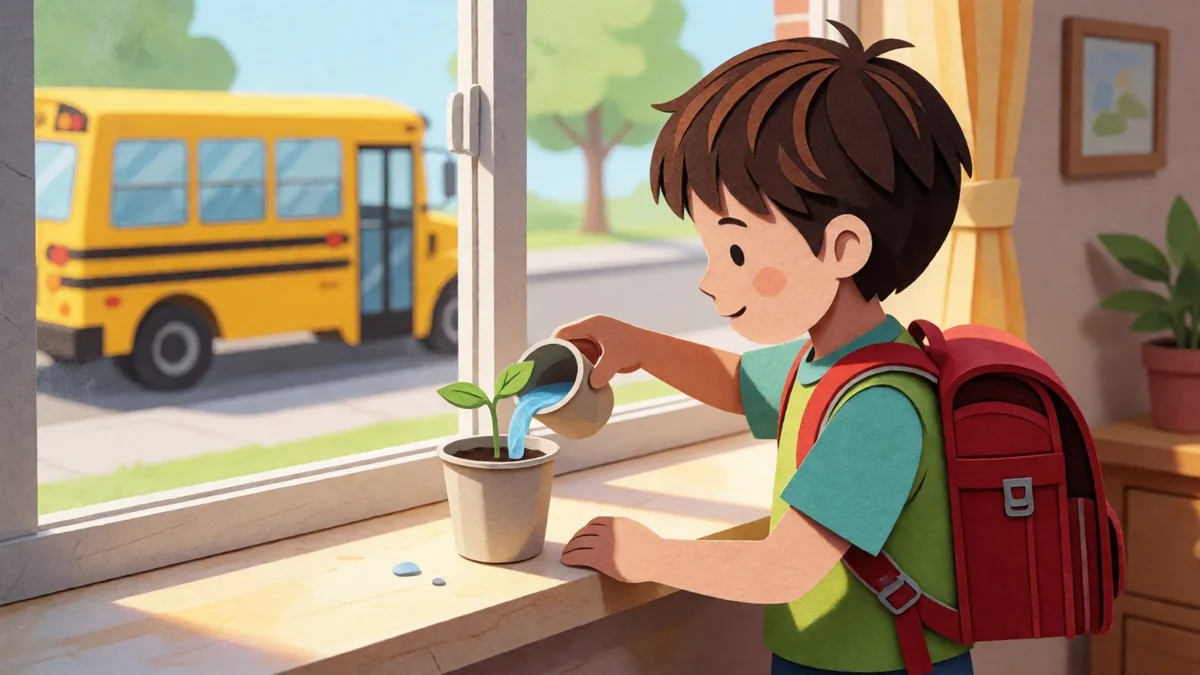
Most of the choices kids make in a day are small. Water the plant now or after school. Use the good stickers today or save them for the project. Grab the biggest pumpkin or check it first. Small choices are where decision-making habits are built, because the results show up quickly and nobody gets hurt when a guess is wrong. Decision making scenarios let students meet those moments on paper first, so they can slow down, picture what happens next and pick a choice they’ll be glad about later. Below you’ll find a four-question routine, four scenarios to try and a quick look at when to bring in harder dilemmas.
Why everyday decision making scenarios work best
When adults talk about decision making, they often jump to big questions of right and wrong. For a second grader, the more useful skill is simpler: noticing that a choice has a later. A dry seedling on a hot morning, a sheet of stickers that has to last until Friday, a pile of markers that all look the same. None of these feels important in the moment, and that’s exactly why they’re good practice. Students can see the whole chain from choice to result, and they can try the thinking again the next day with a different card.
A 4-question routine for any choice
- What is happening? Retell the scenario in one sentence. What does the character want right now? noticing
- What could I do? List at least three options, including the one that’s tempting. options
- What happens next? For each option, picture this afternoon, tomorrow or next week. Who else is affected? thinking ahead
- Which choice would I be glad about later? Pick one and give a reason that uses the word “because.” choosing
Post the four questions on the board and use the same words every time. After a few weeks, students start asking “what happens next?” before you do.
4 everyday scenarios to try
The four below are taken from the free Think, Choose, Act scenario cards. All of them are about what a choice will cause later, and every one comes with three action cards.
What could you do before you leave for the bus?
What could you do during free time today?
What could you do before you pick your pumpkin?
The third, “The Brand-New Marker Sets,” asks what to do before you start drawing when every marker set in the room looks exactly the same. For the seedling, the three action cards are “Water It Now,” “Ask Dad to Check” and “Water It Tonight.” All three sound reasonable at first. Ask the class which one still works if the afternoon is hotter than expected, or if Dad forgets, and the difference becomes clear.
Decision making scenarios vs. moral dilemmas for kids
Moral dilemmas are a different kind of practice. Instead of “what will happen later?”, they ask “what is the right thing to do when it costs me something?” They’re valuable, and older students often love arguing them out, but they work best once the think-ahead habit is in place. A rough guide:
- Grades 2–3: everyday choices with a clear “later,” like the four above.
- Grades 4–5: mix in simple dilemmas where two good things pull against each other.
Three dilemma starters for the older end:
- You find a five-dollar bill under a library table, and nobody is around.
- A friend asks you to say the two of you finished the reading together, but you finished it alone.
- You promised to help a classmate at recess, and then your best friend invites you to a game.
Run them with the same four questions. Students will notice that “what happens next?” still helps, even when the hard part is deciding what matters most.
7 questions to ask after any scenario
- What did the character want right now?
- What might happen this afternoon? Next week?
- Who else is affected by this choice?
- Which option is the easiest? Is it also the best?
- What would you need to know before you choose?
- Is there a fourth option nobody has said yet?
- When have you had to choose between now and later?
What’s in the free decision-making cards
The free Decision-Making What Would You Do? Cards give you 40 choices to talk through: a tablet with a dying battery left on the couch, two tug-of-war captains picking teams, a garden hose gushing onto the grass and many more. There are three action cards per scenario, a full-page reflection sheet with a “Your Turn!” box for each, and a digital copy students can use on any device without logging in.


Planning lessons on other skills too? Head to the free SEL library and pick your next one.
More free decision-making resources
 Free Decision-Making Affirmation CardsGrades 2–8 · PrintFREE
 Free Decision-Making Reading Comprehension Passages — Grade 4Grade 4 · Print + digitalFREE
 Free Decision-Making Scenario Cards — Printable & DigitalGrades 2–6 · Print + digitalFREE
Browse all free SEL resources.
Frequently asked questions
What is a decision making scenario?
A short, realistic situation where a character has to choose what to do next. Students talk about the options, picture what each one leads to and pick the choice they would be glad about later.
How do you teach decision making to kids?
Use the same few questions every time (what is happening, what could I do, what happens next, which choice would I be glad about), practice them on small everyday choices, and point it out when students use the questions on their own.
Which grades are the decision making scenarios for?
They are written for second through fifth grade. Read them aloud in second grade, and let fourth and fifth graders write their answers independently.
Are the decision-making cards free?
Yes, at no cost: every one of the 40 scenarios, all 120 action cards, a reflection page per scenario, and the on-screen version too.
More SEL ideas
 Responsible Decision-MakingHonesty Games for Kids: 6 Classroom Games That Make Telling the Truth Easier
 Responsible Decision-Making12 Examples of Choices and Consequences for Kids (and 3 Role Plays to Act Out)
 Responsible Decision-MakingGood Choices and Bad Choices: How to Help Kids Think Before They Choose


