
Good Choices and Bad Choices: How to Help Kids Think Before They Choose
Most kids can sort good choices from bad ones on a worksheet. The harder skill is spotting the difference before the toy boat is already floating away. That takes one habit: asking "what if?" first.
Hand a second grader a picture of a child sharing and a picture of a child grabbing, and they’ll sort good choices and bad choices in seconds. Real life doesn’t come with the answer drawn in. It comes as a creek, a toy boat and a strong urge to just toss it in. What students need isn’t another sorting sheet. It’s the habit of stopping for one breath and asking, “What happens next if I do this?” Below you’ll find a simple way to teach that habit, everyday moments to talk through, and questions that get kids thinking ahead.
Good choices and bad choices: what kids really need to learn
Sorting is a fine place to start, especially for younger students. But labels can make choosing sound easier than it is. Most of the time, kids already know the rule. What trips them up is the moment: a friend is waiting, the ice cream stand is closing, the new bell is so close to ready. Choosing well is less about knowing which is “good” and more about seeing where a choice leads before you make it.
That shift also changes how we talk about mistakes. A choice that caused a problem isn’t proof that a child is careless. It’s information. “The boat floated away. What could you ask yourself next time?” teaches more than “That was a bad choice.”
Three questions to ask before choosing
- What could happen next? Picture the next five minutes. Where does the boat go? What happens to the bike light if it isn’t charged? thinking ahead
- Who else does it affect? A rushed coat zip or a map left in the rain can turn into someone else’s problem. others
- Will I still like this choice later? Sandals feel great until the trail gets muddy. The best choice is often the one you’ll be glad about an hour from now. patience
Post the three questions where students can see them. After a while, “What could happen next?” becomes something kids say to each other, not just something the teacher asks.
Everyday moments to talk through
Small, ordinary moments work best, because students meet them every week. Read one aloud and ask the three questions:
- Your new bell is almost on, and you want to ride right now.
- Rain is coming, and your trail map is still on the porch.
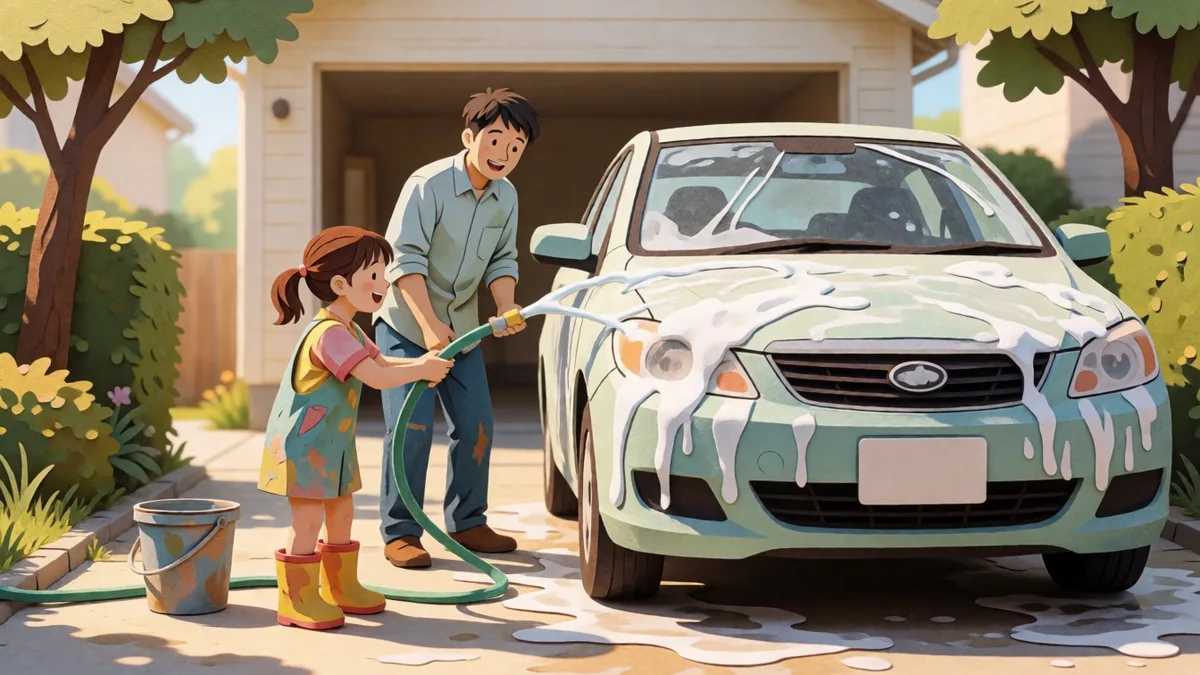
- You’re helping wash the car, and you’re wearing your favorite outfit.
- A friend is waiting outside, and you still have dishes to finish.
- You want to try a bumpy path on a bike that isn’t built for it.
- You didn’t charge your bike light, and now it’s too dark to ride.
Notice that the last one has already happened. Some of the best practice is about the choice after the choice: accepting what happened and doing the thing that helps next time.
Practice: pick a choice, then explain why
Here’s a routine that holds up across grades 2 to 5. Share a short situation and three ways it could go. Each student circles a letter, then adds a sentence about their reasoning. The “why” matters more than the letter. It shows you whether a student is actually thinking ahead or just guessing what the teacher wants.
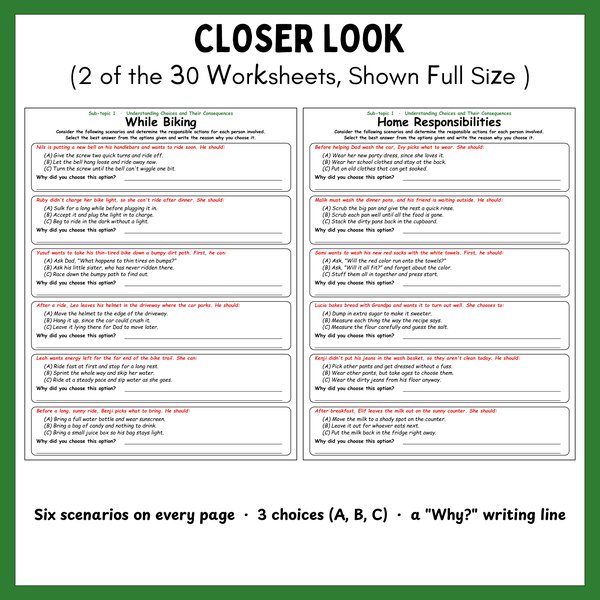
Three examples from a free worksheet set, all about asking “what if?” first:
(A) Toss the boat in and see where it goes.
(B) Ask Dad about it once the boat is in the water.
(C) Ask himself, “What if it floats away?” and check with Dad.
(A) Ask Dad, “Can thin tires handle a bumpy path?”
(B) Guess from the top of the path, and decide on his own.
(C) Race straight down the bumpy path and see what happens next.
(A) Ask Mom, “Will the red color run onto the towels?”
(B) Stuff them all in together and press start.
(C) Ask Mom, “Will it all fit in one load?”
The near-miss choices are the interesting ones. Omar’s option C asks a question, just not the one that protects the towels. Yusuf’s option B does stop to think, but he guesses on his own instead of asking someone who knows. Talking about why those choices fall short teaches students that thinking ahead means asking the right question, and asking the right person.
Talking points for a class circle
- Tell about a time you were glad you stopped to think first.
- What’s a choice that feels fun now but might not feel fun later?
- Who could you ask when you’re not sure what will happen?
- How can a choice you make affect someone in your family?
- When something didn’t go the way you hoped, what helped you next?
- What’s one “What if…?” question you could ask yourself this week?
Inside the free worksheets
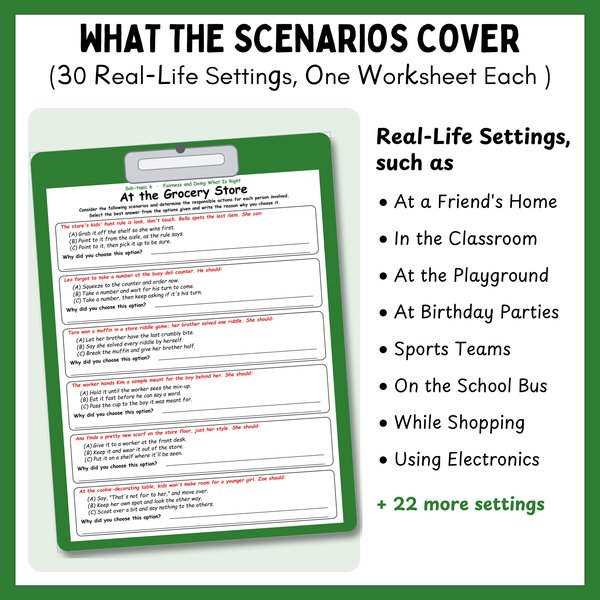
The free Decision-Making Worksheets give students 30 worksheets with 180 multiple-choice scenarios. They start with thinking ahead on walks, bike rides and chores, then move into honesty, fairness, screen time, knowing when to ask a grown-up and doing better after a mistake. Under each scenario, students write the reason behind their pick, so each good choices and bad choices worksheet becomes a short writing task too. Prefer screens? Students can also work through the same worksheets on any device, with no student logins, and send you their answer sheet.
When you’re ready for a new topic, start from the full list of free SEL resources.
More free decision-making resources
 Free Social Awareness Conversation Cards — Morning Meeting QuestionsGrades 2–8 · Print + digitalFREE
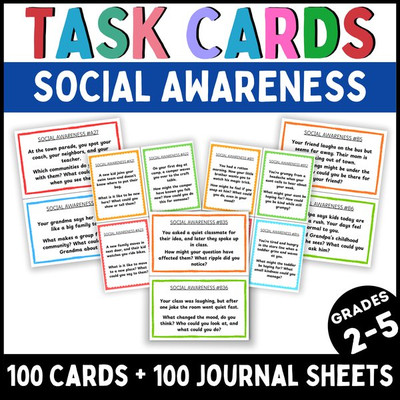 Free Social Awareness Task Cards — Printable & DigitalGrades 2–5 · Print + digitalFREE
 Free Social Awareness What Would You Do? Cards — Think, Choose, ActGrades 2–5 · Print + digitalFREE
Browse all free SEL resources.
Frequently asked questions
What’s the best way to explain good choices and bad choices to children?
Start with sorting if your students are young, then move to thinking ahead. Before a choice, ask: What could happen next? Who else does it affect? Will I still like this choice later? Practice with short, everyday situations and let students explain their thinking.
What should I say when a student makes a choice that goes wrong?
Treat it as information, not a verdict. Ask “What happened next?” and “What could you ask yourself next time?” so the student leaves with a plan instead of a label.
What grades are these worksheets for?
These worksheets were made with grades 3 to 5 in mind. Younger students can do them aloud with the teacher reading each situation and the three choices. For more practice later in the year, there are also making good choices worksheets: 30 worksheets with 180 scenarios in the same format.
Is the good choices and bad choices worksheet set free?
Yes. The Decision-Making Worksheets are free: 30 worksheets with 180 multiple-choice scenarios, room to write a reason under each, and a version students can open on devices.
More SEL ideas
 Responsible Decision-MakingDecision Making Scenarios for Kids: 4 Everyday Choices and a Routine to Talk Them Through
 Responsible Decision-MakingHonesty Games for Kids: 6 Classroom Games That Make Telling the Truth Easier
 Responsible Decision-Making12 Examples of Choices and Consequences for Kids (and 3 Role Plays to Act Out)


