
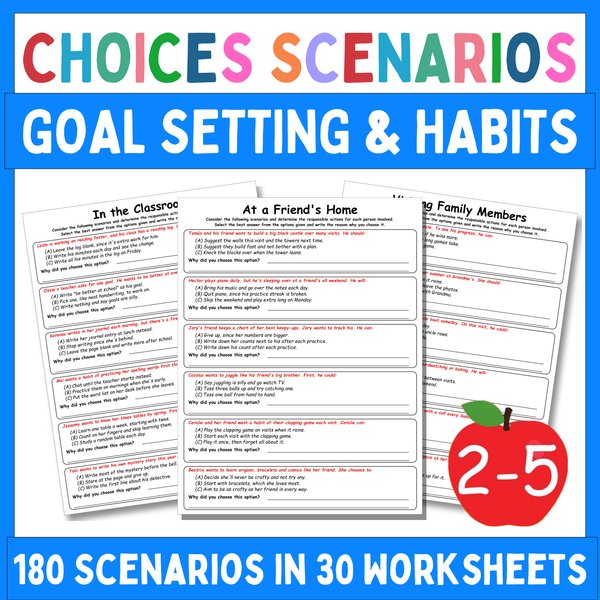
Goal Setting Worksheets — Multiple-Choice Scenarios
Ivy likes art, soccer and baking. Which one does she pick when her family shares goals at dinner?
This resource is in the full SEL Resource Library. See what’s included or start with 10 free resources. Have an account? Log in.
About this resource
Ivy likes art, soccer and baking. Which one does she pick when her family shares goals at dinner? These goal setting worksheets are full of choices like hers for Grades 2–5: 180 scenarios, three options each and a line to explain the pick. They build Self-Management one small, specific step at a time.
What students practice
- Picking one goal to start with
- Making a plan with clear steps
- Taking one small first step
- Building a daily habit tied to a time or cue
- Tracking progress in a way that shows growth
- Handling an obstacle without dropping the goal
What’s inside
- 30 printable worksheets, each in one setting, like the dinner table, Pet Care or the school bus
- 180 multiple choice scenarios (A, B, C) with a why line under each
- 4 teacher pages, one with a scoring note on what makes a goal, plan or habit strong
- 35 pages
A look inside
- Pet Care: “Mila wants to teach her dog to fetch, roll over and shake. She should:” (A) Teach roll over first, the trick her friend’s dog does. (B) Give up, since dogs can’t learn tricks. (C) Teach fetch first, since it’s the easiest.
- Tracking progress at the grocery store: Elias can count the tags he sees each trip, or “Count the tags he can read each trip.”
- Obstacles: Linnea knits a row on each bus ride, but she left her yarn at home.
How to use these goal setting worksheets
- Start of a term or an SEL goals unit: read Ivy’s scenario together, then ask the guide’s question about one small step students could take this week
- Small groups: compare the habit scenarios, such as reading at four at the kitchen table versus “after his shows end”
- Revisit the tracking scenarios later as a springboard for a deeper talk about how students track their own progress
- Independent reflection or sub plans
Grade fit
The goals are child-sized (keepy-ups, hopscotch on one foot, a paper flower a day), and the stems are short enough for a Grade 2 read-aloud. The goal setting scenarios also hold up for Grade 5, where the gap between a vague plan and a specific one is worth a written argument.
Digital version
The interactive digital version shares as one link: students pick A, B or C and type their reason, or just pick if you choose the choices-only format, on any device with no student logins. At the end they download an answer sheet to hand in.
Good to know
The scoring note is a handy teaching tool on its own: passable answers are usually too big, too vague, picked for a weak reason or tied to a chance cue, and the best choice is small, specific and tied to a set time or cue.
Pairs well with
Turn the thinking into a plan with My Weekly Goal Planner — Goal Setting Activity Kit, or try Goal Setting Scenario Cards.
Questions teachers ask
Is there an answer key?
No. The scoring note in the teacher pages explains the pattern instead: the best choice is small, specific and tied to a set time or cue.
Do students need accounts for the digital version?
No. Share one link, and students work on any device without logging in.
More for Self-Management
See all in the library →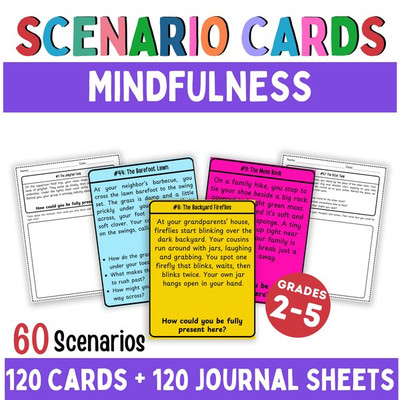


Every resource, one library.
572 SEL resources for elementary classrooms — printables, digital activities and answer sheets, and every new one we add.

