Running My Own Focus
Students learn to manage attention independently across a full work period, analyze distraction patterns across subjects and design a specific fix for each, apply impulse control in high-distraction or emotionally charged moments, use self-monitoring tools at planned intervals, and reflect on their focus patterns across a week to commit to a sustainable habit change.
Lesson Overview
What students will be able to do after this lesson: Students will be able to independently manage their attention across a full work period by using a self-chosen monitoring strategy, analyzing what consistently pulls their focus off track, and committing to a sustainable focus habit based on a week of self-observation.
Skill segments at a glance:
| Segment | Segment name | Primary standards |
|---|---|---|
| 1 | Running My Focus | SM-FOC-5-1 · SM-FOC-5-4 |
| 2 | Mapping and Managing What Pulls Me Away | SM-FOC-5-2 · SM-FOC-5-3 |
| 3 | Committing to a Focus Habit | SM-FOC-5-5 |
Supporting standards reinforced:
| Code | Why it connects |
|---|---|
| SM-HAB-5-1 | Building a consistent routine directly supports the habit-formation arc in Segment 3, where students commit to a specific, repeatable focus behavior |
| SM-GOL-5-3 | Independent multi-step plan management reinforces the autonomous focus planning practiced in Segment 1 |
| SA-REF-5-2 | Structured self-reflection on learning patterns underpins the cross-week pattern analysis and habit commitment in Segments 2 and 3 |
Key Vocabulary
- Self-monitoring — deliberately checking in on your own attention at planned intervals, rather than waiting for someone else to notice you have drifted
- Distraction pattern — a type of situation, object, or feeling that pulls your focus off task in the same way across different subjects or days
- Focus interval — the planned stretch of time you work before checking in on yourself
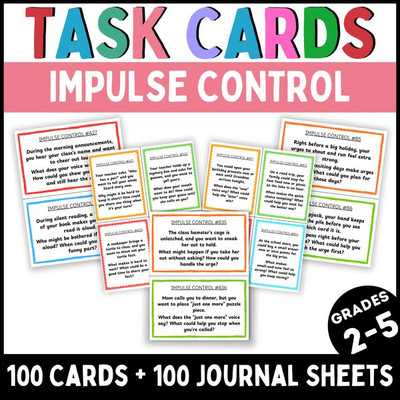
- Impulse — a strong, automatic urge to act or react before you have had a chance to think
- Focus habit — a behavior you use consistently enough that it becomes your default way of working, rather than something you have to decide about each time
Materials
- Whiteboard or chart paper + markers
- Optional: sticky notes for distraction pattern mapping activity in Segment 2
- Optional: a simple timer visible to the class for Segment 1 modeling
- Before the week begins: Post your unit anchor chart and I Can Statement where students can see them — you’ll reference both throughout the week.
How this lesson is structured: Each skill segment below has an I Do (teacher models the skill with a realistic scenario) and a We Do (class practices together with your guidance). Independent practice — the You Do — lives in the practice resources that go alongside this lesson.
What Students Need Before This Lesson
- What’s inside
- What students should already be able to do
- Helpful to have in place
- 4 quick set-ups before the I DoSelf-monitoring vs. being redirected · A distraction pattern vs. a one-time event · Impulse control in charged moments vs. quiet work · A sustainable habit vs. a vague resolution
- Rescue planIf students are significantly behind
This section opens when Grade 5 launches.
Introducing the Skill
- What’s inside
- Opening hook
- What we’re learning
- Why it matters
- Core sentence frameThe frame students use all week
This section opens when Grade 5 launches.
Running My Focus
- What’s inside
- I do: 4 teacher modelsTextbook example: a clean check-in at a planned interval · Starting point → fix: checking in without actually noticing anything · Non-conflict scenario: a check-in when work is going well · Self-chosen means deliberate: what ‘self-chosen strategy’ actually looks like
- We do: 4 guided scenariosWith sentence frames, pacing notes and what to watch for
- Coaching in the momentWhat to say when students get stuck
This section opens when Grade 5 launches.
Mapping and Managing What Pulls Me Away
- What’s inside
- I do: 4 teacher modelsTextbook example: mapping a distraction pattern and designing a specific fix · Starting point → fix: naming a single event instead of a pattern · Impulse control in a high-distraction moment · Positive outcome: the pause leads to something better
- We do: 4 guided scenariosWith sentence frames, pacing notes and what to watch for
- Coaching in the momentWhat to say when students get stuck
This section opens when Grade 5 launches.
Committing to a Focus Habit
- What’s inside
- I do: 3 teacher modelsTextbook example: week-long review leading to a specific habit commitment · Starting point → fix: a commitment that is too vague to hold · Cross-context pattern: a pattern that spans more than one type of situation
- We do: 3 guided scenariosWith sentence frames, pacing notes and what to watch for
- Coaching in the momentWhat to say when students get stuck
This section opens when Grade 5 launches.
Closing the Week
- What’s inside
- 3 partner-share roundsOne for each segment, with the frame students say together
- Round 1 — Segment 1: Running your focus and checking in
- Round 2 — Segment 2: Distraction patterns and impulse control
- Round 3 — Segment 3: Whole-week reflection and habit change
- Land the key idea
This section opens when Grade 5 launches.
Practice for every skill segment
Each lesson comes with independent practice — the “you do” — for each of its 3 skill segments, in print and digital.
Printable practice
Ready-to-copy practice pages for each segment.
- View and print in your browser
- Answer keys for quick checking
Digital activities
Share one link — students open it on any device, and you see their answers.
- Works on Chromebooks, tablets and phones
- Students just type their name to start
While you wait: from the SEL Resource Library
Self-Management resources for Grade 5, ready to use today.