Speaking Up for Someone
Students learn to notice when someone is being treated unkindly or unfairly, understand what speaking up for someone looks like, use simple and kind language to say something, know the difference between speaking up and making things worse, and follow through on an advocacy action.
Lesson Overview
What students will be able to do after this lesson: Students will be able to initiate a simple inclusion action without being told, encourage a peer to do something kind, speak up calmly when someone is being treated unfairly, carry out a classroom leadership responsibility fully and independently, and name one specific leadership action they are proud of and what it changed for someone else.
Skill segments at a glance:
| Segment | Segment name | Primary standards |
|---|---|---|
| 1 | Starting the Action | RS-ADV-2-1 · RS-ADV-2-2 |
| 2 | Stepping Up | RS-ADV-2-3 · RS-ADV-2-4 |
| 3 | Looking Back at What I Did | RS-ADV-2-5 |
Supporting standards reinforced:
| Code | Why it connects |
|---|---|
| RS-BUL-2-3 | Speaking up for someone being treated unfairly uses the same upstander action practiced in L26 |
| RS-FRD-2-2 | Inclusion actions extend the friendship-building skills from L21 |
| SA-EMO-2-1 | Naming how a leadership moment feels reinforces emotional awareness alongside impact reflection |
Key Vocabulary
- Inclusion — Making someone feel welcome and part of the group
- Advocate — Someone who speaks up for others or takes action to help
- Leadership — Noticing what’s needed and doing something about it — even when no one told you to
- Reliability — Doing what you said you would do, all the way through
- Reflect — Looking back at what you did and thinking about what happened
Materials
- Whiteboard or chart paper + marker
- Before the week begins: Post your unit anchor chart and I Can Statement where students can see them — you’ll reference both throughout the week.
How this lesson is structured: Each skill segment has an I Do (teacher models the skill) and a We Do (class practices together with your guidance). Independent practice lives in the practice resources that go alongside this lesson.
What Students Need Before This Lesson
- What’s inside
- What students should already be able to do
- Helpful to have in place
- 4 quick set-ups before the I DoLeadership is not a personality type — it is an action anyone can take · The action has to actually happen — noticing is not enough · Speaking up does not mean arguing — one calm phrase is enough · Starting a job is not the same as finishing it — reliability means all the way through
- Rescue planIf students are significantly behind
This section opens when Grade 2 launches.
Introducing the Skill
- What’s inside
- Opening hook
- What we’re learning
- Why it matters
- Core sentence frameThe frame students use all week
This section opens when Grade 2 launches.
Starting the Action
- What’s inside
- I do: 4 teacher modelsClean example: initiating inclusion (ADV-2-1) · Wrong version → fix: vague or passive noticing · Varied scenario: suggesting kindness to a peer (ADV-2-2) · Non-conflict/positive scenario: unprompted leadership in an ordinary moment
- We do: 5 guided scenariosWith sentence frames, pacing notes and what to watch for
- Coaching in the momentWhat to say when students get stuck
This section opens when Grade 2 launches.
Stepping Up
- What’s inside
- I do: 4 teacher modelsClean example: speaking up when something is unfair (ADV-2-3) · Wrong version → fix: going to the teacher instead of speaking up directly · Varied scenario: following through on a leadership job (ADV-2-4) · Non-conflict/positive scenario: consistent reliability in an ordinary job
- We do: 5 guided scenariosWith sentence frames, pacing notes and what to watch for
- Coaching in the momentWhat to say when students get stuck
This section opens when Grade 2 launches.
Looking Back at What I Did
- What’s inside
- I do: 4 teacher modelsClean example: specific behavior + named effect · Wrong version → fix: vague reflection · Varied scenario: reflecting on a reliability moment (ADV-2-4) · Non-conflict/positive scenario: reflecting on a peer encouragement moment (ADV-2-2)
- We do: 5 guided scenariosWith sentence frames, pacing notes and what to watch for
- Coaching in the momentWhat to say when students get stuck
This section opens when Grade 2 launches.
Closing the Week
- What’s inside
- 3 partner-share roundsOne for each segment, with the frame students say together
- Closing prompt
- Land the key idea
- Connect to daily life
- Optional — Quick check-in
This section opens when Grade 2 launches.
Practice for every skill segment
Each lesson comes with independent practice — the “you do” — for each of its 3 skill segments, in print and digital.
Printable practice
Ready-to-copy practice pages for each segment.
- View and print in your browser
- Answer keys for quick checking
Digital activities
Share one link — students open it on any device, and you see their answers.
- Works on Chromebooks, tablets and phones
- Students just type their name to start
While you wait: from the SEL Resource Library
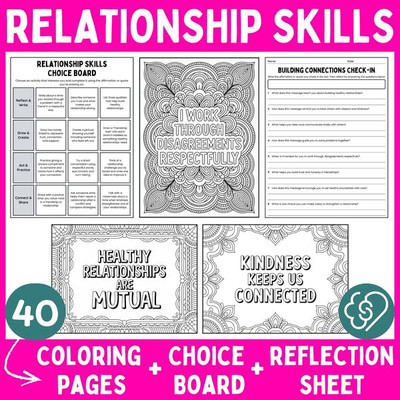
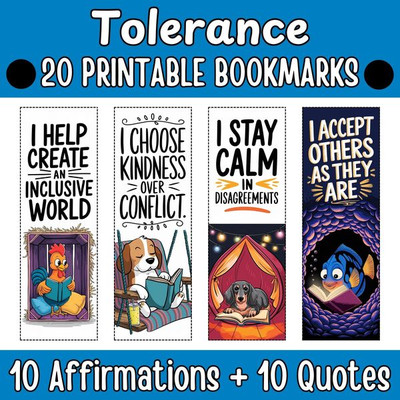
Relationship Skills resources for Grade 2, ready to use today.