
Problem-Solving Puzzles Activity Kit (K–2)
Solving a problem is a lot like doing a jigsaw: look at the pieces, try one and keep going.
This resource is in the full SEL Resource Library. See what’s included or start with 10 free resources. Have an account? Log in.
About this resource
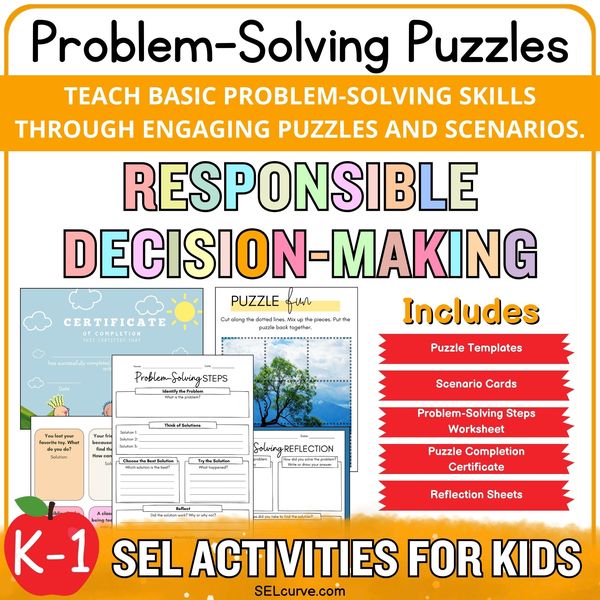
Solving a problem is a lot like doing a jigsaw: look at the pieces, try one and keep going. These problem-solving puzzles start with real puzzles and move to everyday problems like a lost book or a spilled drink, for kindergarten through second grade (Grades K–2). They build step-by-step thinking within Responsible Decision-Making, in SEL activities that make persistence something children feel in their hands.
What students practice
- Staying calm when stuck
- Trying different strategies
- Seeing that one problem can have many good solutions
- Following the steps to solve a problem
What’s inside
- A teacher script with timed steps, about 30 minutes, and a flexible outline
- Puzzle Templates: five cut-apart puzzles
- Scenario Cards: 16 problems, each with a space to write or draw a solution, in two layouts
- Problem-Solving Steps Worksheet with room for three possible solutions
- Puzzle Completion Certificate and a Problem-Solving Reflection Sheet; 27 pages
A look inside
- Teacher script: “Did anyone get stuck? What did you do to get unstuck?”
- Scenario cards: 16 everyday problems, such as forgetting your lunch at home or seeing a new student who looks lonely
- Problem-Solving Steps worksheet: “Identify the Problem”, “Think of Solutions”, “Choose the Best Solution”, “Try the Solution” and “Reflect”
How to use this problem-solving puzzles kit
- Compare problem solving to a puzzle and model a little struggle yourself
- Let each child work a simple puzzle, suggesting edge pieces first and praising effort over speed
- Hold up scenario cards, such as someone’s broken toy, and collect several ideas for each
- Close with a sharing circle on how they started, what they did when stuck and what real problem they solved
Grade fit
Kindergartners can stick to the puzzles and talk through the cards, while older students fill in the steps worksheet themselves. That range is why it covers Grades K–2.
Pairs well with
Next, try Story Solutions for read-aloud problems, or The Problem-Solving Puzzle for Grades 2–4, more problem solving activities.
Questions teachers ask
How long does the lesson take?
The script runs about 30 minutes.
Is it suitable for kindergarten?
Yes. Kindergartners can work the puzzles and talk through the cards, and older students can fill in the steps worksheet.
More for Responsible Decision‑Making
See all in the library →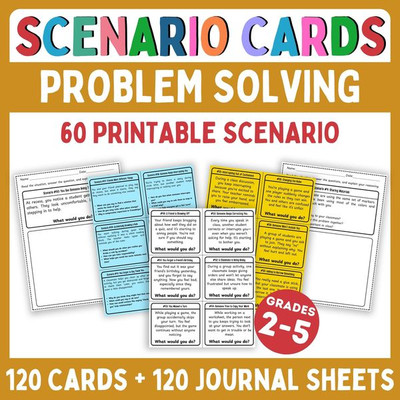
Every resource, one library.
572 SEL resources for elementary classrooms — printables, digital activities and answer sheets, and every new one we add.

