
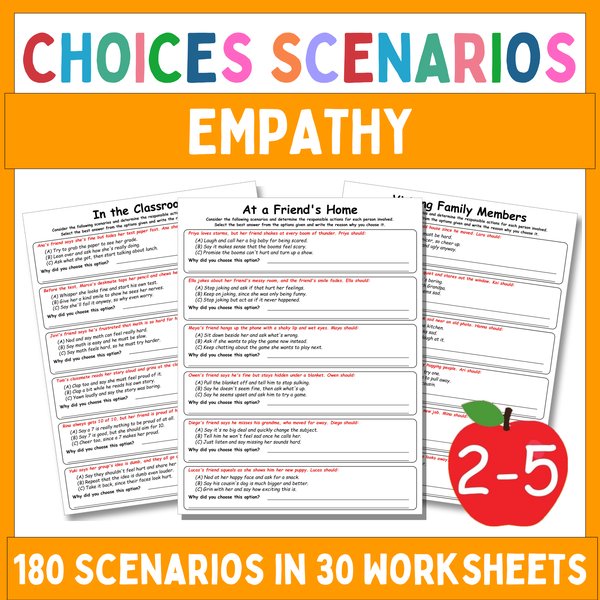
Empathy Worksheets — Multiple-Choice Scenarios
A shaky lip after a phone call. A sigh as Dad sits down to dinner. A friend who says “Nothing” and hides her phone.
This resource is in the full SEL Resource Library. See what’s included or start with 10 free resources. Have an account? Log in.
About this resource
A shaky lip after a phone call. A sigh as Dad sits down to dinner. A friend who says “Nothing” and hides her phone. These empathy worksheets ask Grades 2–5 to catch the clue first, then choose a response from A, B or C and write why. Across 180 scenarios, students build Social Awareness by noticing and sharing what someone else feels.
What students practice
- Reading feelings from faces, voices and actions
- Telling how someone feels when they don’t say it
- Sharing in someone’s happy news
- Understanding a feeling they wouldn’t have themselves
- Listening to a feeling without rushing to fix it
- Reading a face right after they speak or act
What’s inside
- 30 worksheets with six scenarios each, set in places like Pet Care, the grocery store and Public Libraries
- 180 multiple choice scenarios (A, B, C), every one with a “Why did you choose this option?” line
- 4 teacher pages, including a scenario discussion guide with a scoring note
- 35 pages
A look inside
- Visiting Family Members: “Hanna’s grandma smiles, but her eyes look sad near an old photo. Hanna should:” (A) Smile and ask for a snack from the kitchen. (B) Ask about the photo, since she looks sad. (C) Say the old photo looks weird and laugh at it.
- Community Parks: “Chen likes rainy days, but his sister is sad the rain ruined the picnic.”
- While Shopping: Ollie’s friend is sad that the toy he saved for is sold out, and one option is simply to “Say that’s so disappointing after saving.”
How to use these empathy worksheets
- Morning meeting: read Hanna’s scenario and ask the guide’s question about what clues showed the person’s feeling
- Small groups during SEL time: find the options that rush to fix a feeling, like buying another toy, and talk about why staying with the feeling comes first
- After teasing that hurt someone, use the On Walks page, where Pia’s turtle joke makes her friend’s face fall, to talk about reading a face right after you speak
- Independent reflection or early finishers
Grade fit
The feelings are easy to picture (a squeal over a first red strawberry, a little brother covering his ears in a loud store), and stems stay a sentence or two. Younger students can read the empathy scenarios together; older ones can write about the clue they noticed.
Digital version
The interactive digital version shares as one link: students pick A, B or C and type their reason, or just pick if you choose the choices-only format, on any device with no student logins. At the end they download an answer sheet to hand in.
Good to know
Per the scoring note, staying with a feeling beats rushing to fix it or change the subject, so expect a good debate about the advice-giving answers.
Pairs well with
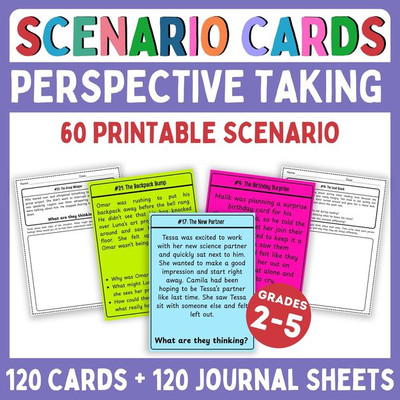
Keep building the skill with Empathy Scenario Cards or act it out with Empathy Role Play Scenarios.
Questions teachers ask
Why isn't giving advice the best answer?
Empathy here means noticing and sharing a feeling. The scoring note ranks staying with the feeling above rushing to fix it, so the best responses show the person they've been understood.
Is there an answer key?
No. The teacher pages include a scoring note and a discussion guide instead.
More for Social Awareness
See all in the library →


Every resource, one library.
572 SEL resources for elementary classrooms — printables, digital activities and answer sheets, and every new one we add.

