How to Teach Perspective Taking to Kids: 10 Games, a 4-Step Routine + Free Scenario Cards
Perspective taking is the skill of imagining how a moment looks and feels to someone else. Here's how to teach perspective taking in grades 2–5: a 4-step routine students can run on their own, 10 quick games and activities, and free scenario cards to practice with.
Perspective taking is the skill of stepping outside your own moment and asking, “How does this look to them?” It sounds simple, but it is one of the hardest social-emotional learning (SEL) skills for kids, because their own side always feels like the whole story. The good news: it can be taught, and the practice can be short. Below is how to teach perspective taking in grades 2–5: a 4-step routine students can learn to run on their own, 10 quick games and activities to practice it (most take 5 to 15 minutes), and free scenario cards to get started.
What is perspective taking for kids?
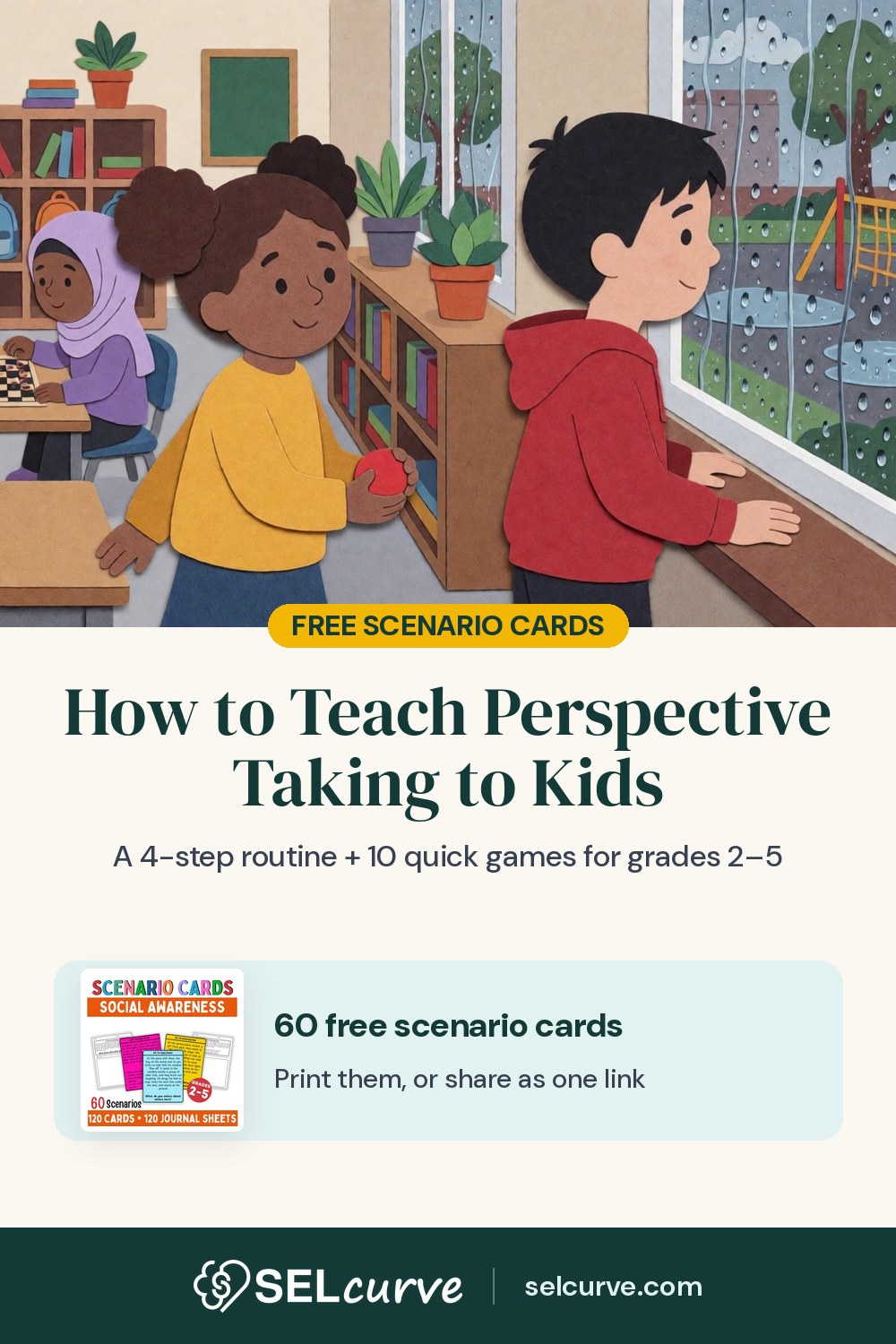
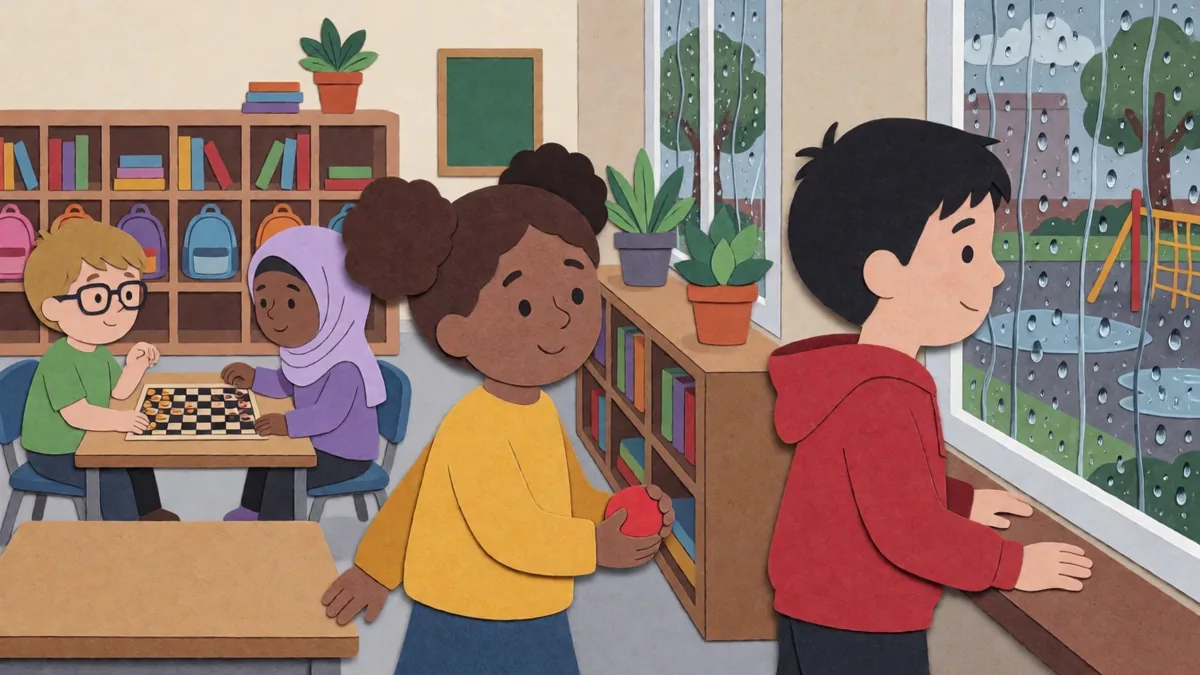
Perspective taking means imagining what another person sees, thinks and feels in the same situation. In kid-friendly words: “Same moment, different view.” When the indoor recess bell rings, one child cheers and grabs the checkers. Another, who runs laps every day, stands at the window bouncing one knee. Nothing is wrong with either reaction. They just see the same rainy day from different places.
Perspective taking is part of social awareness, one of the five CASEL competencies. It sits right next to empathy, but they are not quite the same:
- Perspective taking is the thinking part: “What might she be seeing and thinking right now?”
- Empathy is the feeling part: “How might that feel? I can understand that.”
Students usually need the first to get to the second. And neither one means agreeing. A student can understand why a classmate is upset and still disagree with what the classmate did. (For the feeling half, see how to teach empathy.)
Why perspective taking matters in grades 2–5
Most children begin to understand that other people can think differently from them around age 4 or 5. But knowing it and using it in a busy moment are different things. Through elementary school, students are still learning to slow down long enough to notice someone else’s side, especially when they’re excited, frustrated or in a hurry.
That’s why perspective taking shows up underneath so many classroom moments:
- Conflicts can cool down faster when each student can say what the other one might have been thinking.
- Friendships grow when students notice a friend’s quiet signals, not just their words.
- Group work goes better when students understand why a partner wants to do it differently.
- Reading uses it too: inferring a character’s thoughts is perspective taking on the page.
How to teach perspective taking in 4 steps
The most useful thing you can teach is a short routine students can run on their own when a real moment comes up. Teach the four steps with a scenario, model them out loud, then use the same four words in every game below:
- Notice. What is the other person doing? What clues do you see or hear? reading social cues
- Imagine. If you were standing where they are, what might you be thinking? perspective taking
- Check. It’s a guess, so ask: “Are you okay?” or “Did I get that right?” communication
- Respond. Choose one kind or helpful thing to say or do. kindness
Post the four words on the board and point to them during every scenario talk. Model a “think-aloud” first: “Notice: she scooted away and turned to the fence. Imagine: maybe she’s upset about something. Check: I could ask, ‘Are you okay?’ Respond: I’ll ask if she wants company, and give her space if she doesn’t.” After a few weeks, students start using the steps in real disagreements.
10 perspective-taking games and activities
Practice is where the skill grows. Each game lists how long it takes and the grades it suits. Mix quick daily ones (1, 2, 3) with deeper ones once a week (4 to 8).
1. Two-sides scenario talk
Read a short scenario aloud and ask one question: “How does this look to you, and how does it look to them?” Then ask why they might see it so differently, and what you could say or do. Scenario cards make this easy because the moment is already written. Takes 5 to 10 minutes, grades 2–5. The free social awareness scenario cards include six point-of-view scenarios, each with three guided questions.
2. Same event, two feelings
Give students one event and two people who feel differently about it: it starts to snow, and you cheer, but the bus driver frowns at the sky. Students explain both reactions in one sentence each: “I’m happy because… The driver might be worried because…” Do three in a row as a warm-up. Takes 5 minutes, grades 2–5.
3. Clue detectives
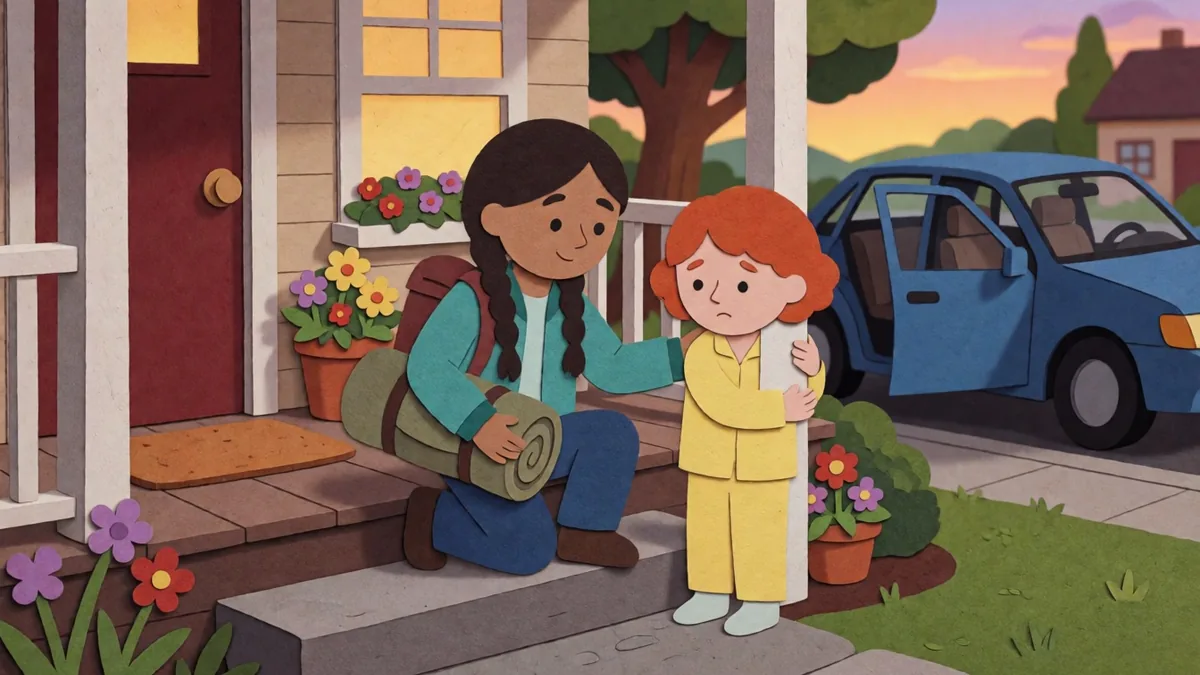
Perspective taking starts with noticing. Describe (or act out) a moment with body-language clues: you sit down next to your friend, and she scoots a few inches away and turns her face toward the fence. Ask: “What clues do you see? What might she be thinking? What’s one kind thing to do next?” Keep the answers as guesses, not facts: “Maybe she…” Takes 5 minutes, grades 2–5.
4. Walk-in-their-shoes role swap
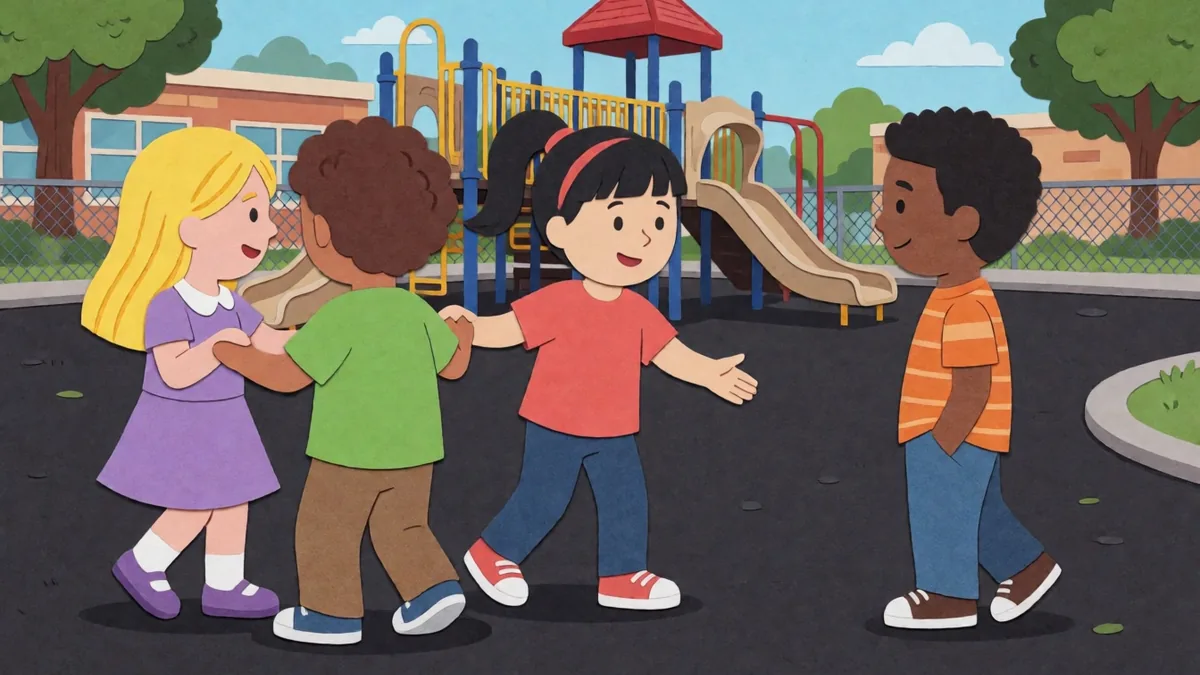
Two students act out a short scenario, then switch roles and play it again. Afterward, each says one thing they noticed from the other side. The switch is where the learning happens: students physically stand in the other person’s spot. Takes 10 to 15 minutes, grades 2–5. The Perspective Taking Role Play Scenarios give you ready-made scenes.
5. Point-of-view retell
After a read-aloud, ask students to retell one scene from a different character’s point of view: the dog, the substitute teacher, the little brother. What did that character notice? What did they want? This builds perspective taking and reading comprehension at the same time. Takes 15 minutes, grades 2–5 (younger students can retell aloud).
6. Thought-bubble pairs
Students draw two simple stick figures in the same moment, like two kids looking at the same rain-soaked field, and add a thought bubble for each. The rule: the bubbles must be different. Share a few and talk about why both thoughts make sense. Takes 10 minutes, grades 2–4.
7. “How old is this view?”
Some perspectives depend on age. Your little brother is upset because the moon keeps “following” the car. Your grandpa says kids today are always in a rush. Ask: “How might the world look to someone that age?” This helps older students be patient with younger siblings and curious about grandparents. Takes 5 to 10 minutes, grades 4–5.
8. Interview someone
Students ask a family member or school staff member one question about a place or event they both know: “What was recess like when you were my age?” or “What is the busiest part of your day here?” Back in class, students share one thing that surprised them. It turns perspective taking into real curiosity about real people. Takes one homework night plus 10 minutes of sharing, grades 3–5.
9. Perspective journal
After a scenario talk, students write for five minutes: “What do you notice about the other person here? Why might they feel that way? What could you do?” Writing slows thinking down, which is exactly what perspective taking needs. The free scenario cards come with two journal pages per scenario, one open-ended and one guided. Takes 5 to 10 minutes, grades 2–5.
10. Morning meeting question
Once a week, start the day with a perspective question: “What might our school look like to a kindergartner on the first day?” or “What does the lunch worker notice that we never see?” Everyone answers in one sentence. Small, regular practice like this adds up. Takes 5 minutes, any grade. The Perspective Taking Conversation Cards are full of questions like these.
A look inside the free perspective-taking scenarios
The free Social Awareness Scenario Cards cover ten areas of social awareness, with six scenarios each. One whole area is Seeing Things from Another Point of View. Here are three of its scenarios, with the guided questions:
What did you and the boy each do when you heard the news? What might this change mean to someone who was out? Now that you see his side, what could you say to him?
What is your friend doing while you set up checkers? Why could indoor recess look different to him than to you? Which idea could make the day work for both of you?
Which clues show this day means something else to your neighbor? Why would she see the new stage another way? What question could you ask her about the old bandstand?
Every scenario comes as an open-ended card (“What do you notice about others here?”) and a guided card with three questions, plus a matching journal page for each.


Quick practice: free perspective-taking task cards
For faster rounds, the free Social Awareness Task Cards are short, one-moment prompts. Ten of them (A6–A10 and B6–B10) focus on seeing things from another point of view. Two examples:
Each card has a matching reflection sheet, so a card can be a quick talk at morning meeting or a written answer at a center.
Use them on screens, too
Both free sets also work as digital activities. You share one link, choose the format (open-ended or guided scenarios, or task card Set A or B), and students answer on any device with no student logins. At the end, each student downloads an answer sheet to hand in. It’s an easy way to run a perspective-taking center or a sub-plan activity without printing.
Planning a whole unit? Browse all perspective-taking resources for grades 2–5 in the SELcurve library: scenario cards, task cards, reading passages, role plays and more.
Perspective-taking resources for your classroom
 Free Social Awareness Scenario Cards — Printable & DigitalGrades 2–6 · Print + digitalFREE
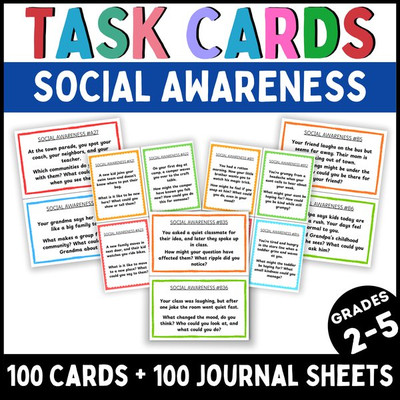 Free Social Awareness Task Cards — Printable & DigitalGrades 2–5 · Print + digitalFREE
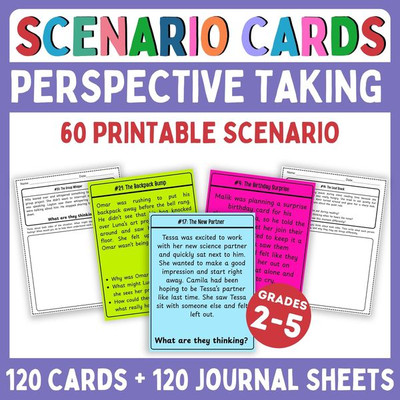 Perspective Taking Scenario Cards — Printable & DigitalGrades 2–6 · Print + digitalFULL LIBRARY
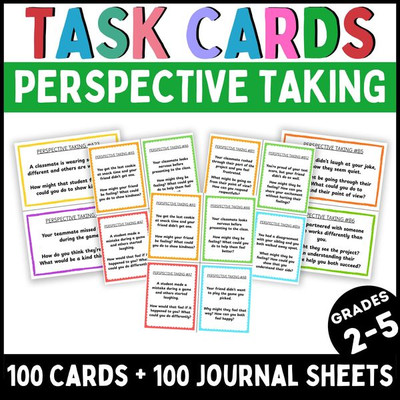 Perspective Taking Task Cards — Printable & DigitalGrades 2–5 · Print + digitalFULL LIBRARY
 Perspective Taking Role Play ScenariosGrades 2–5 · PrintFULL LIBRARY
 Walking in Someone Else’s Shoes — Perspective Taking KitGrades 1–3 · PrintFULL LIBRARY
See everything on the Perspective Taking resources page or browse all free SEL resources.
Frequently asked questions
How do you teach perspective taking to elementary students?
Use short, regular practice with real-life scenarios. Read a moment aloud, ask “How does this look to you, and to them?”, and walk through four steps: notice, imagine, check, respond. Role swaps, point-of-view retells and journal prompts add variety.
What is perspective taking for kids?
Perspective taking is imagining how a situation looks, sounds and feels to someone else. For kids, the simplest version is “same moment, different view”: two people can see the same event in different ways, and both views can make sense.
Is perspective taking the same as empathy?
They’re close partners. Perspective taking is understanding what someone else might be thinking; empathy is understanding how that feels. Students usually need perspective taking first. Neither one means agreeing with what the other person did.
What are some examples of perspective taking for kids?
Everyday moments work best: the snow day you love but the bus driver dreads, the indoor recess you cheer for while a friend who runs laps every day stares out the window, or the old bandstand your neighbor danced on at her wedding. In each one, the same event looks different from someone else’s side.
At what age do children develop perspective taking?
Children begin to understand that others can think differently around age 4 or 5, and the skill keeps developing through elementary school and beyond. Grades 2–5 are a great time to practice using it in real moments: conflicts, friendships and group work.
Are the perspective-taking scenario cards really free?
Yes. The Social Awareness Scenario Cards (60 scenarios with journal pages) and the Social Awareness Task Cards (100 cards with reflection sheets) are complete sets, free with a free SELcurve account. No card needed. Both include a digital version you can share as one link.
More SEL ideas