How to Teach Empathy to Kids: 10 Empathy Games, a 4-Step Routine + Free Scenario Cards
Empathy is the skill of noticing how someone else feels and showing you care. Here's how to teach empathy in grades 2–5: a 4-step routine students can use on their own, 10 quick empathy games and activities, and free scenario cards to practice with.
Empathy is the skill of noticing how someone else feels and letting them know you care. Kids aren’t born knowing how to do it well; they learn it, one small moment at a time. That makes it one of the most teachable parts of social-emotional learning (SEL). Below is how to teach empathy in grades 2–5: a 4-step routine students can learn to use on their own, 10 quick empathy games and activities to practice it (most take 5 to 15 minutes), and free scenario cards to get started.
What is empathy for kids?
In kid-friendly words, empathy means “I notice how you feel, and I care.” It has two parts:
- Understanding: reading the clues (a slumped back, a quiet voice, a face turned away) and naming the feeling underneath.
- Caring: doing something with that understanding, even something small, like sitting nearby or asking “Are you okay?”
Two things empathy is not, and kids need to hear both. Empathy is not agreeing: a student can understand why a classmate is angry and still think grabbing the ball was wrong. And empathy is not fixing: often the kindest response is simply “That sounds hard,” not a solution. When students know they don’t have to agree or fix everything, empathy feels a lot less risky.
Empathy has a thinking partner: perspective taking, or imagining how a moment looks from someone else’s side. If your students struggle to guess what others are thinking, start with how to teach perspective taking.
Why teach empathy in grades 2–5?
Empathy is part of social awareness, one of the five CASEL competencies, and grades 2–5 are a sweet spot for it. Students can read more feelings than they could in kindergarten, but they often miss the quiet ones: the classmate who laughs along but looks far away, or the friend who won’t go near the lake and won’t say why.
Teaching empathy on purpose pays off all over the classroom:
- Fewer hurt feelings turn into conflicts when students notice them early.
- Kinder groups: students who can read a teammate’s frustration adjust before it boils over.
- Stronger friendships: kids feel closer to friends who notice how they’re doing.
- Reading, too: naming a character’s feeling and its cause is a core comprehension skill.
How to teach empathy in 4 steps
Empathy can feel vague to kids (“be nice!”). A short routine makes it concrete. Teach these four steps with a scenario, model them out loud, then use the same four words in every game below:
- Look. What clues do you see or hear: face, body, voice, what just happened? reading social cues
- Name. What might they be feeling? Pick an exact word: disappointed, embarrassed, lonely, proud. feelings vocabulary
- Wonder. Why might they feel that way? There could be a reason you can’t see. understanding others
- Show. Do one small caring thing: ask, sit nearby, include, help, or just say “That sounds hard.” kindness
Post the four words where students can see them. Model a think-aloud first: “Look: he walked upstairs slowly without a word. Name: maybe disappointed. Wonder: he was waiting for a letter that didn’t come. Show: I could ask if he wants to shoot hoops.” After a few weeks, you’ll hear students using the words on their own.
10 empathy games for elementary students
Each game lists how long it takes and the grades it suits. Use the quick ones (1, 2, 3, 10) often and the longer ones once a week.
1. Body-clue charades
Whisper a short scenario to one student, who acts out only the body clues, with no words: shoulders slumped, eyes on the floor, feet dragging. The class names a feeling and the clue that gave it away: “Disappointed, because he’s dragging his feet.” Then read the scenario aloud and compare. Acting it out helps students notice clues they usually skip. Takes 5 to 10 minutes, grades 2–5. The free social awareness scenario cards include a whole area of six scenarios on reading social cues and body language.
2. Feeling word upgrade
Write a “plain” feeling on the board (sad, mad, happy) and race to upgrade it with more exact words: sad becomes disappointed, lonely, left out, homesick. Then pick a scenario and ask which upgraded word fits best. Exact words lead to better responses: “lonely” calls for company, “embarrassed” calls for privacy. Takes 5 minutes, grades 2–5.
3. The hidden-reason iceberg
Draw an iceberg. Above the water, write what everyone can see: “My cousin snapped at everyone at the beach.” Below the water, students brainstorm reasons nobody can see: she hardly slept, she misses a friend, she’s worried about something. The lesson: there’s almost always more under the surface, so wonder before you judge. Takes 10 minutes, grades 3–5.
4. What do I say? Caring-phrase practice
Many kids want to be kind but freeze because they don’t know what to say. Practice a few caring phrases until they’re automatic: “That sounds hard.” “Are you okay?” “Do you want to talk about it?” “I’d feel that way too.” Partners take turns reading a task card and answering with one of the phrases. Takes 5 to 10 minutes, grades 2–5.
5. Fact-and-feeling listening pairs
One partner talks for one minute about something that happened this week. The other only listens: no interrupting, no advice. Then the listener says back one fact and one feeling: “You went to your grandma’s, and it sounds like you felt happy and a little tired.” Switch. Students are often surprised how good it feels to be really heard. Takes 10 minutes, grades 3–5.
6. Pick the caring response
Make a class list of caring actions: ask, listen, sit nearby, invite, help, give space, tell a grown-up. For each scenario, students choose the response that fits best and explain why. This teaches that empathy isn’t one move; sometimes the kindest thing is giving someone a little space. Takes 10 minutes, grades 2–5.
7. Read-aloud feelings tracker
During a read-aloud, students track one character’s feelings on a simple timeline: beginning, middle, end. At each point they write the feeling and the clue from the text. It builds empathy and comprehension together, and it works with any book you’re already reading. Takes 15 minutes, grades 2–5.
8. Helper role play
One student plays someone having a hard moment (from a scenario card); the other practices responding using the four steps. Classmates watch for one thing: “What did the helper notice first?” Keep scenes short and low-stakes. Takes 10 to 15 minutes, grades 2–5. For younger students, the Role-Playing Emotional Responses kit (grades 1–3) gives you face cards, scenario cards and reflection sheets for this.
9. “I noticed” notes
Once a week, each student writes a short note to a classmate that starts with “I noticed…”: “I noticed you looked nervous before your presentation, and you did it anyway.” Collect and hand them out at the end of the day. It turns noticing into a habit, and everyone gets noticed at least once. Takes 10 minutes, grades 2–5.
10. Empathy exit ticket
Before students leave, hand each one a task card and its reflection sheet. They answer two questions in writing: “How might they feel, and why? What could you say or do?” It gives you a quick look at who is reading feelings well and who needs more practice. Takes 5 minutes, grades 2–5. The free social awareness task cards come with matching reflection sheets.
A look inside the free empathy scenarios
The free Social Awareness Scenario Cards cover ten areas of social awareness, with six scenarios each. The first area, Understanding How Others Feel, is pure empathy practice. Here are three of its scenarios, with the guided questions:
How does your brother move once he’s looked through the mail? Why might this pile of mail matter so much to him? What could you say or do when you see him like this?
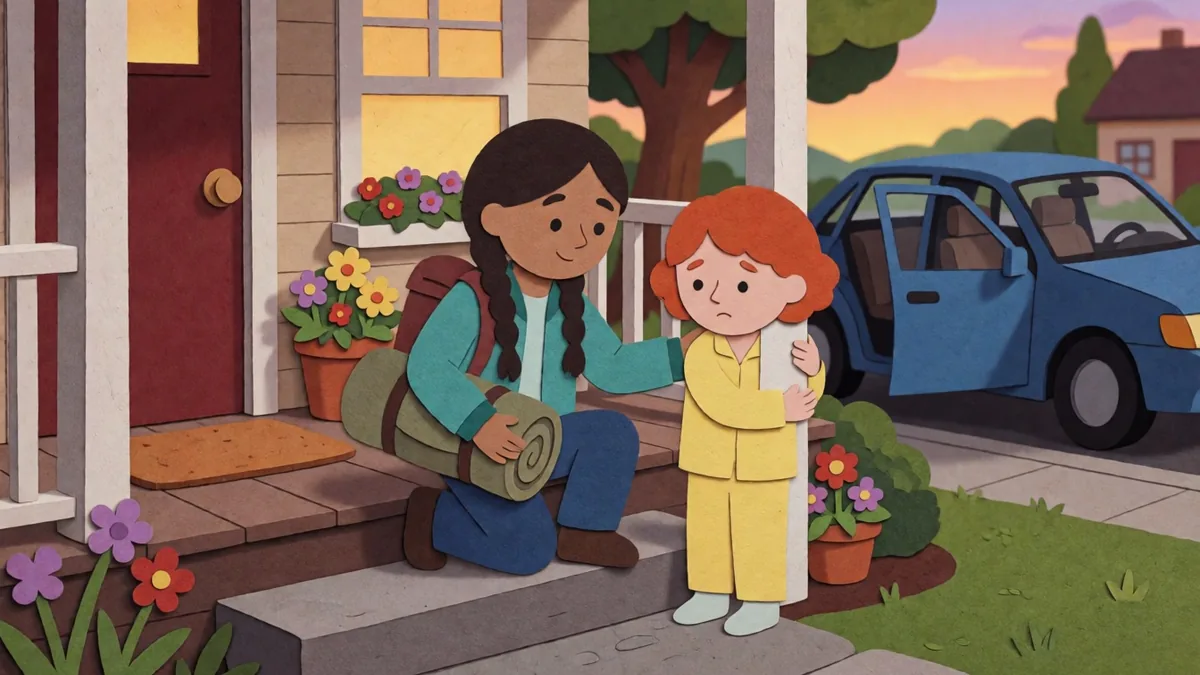
How does your sister act as you head to the car? Why could tonight be hard for her? Before the car pulls away, what could you do?
Which clues show how the boy is doing on the swing? Why could the laughing land so hard on him? What might you say or do from the next swing?
Every scenario comes as an open-ended card (“What do you notice about others here?”) and a guided card with three questions, plus a matching journal page for each.


Quick practice: free empathy task cards
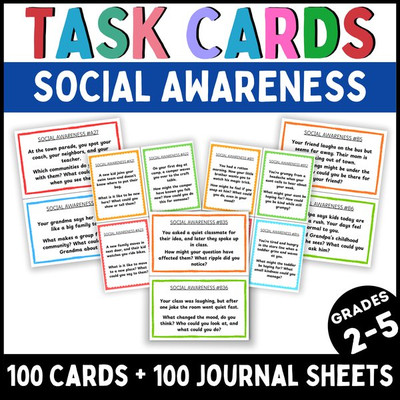
For faster rounds, the free Social Awareness Task Cards are short, one-moment prompts. Ten of them (A1–A5 and B1–B5) are about understanding how others feel. The grades 4–5 cards go a step further and ask about reasons you can’t see. Two examples:
Each card has a matching reflection sheet, so a card can be a quick talk at morning meeting or a written answer at a center.
Use them on screens, too
Both free sets also work as digital activities. You share one link, choose the format (open-ended or guided scenarios, or task card Set A or B), and students answer on any device with no student logins. At the end, each student downloads an answer sheet to hand in. It’s an easy way to run an empathy center or a sub-plan activity without printing.
Want more for this unit? Browse all empathy resources for grades 2–5 in the SELcurve library, or keep going with how to teach inclusion and belonging, empathy’s natural next step.
Empathy resources for your classroom
 Free Social Awareness Scenario Cards — Printable & DigitalGrades 2–6 · Print + digitalFREE
 Free Social Awareness Task Cards — Printable & DigitalGrades 2–5 · Print + digitalFREE
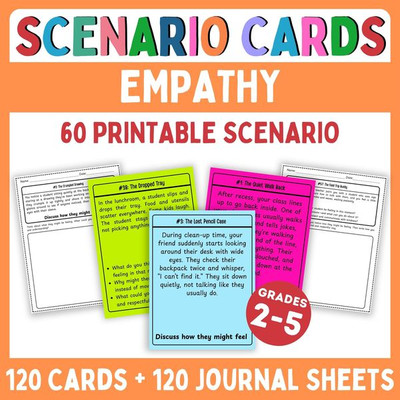 Empathy Scenario Cards — Printable & DigitalGrades 2–6 · Print + digitalFULL LIBRARY
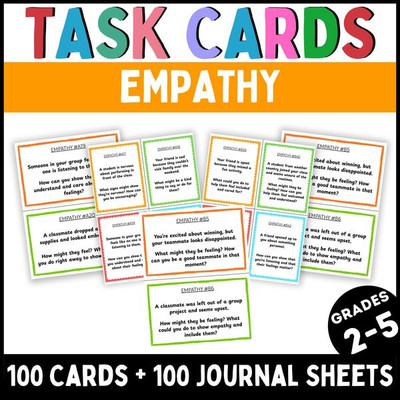 Empathy Task Cards — Printable & DigitalGrades 2–5 · Print + digitalFULL LIBRARY
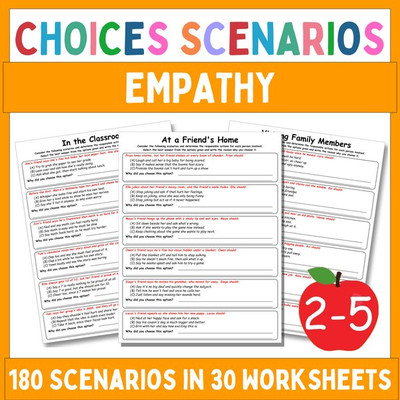 Empathy Worksheets — Multiple-Choice ScenariosGrades 2–5 · Print + digitalFULL LIBRARY
 Role-Playing Emotional Responses — Empathy Activity KitGrades 1–3 · PrintFULL LIBRARY
See everything on the Empathy resources page or browse all free SEL resources.
Frequently asked questions
How do you teach empathy in the classroom?
Teach a short routine and practice it often. Read a real-life scenario and walk through four steps: look for clues, name the feeling, wonder why, and show you care. Add quick games like body-clue charades, listening pairs and “I noticed” notes. A few minutes a day works better than one long lesson.
What is empathy for kids?
Empathy means noticing how someone else feels and caring about it. For kids: “I notice how you feel, and I care.” It includes understanding the feeling and doing something kind with that understanding.
Can empathy really be taught?
Yes. Children get better at reading feelings and responding kindly with practice, just like any other skill. Exact feeling words, regular scenario talks and simple sentence starters give students the tools to show empathy in real moments.
Does empathy mean agreeing with someone?
No. Empathy means understanding how someone feels, not agreeing with what they did or giving up your own feelings. A student can understand why a classmate is upset and still disagree with how the classmate acted.
Are the empathy scenario cards really free?
Yes. The Social Awareness Scenario Cards (60 scenarios with journal pages) and the Social Awareness Task Cards (100 cards with reflection sheets) are complete sets, free with a free SELcurve account. No card needed. Both include a digital version you can share as one link.
More SEL ideas