

Taking Responsibility Role Play Scenarios
A baseball cracks the kitchen window, and Dario’s first move is to blame his little brother.
This resource is in the full SEL Resource Library. See what’s included or start with 10 free resources. Have an account? Log in.
About this resource
A baseball cracks the kitchen window, and Dario’s first move is to blame his little brother. These taking responsibility role play scenarios walk Grades 2–5 through what comes next: owning up, clearing someone’s name, fixing the damage and accepting a fair consequence. Across twenty scenes at home, in class, on the field and at camp, the Responsibility-Taker models Responsible Decision-Making.
What students practice
- Owning up to mistakes
- Avoiding the blame game
- Fixing what you broke
- Doing jobs without reminders
- Accepting fair consequences calmly
What’s inside
- Twenty scripted scenes, from The Broken Window to Mr. Holt’s Tomato Plants, each with a cast, a setting and dialogue
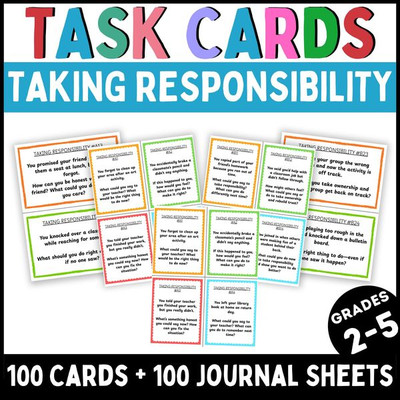
- 100 discussion cards (five per scene), including “Clearing Milo’s Name” and “Taking the Blame Off Ivo”
- A detailed teacher script, plus an outline for teachers who prefer their own words
- Objectives, materials (including an optional “Own It, Fix It, Follow Through” visual aid) and tips; 50 pages
A look inside
- The Recycling Job: a substitute is in, nobody calls out class jobs, and Mina checks the job chart and takes the paper bin out herself.
- The Missed Bus: Isaiah oversleeps and blames his sister Naomi for not waking him, until he owns that setting his alarm was his job.
- The Borrowed Bike: Callum rides Priyanka’s bike without asking, scratches it on gravel and offers to use his savings to pay for the repair.
- Other scenes include The Messy Cabin at summer camp and The Broken Trophy in a team locker room.
How to use these taking responsibility role play scenarios
- Open with the 5–7 minute discussion from the detailed script before anyone takes a role
- Run a scene in 10–15 minutes, then talk about how the character owned up and made things right
- Try the script’s twist: replay the scene with the character blaming someone else, and compare how the outcome changes
- Wrap up with 5–10 minutes of sharing and discussion, using that scene’s five cards
Grade fit
The slip-ups are kid-sized: a forgotten dog walk, grape juice spilled at a park picnic, a messy cabin that costs a clean-cabin point. Students can read the role play scripts aloud or swap in their own words, which keeps this SEL practice workable from Grade 2 through Grade 5.
Pairs well with
Looking for more taking responsibility activities? Try Taking Responsibility Scenario Cards or Owning Mistakes Stop Think Act Cards.
Questions teachers ask
Is there a visual aid to go with the scenes?
The materials list suggests an optional “Own It, Fix It, Follow Through” visual aid, along with the printed scripts and an optional timer to keep each role play short.
How much class time should I plan?
In the detailed script, the introduction takes 5–7 minutes, the role play 10–15 and the sharing and discussion 5–10.
More for Responsible Decision‑Making
See all in the library →

Every resource, one library.
572 SEL resources for elementary classrooms — printables, digital activities and answer sheets, and every new one we add.

