Brain Breaks for Third Graders: Quick Movement Games With a Growth Mindset Twist (Free)
Third grade is when "I'm just not good at this" starts to show up. These brain breaks for third graders get kids moving for a few minutes and teach a better answer: change the strategy, not just try harder.
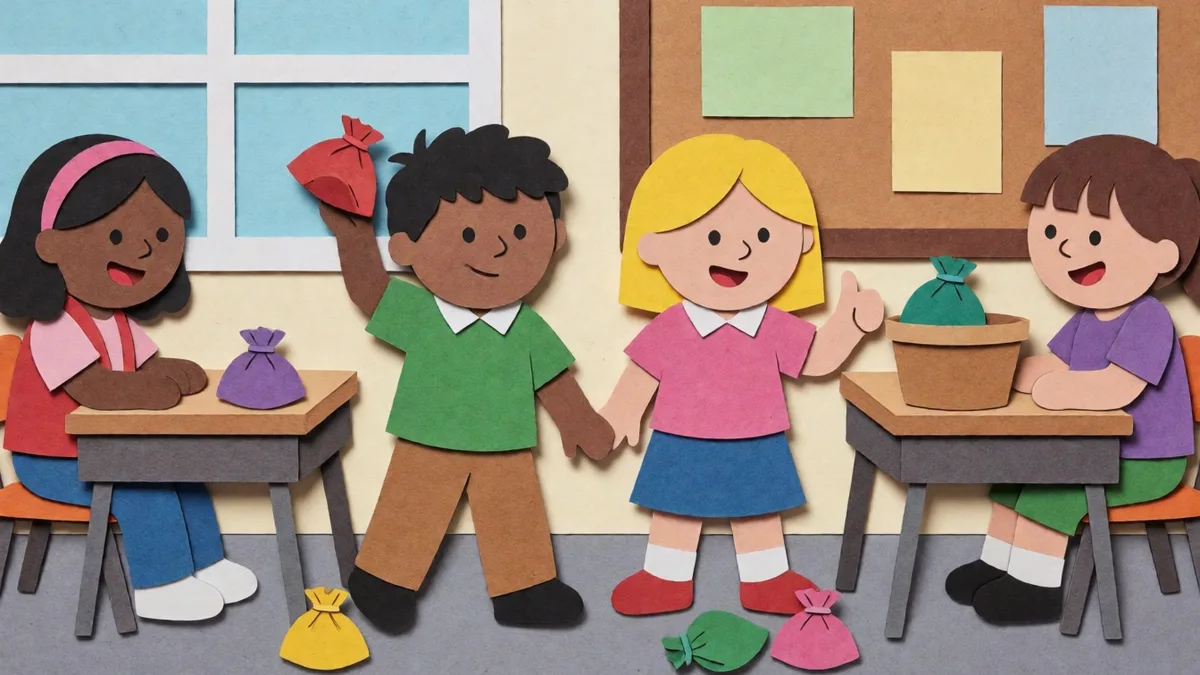
Third grade brings longer assignments, multi-step math and chapter books, and with them a new phrase: “I’m just not a math person.” Brain breaks for third graders can’t fix that on their own, but they can do two jobs at once: give restless bodies a few minutes to move, and practice a growth mindset idea that goes further than “try harder.” The idea is simple enough for an eight-year-old: when hard work isn’t working, change the strategy. Below are 8 brain breaks built around it, each 2 to 5 minutes, with a seated version. Breaks 1 to 4 are printable cards from a free social-emotional learning (SEL) game for grades 3–5.
Effort vs. strategy: the idea behind these breaks
“Keep trying” is good advice until a child tries the same thing ten times. Third graders are ready for a more useful message:
| When it’s not working… | Instead of… | Try… |
|---|---|---|
| Spelling words keep coming back wrong | Copying them five more times | Writing them a new way, or spelling them to a partner |
| A math problem won’t come out right | Starting over the same way | Drawing it, or putting each step in its own box |
| A group project keeps falling apart | “We’re bad at this” | Asking another group what they tried |
The brain breaks below make that switch physical, so children feel the difference one change can make.
8 brain breaks for third graders
1. Strategy Switch
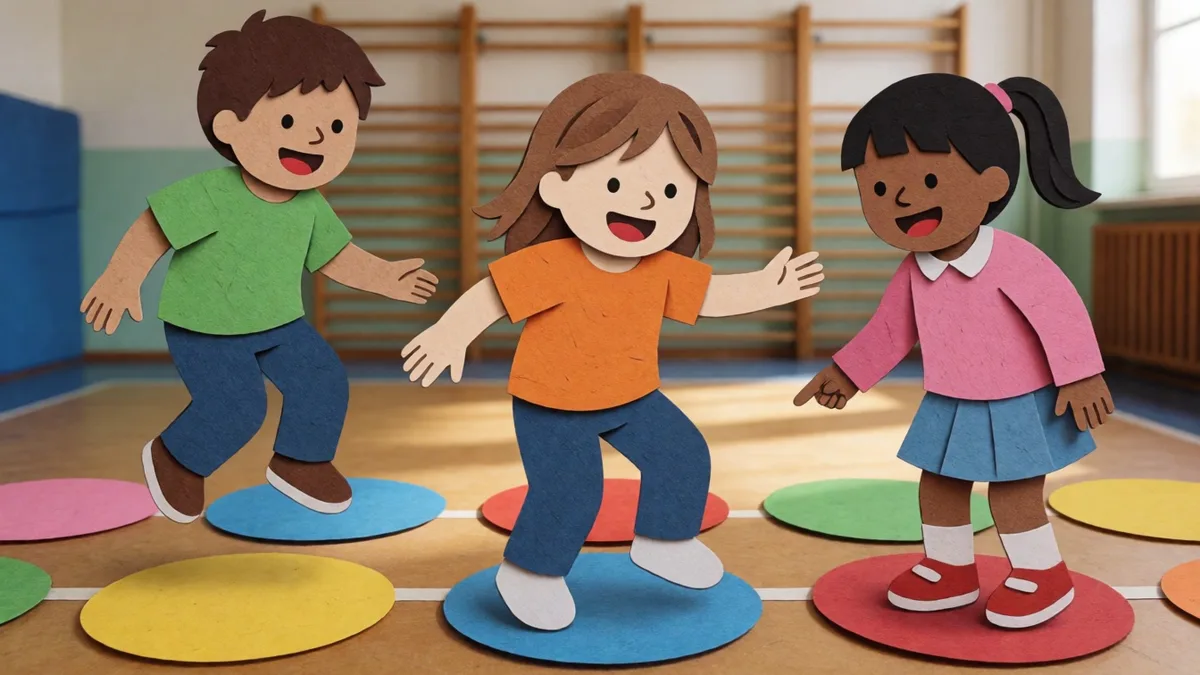
Everyone carries a pretend tray of cups and walks fast in place. “Spill!” Now switch one thing: walk slowly. Switch again: two hands, eyes on the cups. Ask, “Which change helped?” Same goal, new strategy. Takes 2 minutes. Medium energy. Seated: walk two fingers across the desk.
2. One Change
Partners sit facing each other. Partner A names a problem (comic panels run out of room, or a kite keeps diving). Partner B suggests one change, like “Sketch the boxes first.” A says, “I’ll try that next.” Switch. Takes 2 to 3 minutes. Calm.
3. True or False Walk
Label two sides of the room TRUE and FALSE. Read a statement and let students walk to a side: “Some people are math people, and some people just aren’t.” Then share the answer. False: math skills grow with practice, strategies and help, like any skill. Try a second one: “Two students practice the same amount. Different strategies give them different results.” (True.) Takes 3 minutes. Medium energy. Seated: thumbs up or down.
4. Pick Your Fix
Hang four corner signs and read a stuck moment: “You practice spelling the same way daily and still miss three words. What would you change?” Write them differently, spell them to a partner, practice only those three, or ask how others study. Two corners change the strategy; two bring in other people. Both work. Takes 3 minutes. Lively.
5. Paper Ball Toss
Each student crumples a scrap of paper and tries to toss it into a bin from a line. Miss? Before the second throw, they must change one thing: distance, arm, overhand or underhand. Count how many improved after one change. Takes 3 minutes. Lively. Seated version: toss into a cup on your own desk.
6. Balance Challenge
Stand on one foot for 15 seconds. Wobbly? Try a strategy: eyes on one spot, arms out, or a slower breath. Try again and notice the difference. Takes 2 minutes. Calm. Seated: lift one foot and balance a pencil on your palm instead.
7. “Yet” Stretch
Students reach up high and say something they can’t do yet (“I can’t do cartwheels…”), then reach down and finish it: “…yet.” Then they name one strategy that might help (“practice on the grass with a friend spotting”). Takes 1 to 2 minutes. Calm.
8. Strategy Charades
One student acts out a strategy without words: drawing a picture, asking for help, checking work, taking a break. The class guesses it. Keep a list on the board of every strategy guessed; it becomes a class “when I’m stuck” menu. Takes 3 to 4 minutes. Medium energy.
Inside the free “change the strategy” round
Breaks 1 to 4 come from Round 3 of the free Self-Awareness Brain Breaks for grades 3–5, called “Change the strategy.” Its goal: students can explain why effort alone isn’t always enough, and name one strategy to change. Use all 10 cards as a 15- to 20-minute lesson, or one card as a reset between math problems. Three of them:
Teacher says: That happens to everyone who learns. Hold onto that moment for this round.
Teacher says: A trick like that is a strategy: a way of doing something.
Teacher says: When effort stalls, a new strategy is often what’s missing.
The rest of the free game covers exact feeling words, strengths with evidence, coaching yourself and looking back, plus a final round that uses every tool. A tools poster, movement cards, room signs and 24 open practice cards come with it.


More free self-awareness resources
 Free Self-Awareness Worksheets — Multiple-Choice ScenariosGrades 2–5 · Print + digitalFREE
 Free Self-Awareness Scenario Cards — Printable & DigitalGrades 2–6 · Print + digitalFREE
 Free Self-Awareness Reading Comprehension Passages — Grade 3Grade 3 · Print + digitalFREE
Browse all free SEL resources.
Frequently asked questions
How long should a brain break be in third grade?
Two to five minutes is enough for a reset. A full round of the free game takes 15 to 20 minutes, so it works best as an SEL lesson; single cards work as quick breaks.
How do you teach growth mindset to third graders?
Go one step past “try harder.” Teach students that when effort stalls, they can change one thing about how they’re doing it, then check if it helped. Short games make that idea concrete.
Are brain breaks a waste of teaching time?
A few minutes of movement helps students settle back into work, and when the break practices a skill like changing the strategy, those minutes teach something too.
What if older students think brain breaks are babyish?
Hand them the job. After a round, let student leaders read the cards and pick the movement, and offer the seated versions. Ownership beats “too old to move.”
Is the growth mindset game only about effort?
No. Round 3 teaches that when effort isn’t working, you change the strategy. Other rounds in the free set cover feeling words, strengths, self-talk and looking back: 60 cards in all.
More SEL ideas