Brain Breaks for 5th Graders That Aren’t Babyish (Free Kindness Movement Game)
Fifth graders will roll their eyes at a dance video, but they'll play a game that treats them like the oldest kids in the school. These brain breaks for fifth graders are quick, a little challenging, and practice real kindness, with a free printable movement game.
Fifth graders are the oldest kids in most elementary schools, and they know it. Put on a cartoon dance video and half the class will sit it out. But they still need to move during a long day, maybe more than ever, as lessons get longer and harder. The trick with brain breaks for fifth graders is to make them feel grown-up: real situations, real choices, and a little challenge. The 8 below take 1 to 5 minutes, have seated versions, and practice a skill older students care about: noticing who needs kindness, and asking first before jumping in. Our free printable social-emotional learning (SEL) game supplies the first five.
What makes a brain break feel “not babyish”
- Real situations, not cartoons. A quiet new kid at the lunch table beats a dancing banana.
- Choices with no single right answer. Fifth graders like to argue a point. Let them.
- Student leaders. Once students know a game, let them read the cards and pick the movement.
- A seated option, always. Too cool to move? Show it with your hands. Everyone still takes part.
- A reason. “This helps your brain switch gears” lands better than “time for a brain break!”
8 brain breaks for fifth graders
1. Scan the Room
Students walk slowly, sweeping one arm like a lighthouse beam. You read a clue at a time (“can’t reach a shelf,” “tripped, holding an ankle,” “a chair is missing”), and everyone freezes and chooses: hand out to ask if they can help, point to the door to get an adult, or step back to give space. The point: different moments need different help. Takes 2 to 3 minutes. Medium energy. Seated: sweep the arm from your chair.
2. Slow-Motion Kindness
Students pick a small kind act (holding a heavy door, offering a pencil) and act it out with their arms in slow motion, hold it for three counts, and lower their arms. Slow motion shows each part of helping, and it’s calming. Takes 1 minute. Calm. Already seated-friendly.
3. True or False: Helping
Label two sides TRUE and FALSE and read: “Showing a stuck classmate the answer is a way of helping.” Students walk to a side. Most pick true; the answer is false, because it does the thinking for them. Ask first: “Want a hint, or want to keep trying?” Takes 2 minutes. Medium energy. Seated: thumbs up or down.
4. Quiet Kindness Vote
Same two sides: “Quiet kindness that no one sees counts as much as kindness a crowd sees.” (True: the person still got help.) This one sparks good discussion about doing kind things for the right reasons. Takes 2 minutes. Medium energy.
5. Four Corners: The Lunch Table
Hang four corner signs and read: “A student you don’t know sits at the end of your lunch table, quiet. What could you do?” Say hi and your name, slide your tray to make room, pull them into the table talk, or smile and let them be. Students walk to a corner. Talk about it: quiet can mean shy, or it can mean “I like quiet.” Takes 3 minutes. Lively.
6. Compliment Relay
Teams line up. The first student walks to the board, writes one specific compliment for the class (“We cleaned up fast after the experiment”), walks back and tags the next. Specific beats general: “You’re nice” doesn’t count. Takes 3 to 4 minutes. Medium energy.
7. Stand Up If… (Kindness Edition)
Read prompts, and students stand if they’re true: “Stand up if someone helped you this week without being asked.” “Stand up if you’ve ever been the new kid.” Look around together. It builds belonging fast without anyone having to speak. Takes 1 to 2 minutes. Medium energy. Seated: raise a hand.
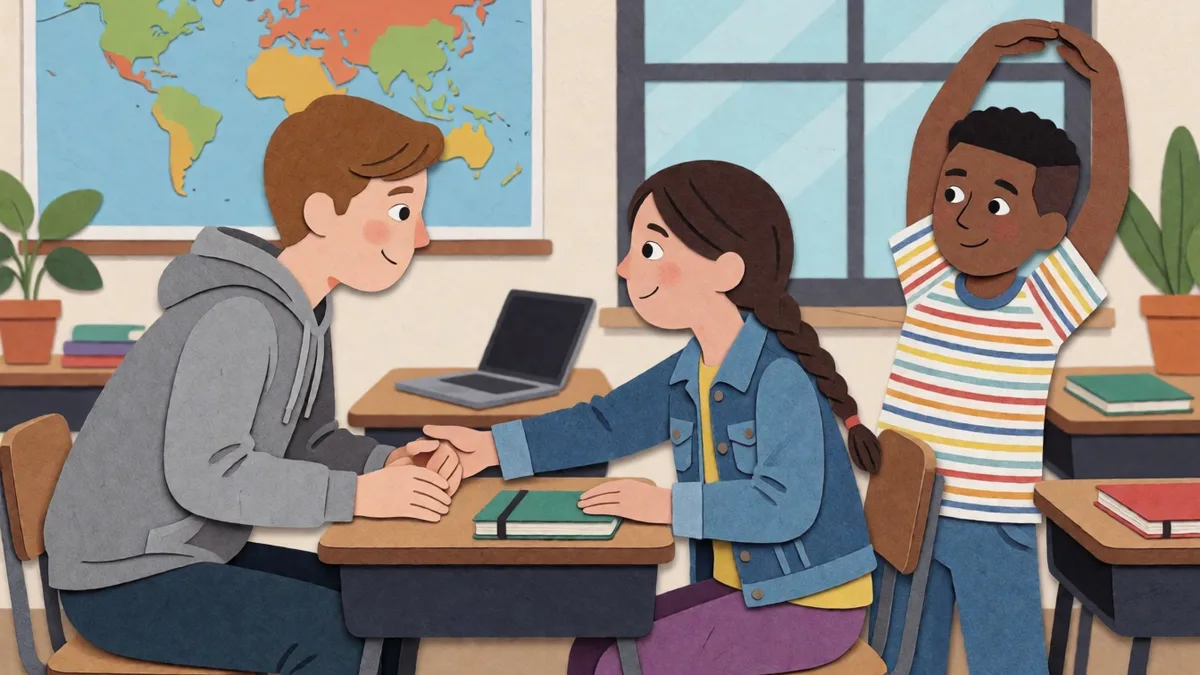
8. Stretch and Thanks
A slow standing stretch. On each reach, students silently think of one person who helped them recently and what exactly they did. On the last stretch, they turn toward that person’s seat (or the door, if it’s someone outside the room). Takes 2 minutes. Calm.
Getting ready for middle school
Fifth grade is the last year many students have one main teacher. Next year, they’ll move between classes, sit with new people at lunch, and work in groups with kids they barely know. The skills in these brain breaks (reading a room, asking before helping, making space for someone new) are the same ones that make that move easier. Brain breaks for middle schoolers use the same ideas with harder situations, so these games are good practice for what’s next.
Inside the free kindness round
Breaks 1 to 5 come from Round 2 of the free Social Awareness Brain Breaks for grades 3–5, called “Kindness: Noticing who needs it.” By the end of the round, students spot who needs kindness and ask first. Ten cards make a 15- to 20-minute lesson, but fifth graders often ask for one card at a time between subjects. Three of them:
Teacher says: Noticing comes first. Kindness starts when you spot what someone needs and decide to act.
Teacher says: Lots of people do. That’s why kind helpers ask first.
The rest of the free game covers reading a situation, specific thanks, other points of view and choosing the fair way, plus a final round set around the school. You also get 24 open cards for situations from your own school.


More free social awareness resources
 Free Social Awareness Conversation Cards — Morning Meeting QuestionsGrades 2–8 · Print + digitalFREE
 Free Social Awareness Reading Comprehension Passages — Grade 5Grade 5 · Print + digitalFREE
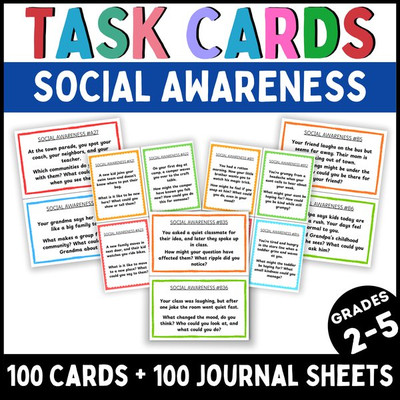 Free Social Awareness Task Cards — Printable & DigitalGrades 2–5 · Print + digitalFREE
Browse all free SEL resources.
Frequently asked questions
Do fifth graders still need brain breaks?
Yes. Longer lessons and harder work make short movement breaks just as useful in fifth grade as in the younger grades. The difference is the style: real situations, choices and a seated option work better than cartoon videos.
How do I get 5th graders to join in?
Explain why you’re doing it, keep it short, offer a seated version, and hand the cards to student leaders once they know the game.
How long should a brain break be for 5th grade?
One to five minutes. A full round of the kindness game takes 15 to 20 minutes, so use it as an SEL lesson and pull single cards for quick breaks.
Can brain breaks work for middle school too?
Yes, with older situations and more student choice. The same ideas, noticing what someone needs and asking first, carry straight into middle school.
Will fifth graders think a movement game is too young for them?
Real school situations and a choice on every card help it feel grown-up. Let students read the cards and lead once they know the game. The free set has 60 game cards, so it lasts the year.
More SEL ideas