Social Awareness Examples for Kids: 15 Everyday Moments to Notice
Social awareness sounds abstract until you see it: a kid who notices why a classmate is bossy, or who quietly covers a rip in someone's pants. Here are everyday examples to share with students, a simple routine, and three role plays to act out.
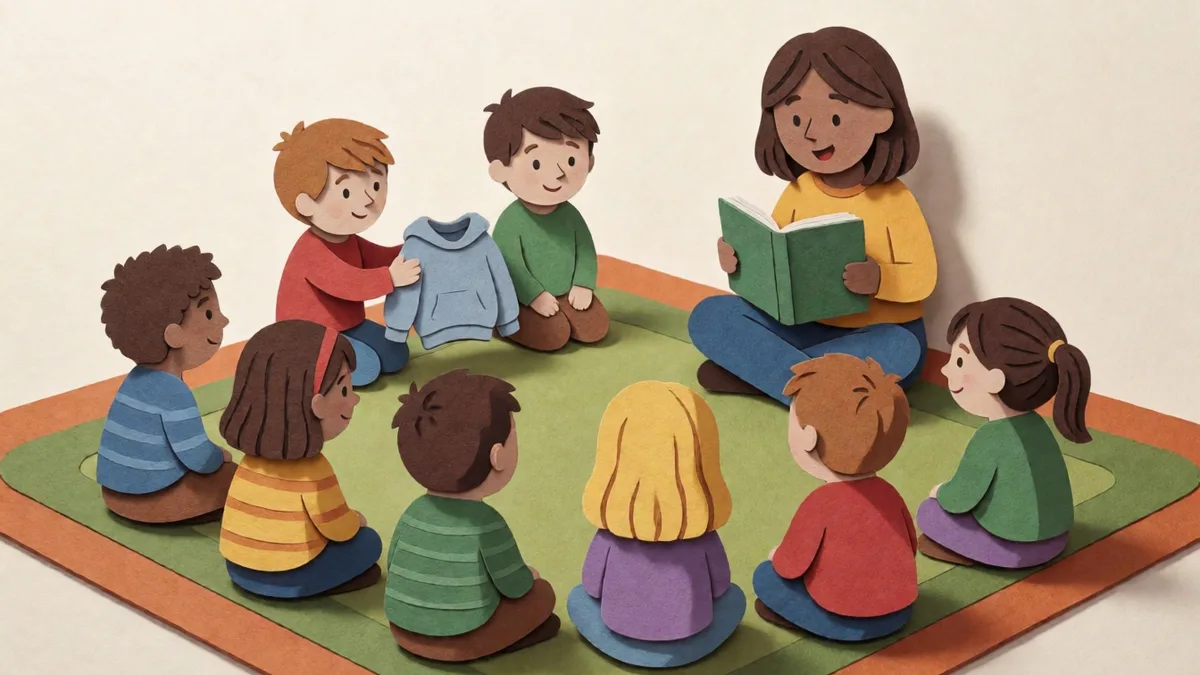
Social awareness is easy to name and hard to picture. It shows up in small moments: the kid who wonders why a classmate is suddenly bossy, the friend who argues the other side of a question just to understand it, the student who quietly hands over a sweatshirt. The social awareness examples below give students those pictures. Share a few at morning meeting, act some out, and then ask students to spot their own examples during the week.
What is social awareness?
Social awareness is noticing and understanding other people: how they feel, how things look from where they stand, and what they might need. For kids, it comes down to three questions: What do I notice? What might be going on for them? What could I do?
15 social awareness examples for students
Noticing how someone feels
- A classmate keeps correcting how you water the plants she used to care for, and you realize she’s sad to give them up.
- A friend goes quiet after losing a game, so you ask if they want to play something else.
- Your little brother slams a door, and you wonder what happened before you get mad.
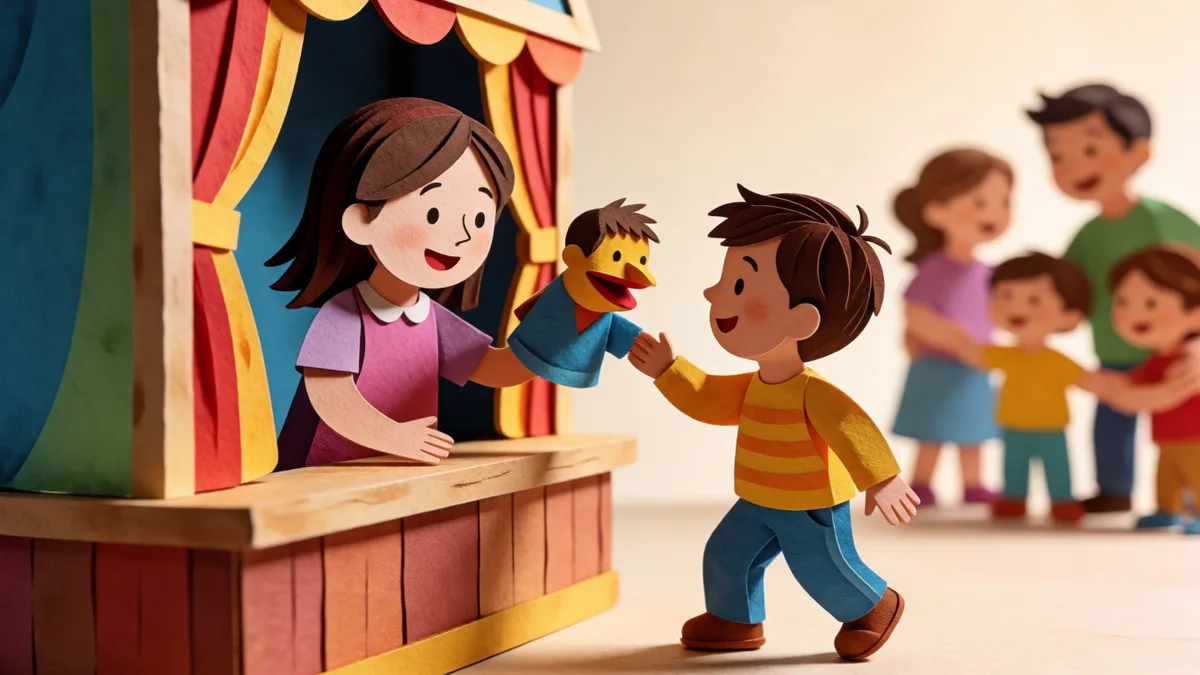
- A new student stands near the wall at recess, and you notice no one has asked them to play.
- Your teacher’s voice sounds tired, so you hand in your work without being reminded.
Seeing it from the other side
- You think being the oldest is hardest, then picture what your younger sister sees: a later bedtime and walking to school with the big kids.
- Your partner wants a different project idea, so you ask what they like about theirs before arguing.
- A friend is upset you sat with someone else, and you think about how lunch looked from their seat.
- You pick a birthday gift by what your friend loves, not what you’d want.
- The lunch helper says “hurry up,” and you notice how many kids are still in line.
Responding with kindness
- A classmate’s pants rip at recess, and you lend your sweatshirt without saying a word to the room.
- Someone drops their books in the hall, and you help pick them up.
- A classmate is laughed at for a wrong answer, and you say, “I thought that too.”
- Your grandpa is slow on the stairs, so you walk beside him instead of running ahead.
- A friend is nervous about a test, so you remind them about the spelling game you practiced together.
Notice, wonder, respond: a routine for any example
Turn any of these moments into a two-minute discussion:
- Notice. What can you see or hear? Faces, voices, hands, who is near whom. observing
- Wonder. What might the other person be feeling or thinking? Give two possible answers, not one. perspective
- Respond. What is one thing you could say or do that fits what you noticed? Small and quiet usually works best. kindness
Three social awareness role plays to act out
Acting out a moment lets students feel both sides of it. The scenes below, borrowed from a free social awareness set, match one step of the routine each.
| Scene | What the character notices | What they do |
|---|---|---|
| 1. The Bean Plant Handoff | Itunu keeps telling Jibola how to water the bean plants she planted in September. | He sees the sad feeling behind the bossing and asks which bean sprouted first. |
| 3. The Other Side Card | Lwazi, the oldest of three, draws the card “Oldest is better.” | He looks at his family through his little sister’s eyes and finds real reasons. |
| 5. The Split Seam | Ilkay comes in from recess red-faced, holding a rip in his pants. | Kostas quietly lends his sweatshirt and walks with him to ask about the nurse. |
Each scene is followed by five discussion cards. These three ask students to connect the scene to their own lives:
Inside the free social awareness role plays
The free Social Awareness Role Play Scenarios bring together twenty classroom-ready scenes for grades 2–5, from a star book chosen for a sky-loving aunt and three different club bracelets to a buried fire hydrant. Every scene comes with characters, a setting and full lines, then five discussion cards on the facing page. You also get a detailed script, a quick lesson outline and tips for acting scenes out safely.


Looking beyond social awareness? The free SEL printables cover every competency.
More free social awareness resources
 Free Social Awareness Conversation Cards — Morning Meeting QuestionsGrades 2–8 · Print + digitalFREE
 Free Social Awareness Reading Comprehension Passages — Grade 5Grade 5 · Print + digitalFREE
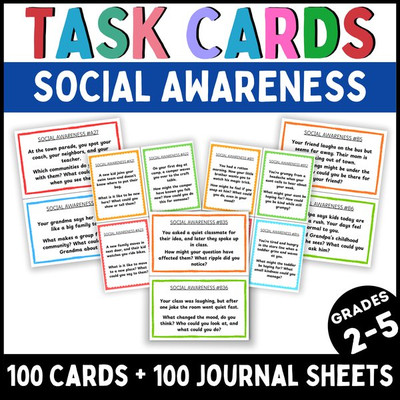 Free Social Awareness Task Cards — Printable & DigitalGrades 2–5 · Print + digitalFREE
Browse all free SEL resources.
Frequently asked questions
What are examples of social awareness?
Noticing a friend has gone quiet and asking if they’re okay, picturing how a situation looks to a younger sibling, and quietly helping a classmate who is embarrassed are all everyday examples.
How do you teach social awareness to elementary students?
Use a simple routine: notice what you see and hear, wonder about two things the other person might be feeling, then choose one small way to respond. Short role plays let students practice both sides.
Is social awareness the same as empathy?
Empathy, understanding how someone feels, is one part of it. Social awareness also includes seeing other points of view, showing kindness and noticing what people around you need.
Do I have to pay for the social awareness scripts?
No payment needed. Print all twenty scenes and their cards, plus the teacher guide, for your classroom.
More SEL ideas