Full library·Grades 2–5·Self-Awareness·Task Cards · Stop Think Act Cards
Self-Reflection Stop Think Act Cards
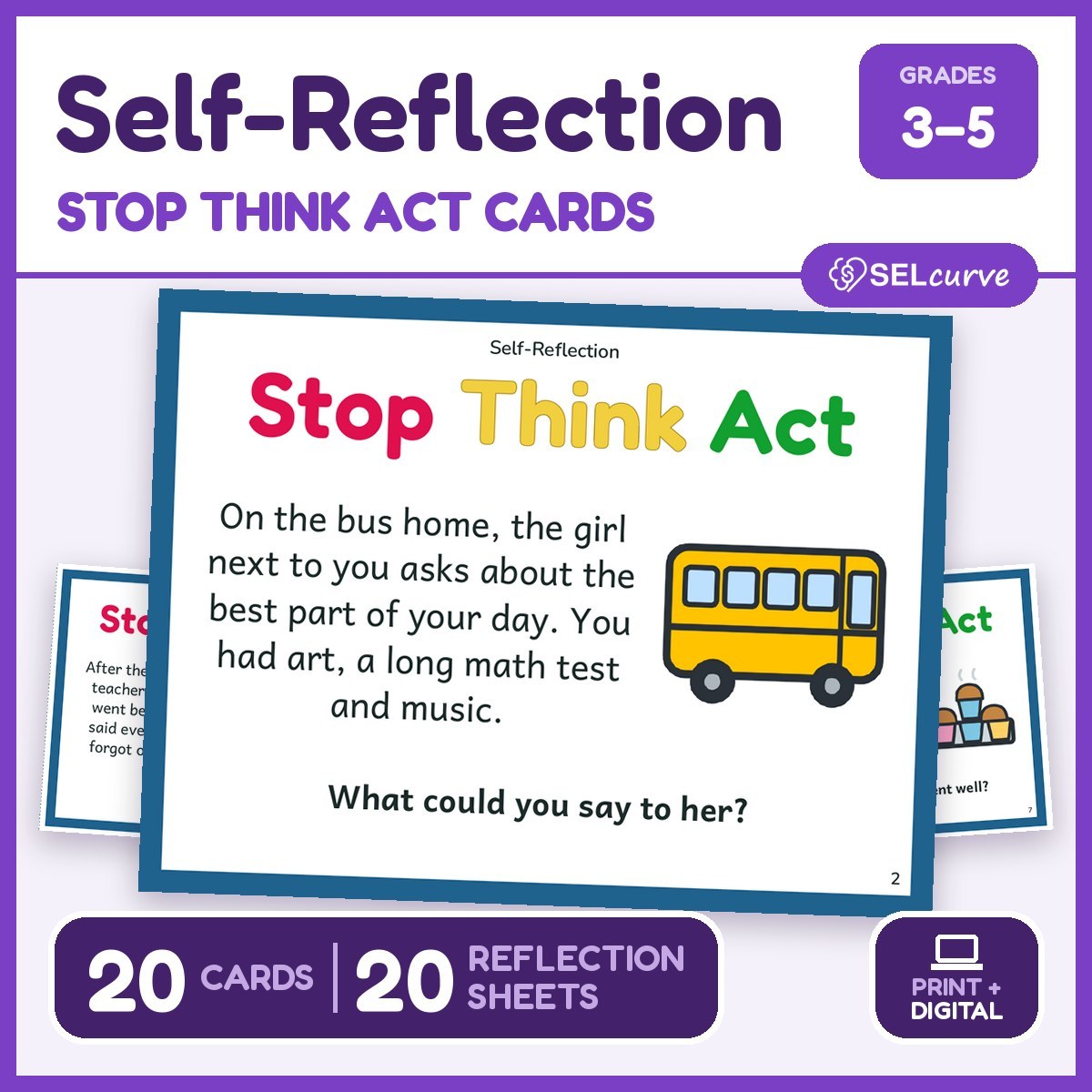
Grandpa hands you the first muffin you baked together, a sand castle tower stands at last after falling down twice, at bedtime you remember you were late because you couldn’t find your shoes: the 20 self-reflection stop think act cards catc…
- 20 Stop Think Act cards
- 20 reflection sheets
- Print + digital
In the full library, with 29 more on Self-Reflection
Scenario cards, worksheets, role play and more (grades K–12).
Get the free Self-Awareness Task CardsFree account · school email works · See the full library
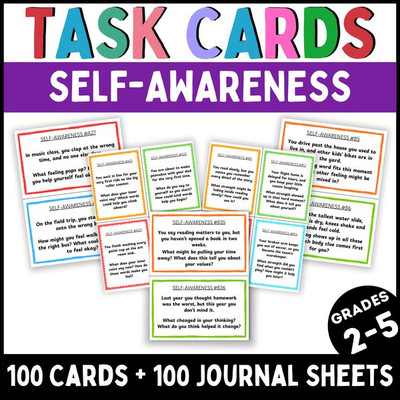
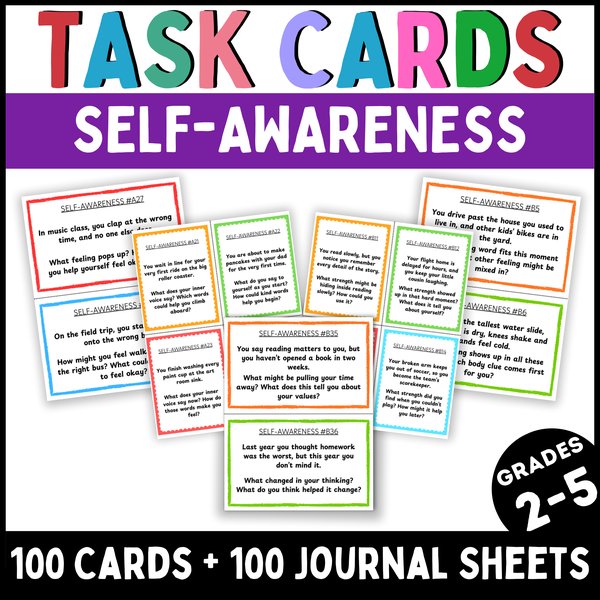 Same format, free with a free account: Self-Awareness Task CardsOpen it →
- Grades
- 2–5
- What you get
- 20 Stop Think Act cards
- Type
- Task Cards
- Use it
- Print + digitaldigital = any device, no student logins
- Competency
- Self-Awareness
- Topic
- Self-Reflection
About this resource
Grandpa hands you the first muffin you baked together, a sand castle tower stands at last after falling down twice, at bedtime you remember you were late because you couldn’t find your shoes: the 20 self-reflection stop think act cards catch Grades 3–5 at the end of a day, a game, a project or a visit. Students look back at what went well and what was hard, think about how their actions affected others, and make one small plan. It is a Self-Awareness resource. Find more in our self-reflection activities.
What students practice
- Thinking back over the day
- Noticing what went well and what was hard
- Seeing how their actions affected others
- Planning what to do differently
What’s inside these think before you act self-reflection cards
- Two formats: full-page cards for whole-class talks and display, and 4-per-page cards to cut for small groups, partner talks and stations
- A 4-page teacher guide with classroom uses, tips such as keeping reflection free of blame, a step-by-step guide and differentiation, plus Cards at a Glance and a printing guide
- A Family Connection page with a weekly glow and grow, and a digital activity for any device with no student logins
A look inside
Card 5: “After the class play, your teacher asks what part went best for you. You said every line, but you forgot one dance step.”
Card 14: after soccer at recess, you realize you did not pass the ball once, and Leo looked sad on the way in. Students answer: “What could you say to Leo?”
How to lead a looking-back talk with these cards
- Read the card: read it aloud and ask students to imagine they are there.
- Look back: what happened, and what went well or was hard? How did your actions affect others, and what could you plan?
- Talk it through: brainstorm two or three things to say or plan, choose the one that helps most, and act out a short looking-back talk with a partner asking the questions.
- Reflect: students finish on the reflection sheet, or you post the digital activity in Google Classroom or Teams, or show a QR code, so they answer on any device and send you their answer sheet.
Grade fit
Grades 3–5 are ready to look back on a spelling game, a science experiment or a group project and name one thing to change. Younger students use starters like “Today went well when…” and work through a card together first; older students explain how one choice they made affected someone else. Mixed-ability pairs can ask each other the three routine questions.
Printing
- Full-page cards: single-sided cardstock or plain paper; use them for the whole class, a display or one card per group.
- 4-per-page cards: cardstock or plain paper, single-sided; cut along the dashed lines, and laminate to reuse.
- Reflection sheets: plain paper, single-sided, one per student after the card.
- Black-and-white printing works fine for every card.
Good to know
Reflection stays about learning, not about who was wrong. Students may always pass, the talk is about situations rather than people, and sharing something they noticed about their own day is invited only if they want to.
Questions teachers ask
What three questions do students learn to ask?
“What went well? What was hard? What will I try?” The guide suggests posting them near your classroom door for the end of each day.
What grades are these self-reflection stop think act cards for?
Grades 3–5. Younger students use sentence starters and guided practice, and older students explain how one of their choices affected someone else.
When in the day do the cards work best?
The cards are set at the end of a day, a game, a project or a visit. In Morning Meeting, the guide suggests using a card as a talking point and sharing one good part and one hard part of yesterday.
Is there a version for devices?
Yes. Post it in Google Classroom or Teams, or show a QR code. Students work on any device with no student logins and send you their answer sheet.
More for Self-Awareness
See all in the library →
Every resource, one library.
770 SEL resources for elementary classrooms — printables, digital activities and answer sheets, and every new one we add.