Paid·Grades K–2·Self-Awareness·Brain Breaks
Self-Reflection Brain Breaks
- 60 game cards
- 24 Open Practice Cards
- Printable
 Free with a free accountSelf-Awareness Brain Breaks60 game cards · 6 Round Cards · 24 Open Practice Cards · Printable
What a free account gives you
- 81 free resources across all five SEL areas, ready to print
- Digital activities: post them in Google Classroom or Teams. Any device · No student logins
- A planner and collections to keep your SEL week organized
- Grades
- K–2
- What you get
- 60 game cards
- Type
- Brain Breaks
- Use it
- PrintView & Print in your browser
- Competency
- Self-Awareness
- Topic
- Self-Reflection
About this resource
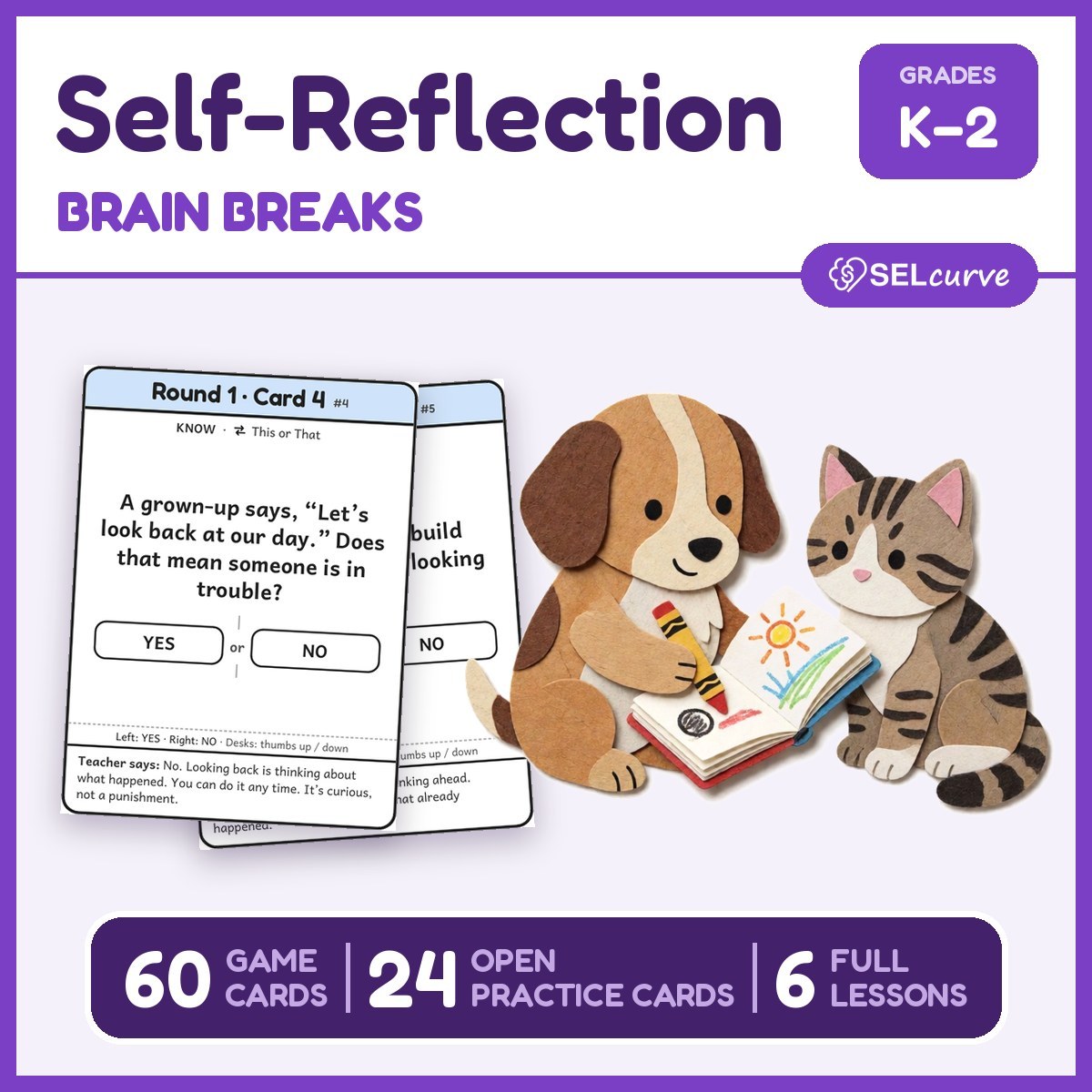
When “How did it go?” gets a shrug, these self-reflection brain breaks give Grades K–2 a way to look back with their whole bodies, using 60 game cards for six 15–20 minute lessons while 24 Open Practice Cards cover the quick breaks. Children decide whether a grown-up who says it is time to look back at the day means someone is in trouble, walk to a side for a class that watered its bean plant every day, and find out that even grabbing the first crayon without stopping to think is a choice. It is a Self-Awareness resource. Find more in our self-reflection activities.
What students practice
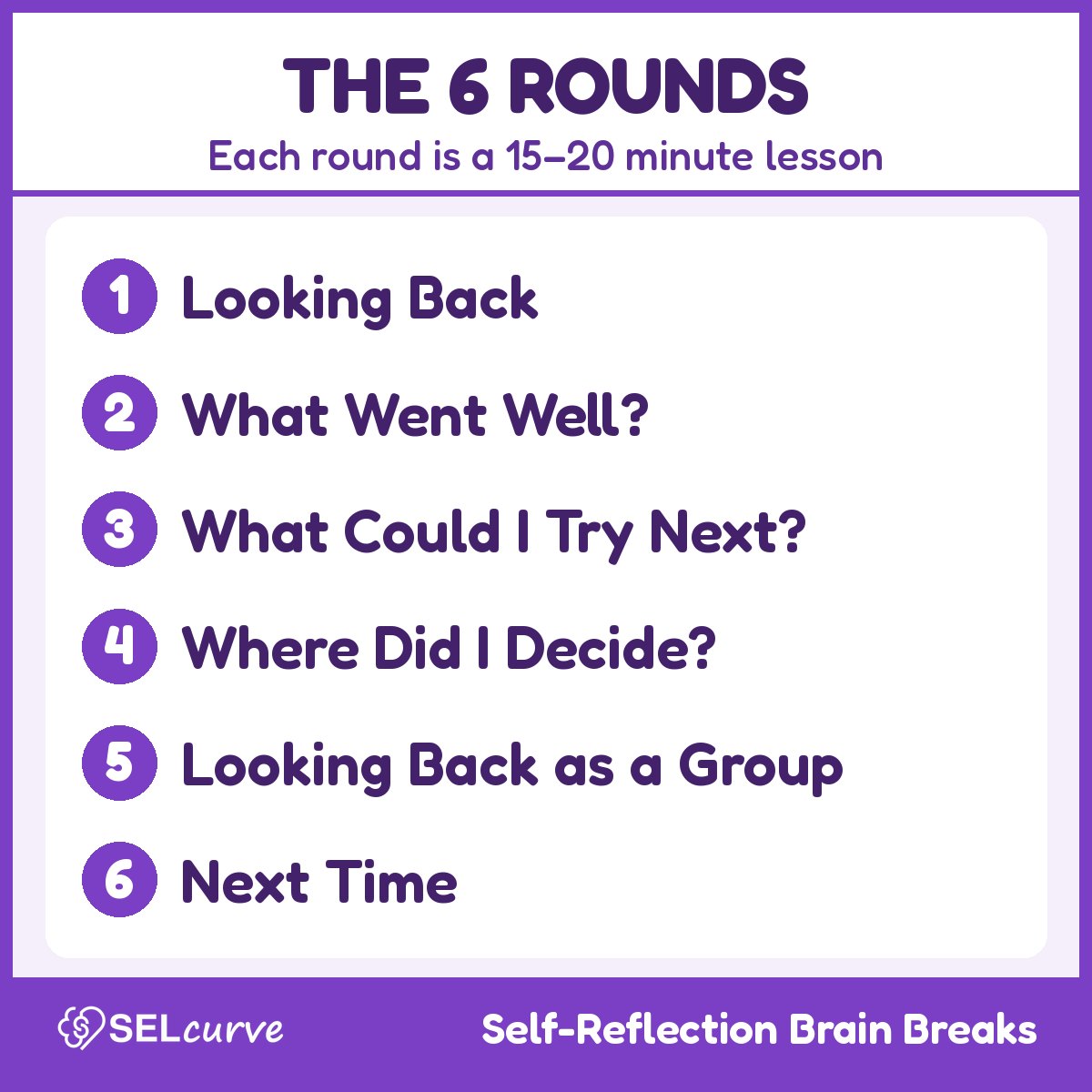
Six rounds that build a look-back habit:
- Looking back
- What went well?
- What could I try next?
- Where did I decide?
- Looking back as a group
- Next time
Right for your grade
Grades K–2
Young children live in the moment, the guide notes, so every card is short and read aloud by you. The situations come from class games, songs, art time, group projects and the end of the school day, answers are simple movements, and each corner sign pairs its letter with a color and a shape.
Everything included
What’s inside these SEL games for little learners
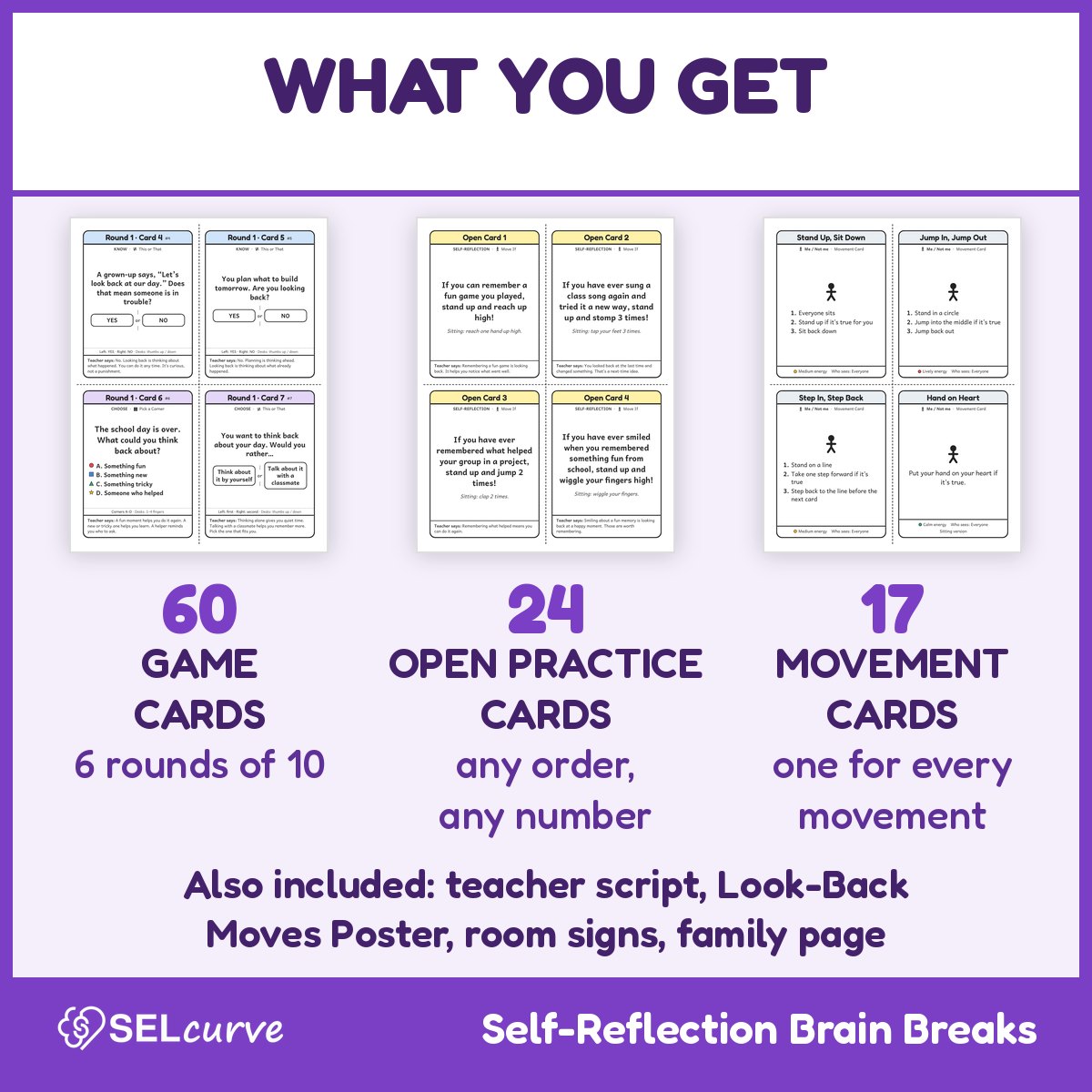
- 60 game cards split into 6 rounds of ten, in the order you play them
- A Round Card for every round with the plan and a place to stop early, plus 6 blank Make Your Own cards
- 24 Open Practice Cards that need no set-up, each with a sitting version
- A Detailed Script for Teachers, round by round, with a Movement Menu of more moves
- The Look-Back Moves Poster with six moves, 17 Movement Cards, corner signs plus Small and Big signs, and a family page to send home
A look inside
Real pages, real moments
In the classroom
How to use these look-back brain breaks
- 1Three-minute break: read 3–5 Open Practice Cards exactly as written; children do the move, then sit while you read the Teacher says line.
- 2A round as an SEL lesson: the Round Card goes first; then read the ten cards in order, letting children answer with the default move for each card type.
- 3Glow before grow: the guide asks you to start every look-back with what went well, then stop at one thing to try.
- 4Kindergarten: for a first game, the guide suggests only 4–5 cards, with each movement practiced ahead of time.
Printing and prep
Ready to print
- Use US Letter at Actual size and print single-sided; color is optional.
- A round takes 3 printed pages, holding its Round Card, the round’s game cards and a blank card of your own.
- Laminate or use cardstock so the cards last; keep each round with its Round Card on top.
Questions teachers ask
FAQ
Is looking back a consequence in these self-reflection brain breaks?
No. The guide says never to use it as a consequence or to find out who did something, and to look back on fun moments as well as tricky ones.
What are a glow and a grow?
A glow is something that went well. A grow is one thing to try next time, like giving everyone a turn first.
What if a child is going through something hard right now?
The script flags the private card in Round 3. You can skip it and check in with the child later; the round works without it.
Is there an upper-grade version?
Yes. The Grades 3–5 version builds on these ideas with step-by-step retelling, finding causes, group debriefs and a private Next-Time Note.
More for Self-Awareness
See all in the library →


Try it in class this week
Start with the free Self-Awareness Brain Breaks, or unlock it with Monthly.