Paid·Grades K–2·Self-Awareness·Brain Breaks
Personal Values Brain Breaks
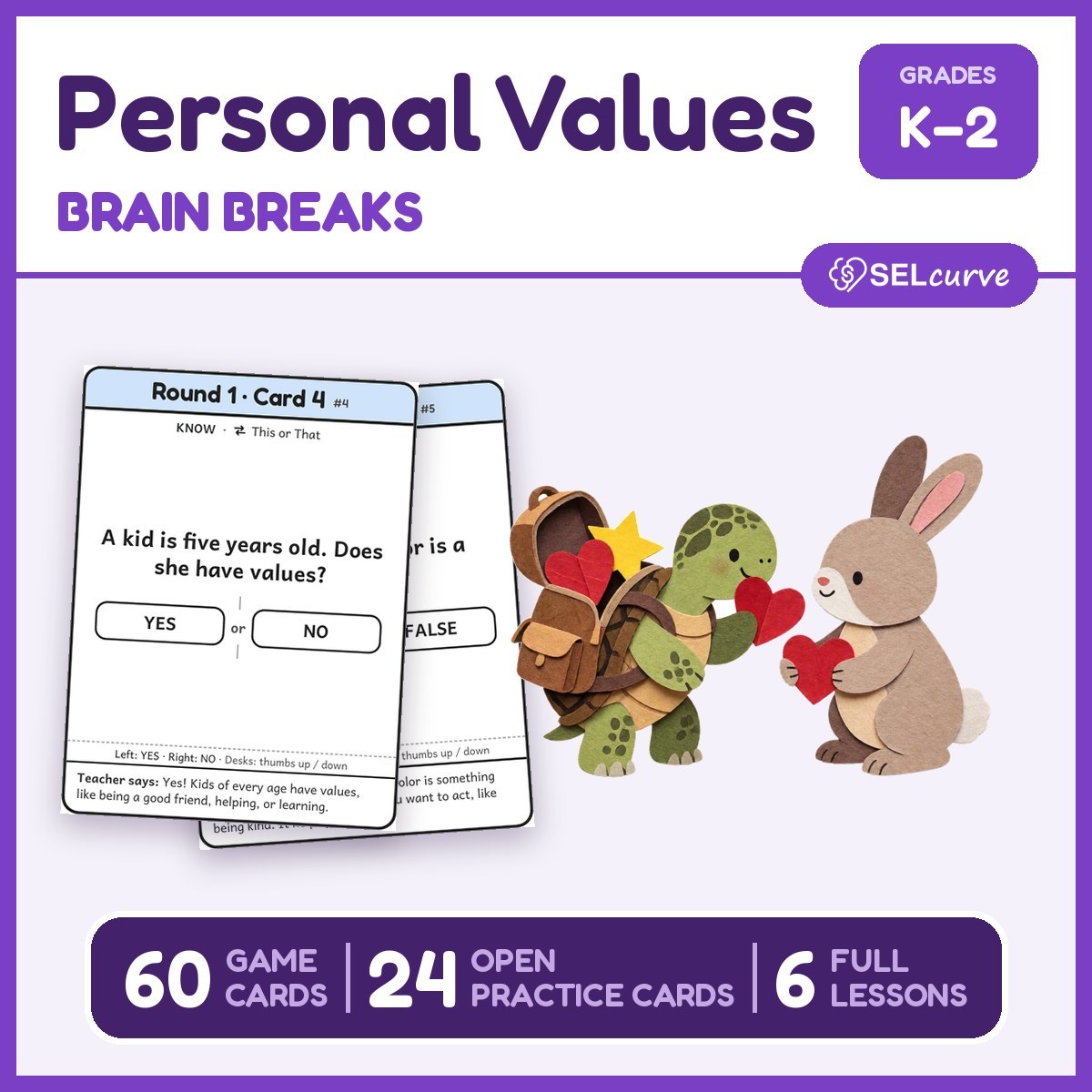
- 60 game cards
- 24 Open Practice Cards
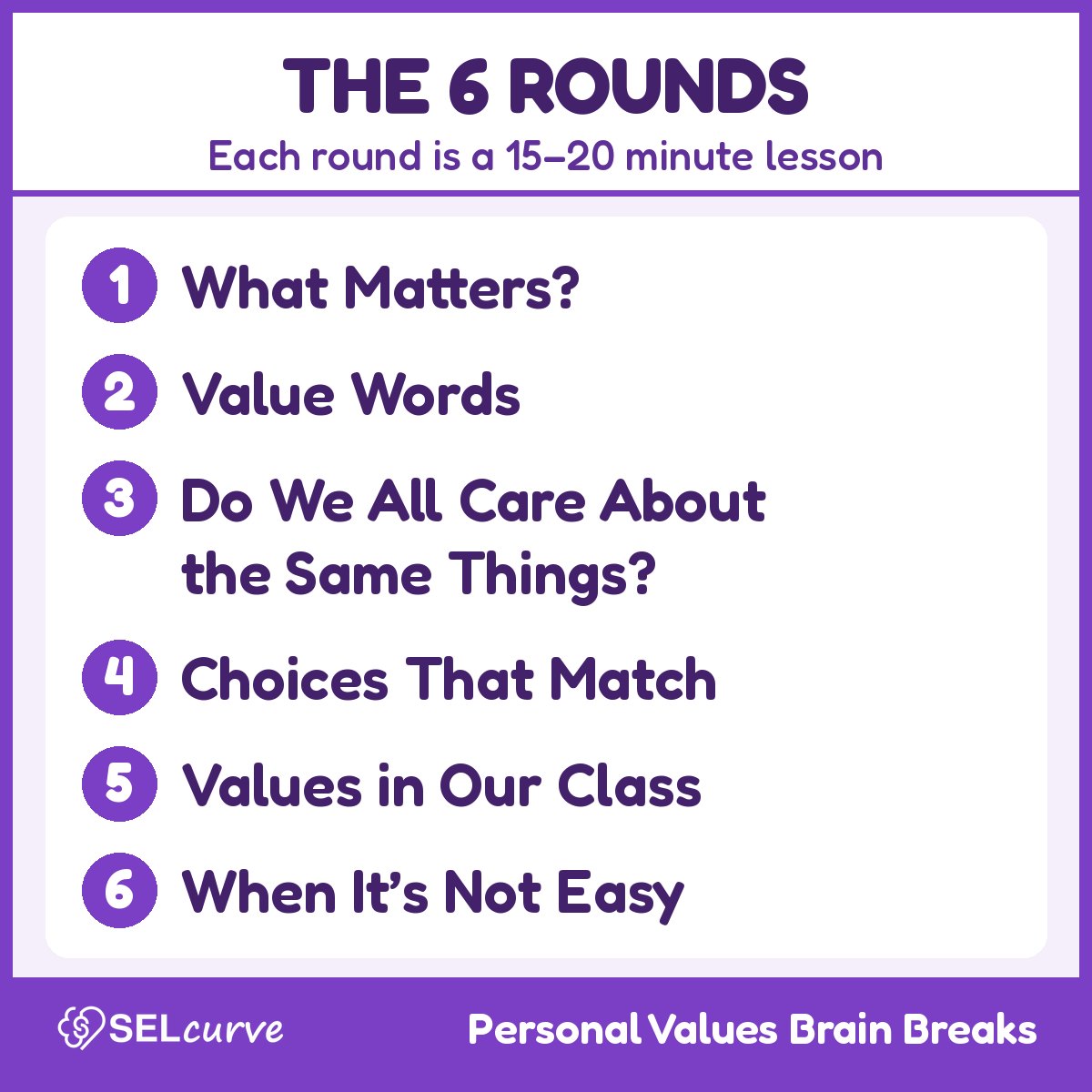
- 6 Round Cards
- Printable
 Free with a free accountSelf-Awareness Brain Breaks60 game cards · 6 Round Cards · 24 Open Practice Cards · Printable
What a free account gives you
- 71 free resources across all five SEL areas, ready to print
- Digital activities: post them in Google Classroom or Teams. Any device · No student logins
- A planner and collections to keep your SEL week organized
- Grades
- K–2
- What you get
- 60 game cards in 6 rounds
- Type
- Brain Breaks
- Use it
- PrintView & Print in your browser
- Competency
- Self-Awareness
- Topic
- Personal Values
About this resource
Children name what matters to them in these personal values brain breaks for Grades K–2, which combine 60 game cards for six 15–20 minute lessons with 24 Open Practice Cards for a 3-minute break. They wiggle their arms if they have ever made up a song or a dance, choose between curiosity and creativity for a kid who wonders why the moon changes shape, and open a Matters Fist to say what matters to them. It is a Self-Awareness resource. Find more in our personal values activities.
What students practice
A different question for each round:
- What matters?
- Value words
- Do we all care about the same things?
- Choices that match
- Values in our class
- When it’s not easy
Right for your grade
Grades K–2
Made for young learners, with short cards you read aloud and situations from their day: free-choice time, recess games, class votes, read-alouds and class projects. Value words are few and simple, each new one comes with a short meaning, and the guide suggests a kindergarten class begin with four or five cards.
Everything included
What’s inside these personal values activities
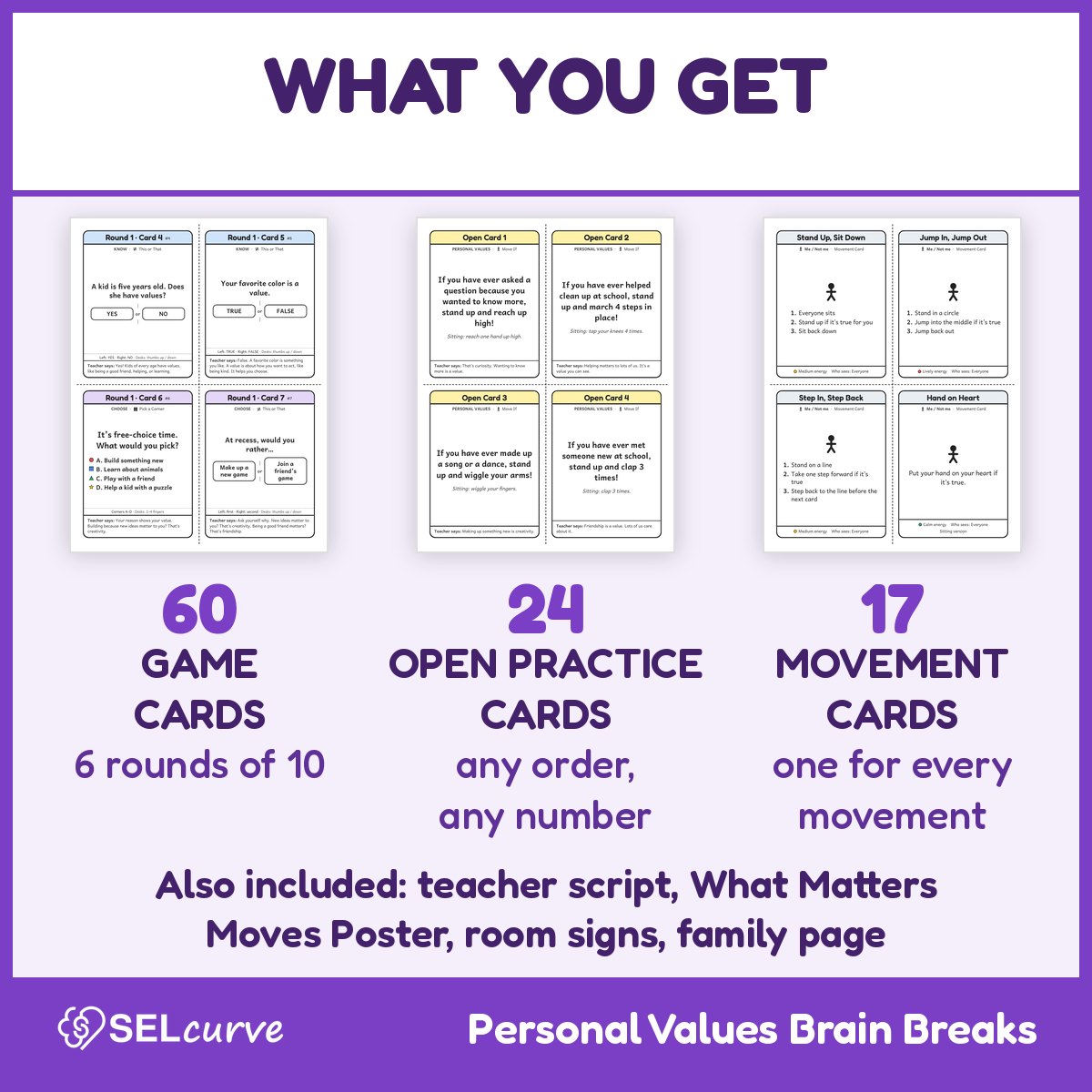
- 60 game cards in 6 rounds, with 3 Connect, 2 Know, 2 Choose, 2 Do and 1 Reflect in each round, kept in playing order
- 24 Open Practice Cards about curiosity, helping, friendship and respect, each one usable on its own
- 6 Round Cards and 6 Make Your Own cards with each round’s plan and a blank card for a prompt of your own
- A Detailed Script for Teachers that opens and closes each round for you, plus a Movement Menu
- The What Matters Moves Poster with its list of value words, 17 Movement Cards, 6 Room Signs and a Family Connection page
A look inside
Real pages, real moments
In the classroom
How to use these personal values brain breaks
- 1Short on time: before quiet work, read a few Open Practice Cards as written so children move, then hear what value the card names.
- 2A full round: read the Round Card, then each card in order, and children answer with the Quick Start move for that kind of card.
- 3Ask why: the guide’s question, why does that matter to you, counts more than the answer, since every value on the list is a good one.
- 4Using the script: the six rounds build from what matters to when it’s not easy, so the first time, play them in order.
Printing and prep
Ready to print
- On US Letter, print one side at Actual size; Fit to page handles A4.
- Game cards come 4 per page, so each round is 3 pages. Cut along the dashed lines.
- Any printer setting for color or grayscale works, and lamination helps the most-used rounds survive.
- To start small, print only Round 1 (pages 23–25) and the corner signs.
Questions teachers ask
FAQ
Do these personal values brain breaks rank values?
No. The guide asks you never to rank them, since every value on the list is a good one and the reason is the lesson.
What value words do children learn?
Simple ones from their school day, such as helping, curiosity, creativity, friendship, kindness and respect, each with a short meaning.
Do children have to share their own values?
No. No child has to move, share or explain, and staying still always counts as a pass.
Is there a version for older students?
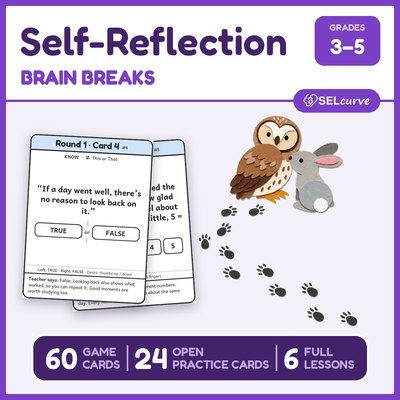
Yes. The Grades 3–5 version adds top values, values that pull different ways and giving reasons.
More for Self-Awareness
See all in the library →

Try it in class this week
Start with the free Self-Awareness Brain Breaks, or unlock it with Monthly.