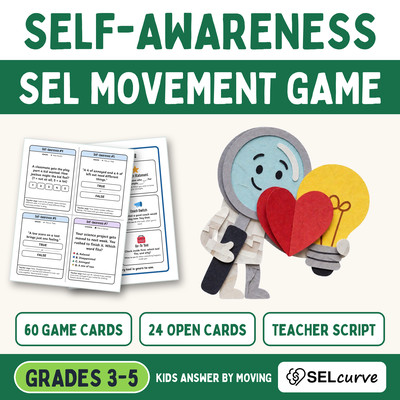
Paid·Grades 3–5·Self-Awareness·Brain Breaks
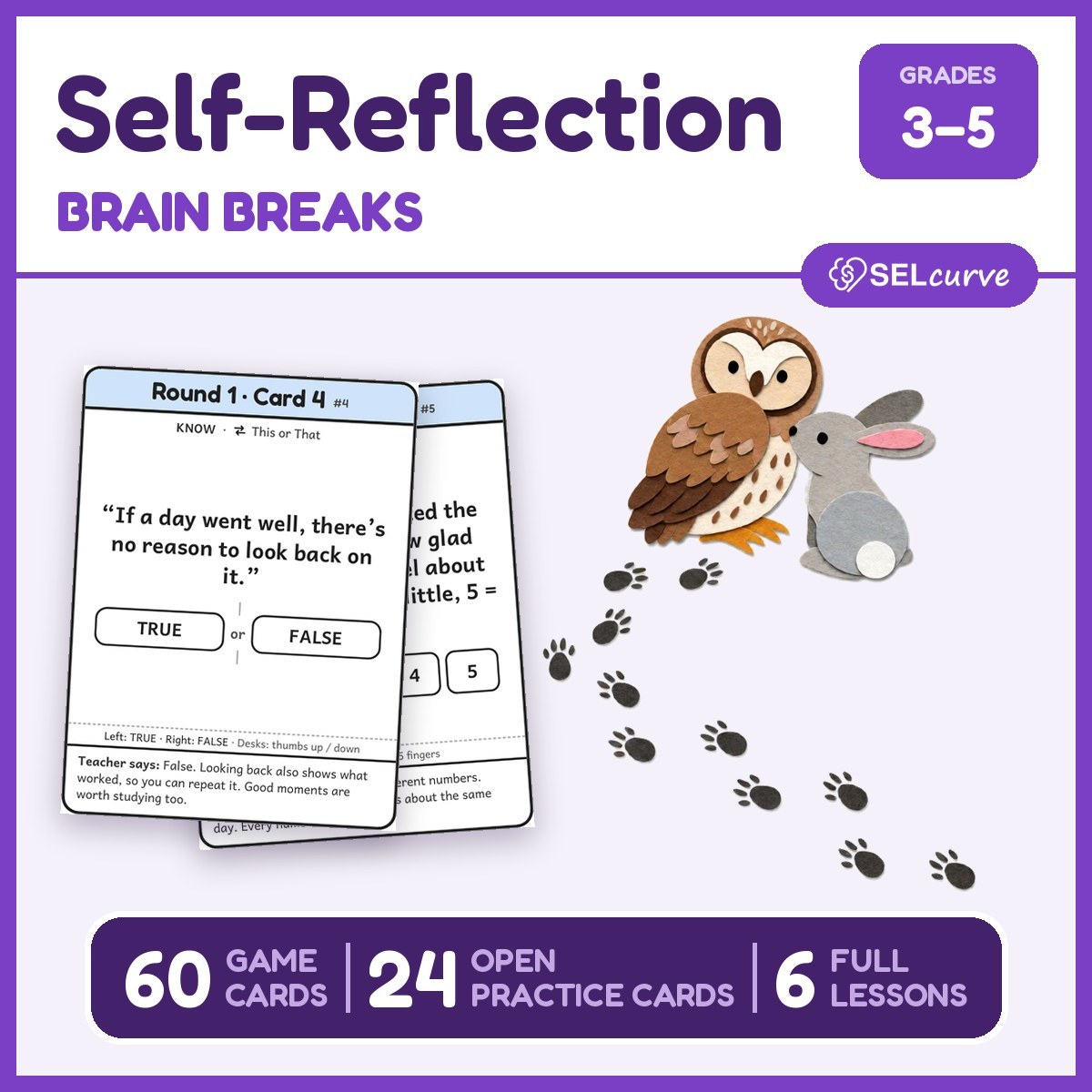
Self-Reflection Brain Breaks
- 60 game cards
- 6 Round Cards
- 24 Open Practice Cards
- Printable
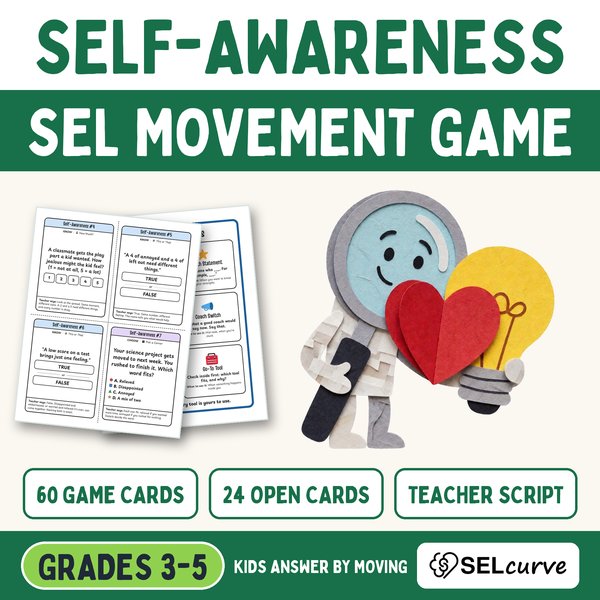 Free with a free accountSelf-Awareness Brain Breaks60 game cards · 6 Round Cards · 24 Open Practice Cards · Printable
What a free account gives you
- 81 free resources across all five SEL areas, ready to print
- Digital activities: post them in Google Classroom or Teams. Any device · No student logins
- A planner and collections to keep your SEL week organized
- Grades
- 3–5
- What you get
- 60 game cards in 6 rounds
- Type
- Brain Breaks
- Use it
- PrintView & Print in your browser
- Competency
- Self-Awareness
- Topic
- Self-Reflection
About this resource
With these self-reflection brain breaks, Grades 3–5 practice looking back the way a sports announcer gives a play-by-play: 60 game cards build six 15–20 minute lessons, and 24 Open Practice Cards fill a spare 3 minutes. Students stretch side to side if they have ever wondered why a game went so well, walk to TRUE or FALSE on whether a debrief is mainly about finding out whose fault it was, and choose a corner for the first thing they would use to find the moment they decided to pass in a class soccer game. It is a Self-Awareness resource. Find more in our self-reflection activities.
What students practice
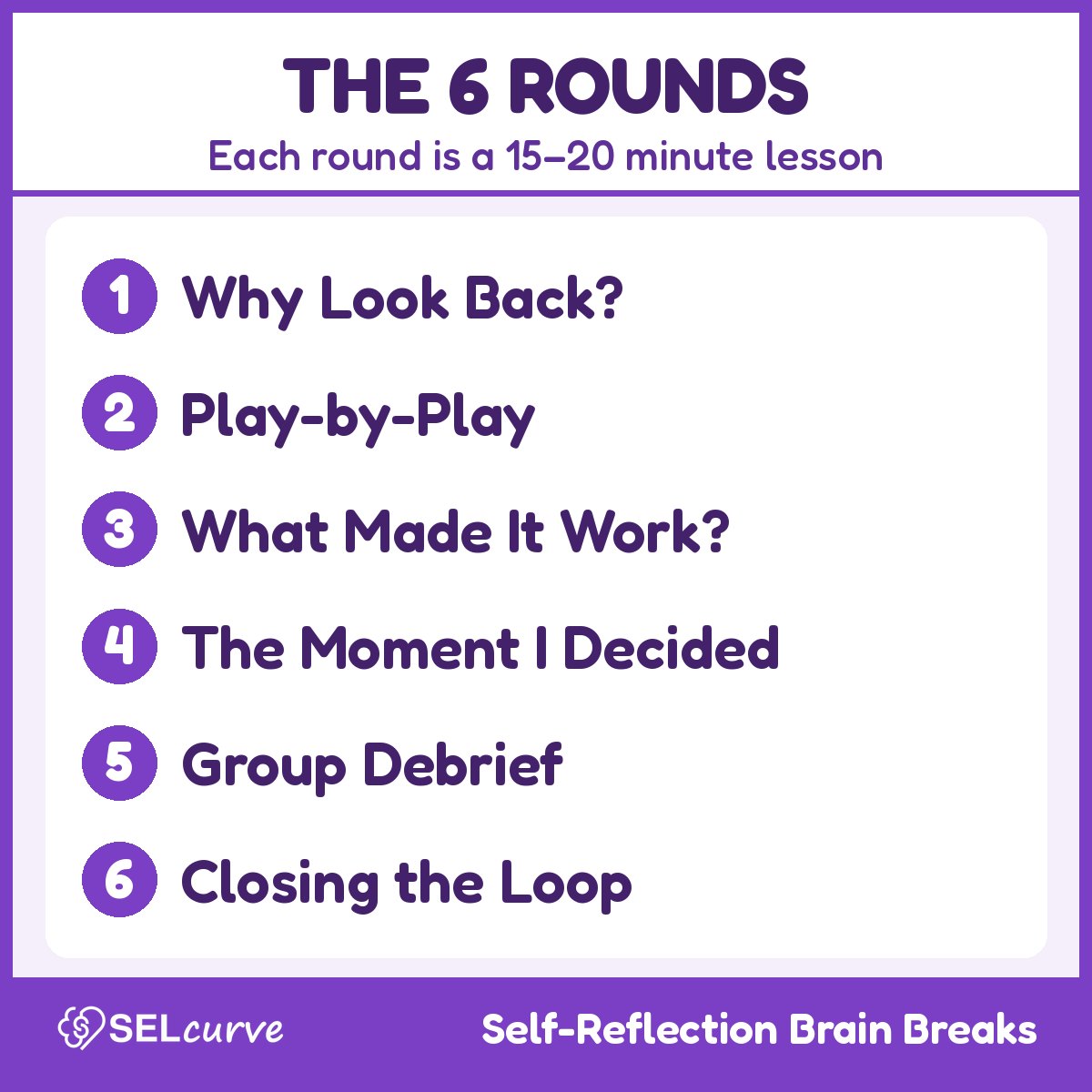
Each round adds one look-back tool:
- Why look back?
- Play-by-play
- What made it work?
- The moment I decided
- Group debrief
- Closing the loop
Right for your grade
Grades 3–5
The guide points out that most upper elementary students can say whether something went well but not yet retell it step by step or find what made it work. The scenes fit their world, from group projects and class plays to team games and the end of the school day, and the cards ask them to separate facts from opinions, find causes and pin down when a decision happened.
Everything included
What’s inside these self-reflection activities
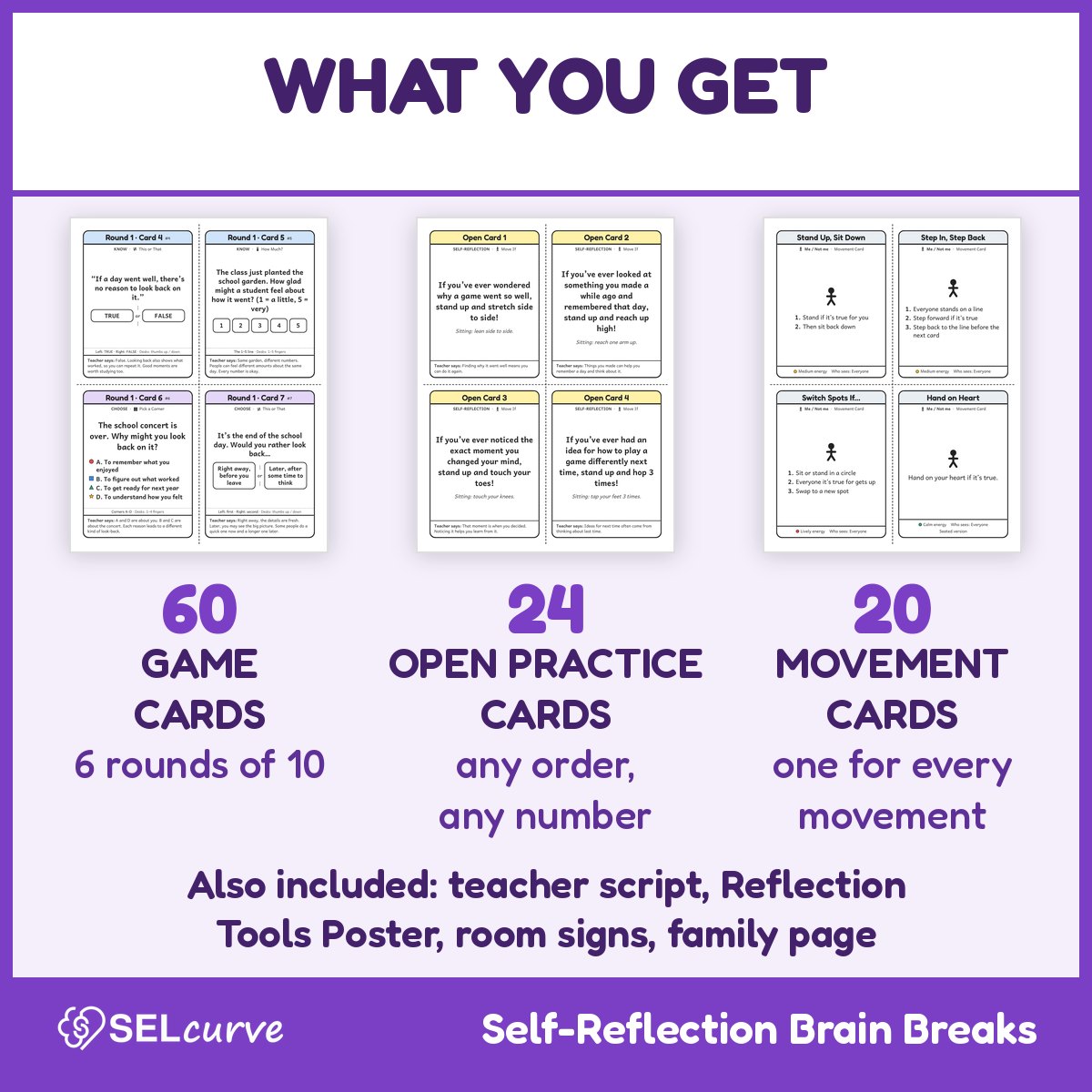
- 60 game cards in 6 rounds, ten to a round in the order you play them, each round running Connect, Know, Choose, Do and Reflect
- 6 Round Cards naming the big idea, materials and Do cards, plus 6 blank Make Your Own cards
- 24 Open Practice Cards for warm-ups or a quick review, with a seated move on every card
- A Detailed Script for Teachers with an Introduction and Calm Finish for each round, and a Movement Menu
- The Reflection Tools Poster showing the six tools, 20 Movement Cards, six corner and line-end signs, and a note for families
A look inside
Real pages, real moments
In the classroom
How to use these self-reflection brain breaks in Grades 3–5
- 1Spare three minutes: pick 3–5 Open Practice Cards in any order; read each card, everyone moves, then hear the Teacher says line.
- 2Round by round: play the six rounds in order the first time, since Round 6 puts all six tools together in a Look-Back Run-Through.
- 3During a round: keep to about a minute a card, and when a Know card splits the room, have one student from each side explain their choice.
- 4Student-led replays: after Round 1, a student leader can read the cards while you keep the Round Card.
Printing and prep
Ready to print
- Print at Actual size, single-sided, on US Letter, or choose Fit to page for A4. Both color and black and white work.
- Use cardstock or laminate the cards if you plan to replay the rounds all year.
- Round 6 also needs scrap paper and pencils for the Next-Time Note.
Questions teachers ask
FAQ
Will these self-reflection brain breaks feel like a punishment?
They are built not to. Every look-back starts with what worked, and the guide warns that if reflection only follows trouble, students learn that it means trouble.
Does anyone read the Next-Time Notes?
No. Students keep their notes and decide whether anyone sees them; you don’t collect or read them.
What if a student is going through something hard?
The script flags the private card in Round 1 and says you can skip it and check in with that student privately; the round works without it.
What is in the K–2 pack?
The Grades K–2 version focuses on thinking back, finding a glow and a grow, and finding the moment you decided.
More for Self-Awareness
See all in the library →

Try it in class this week
Start with the free Self-Awareness Brain Breaks, or unlock it with Monthly.