Paid·Grades 3–5·Responsible Decision‑Making·Stop Think Act Cards
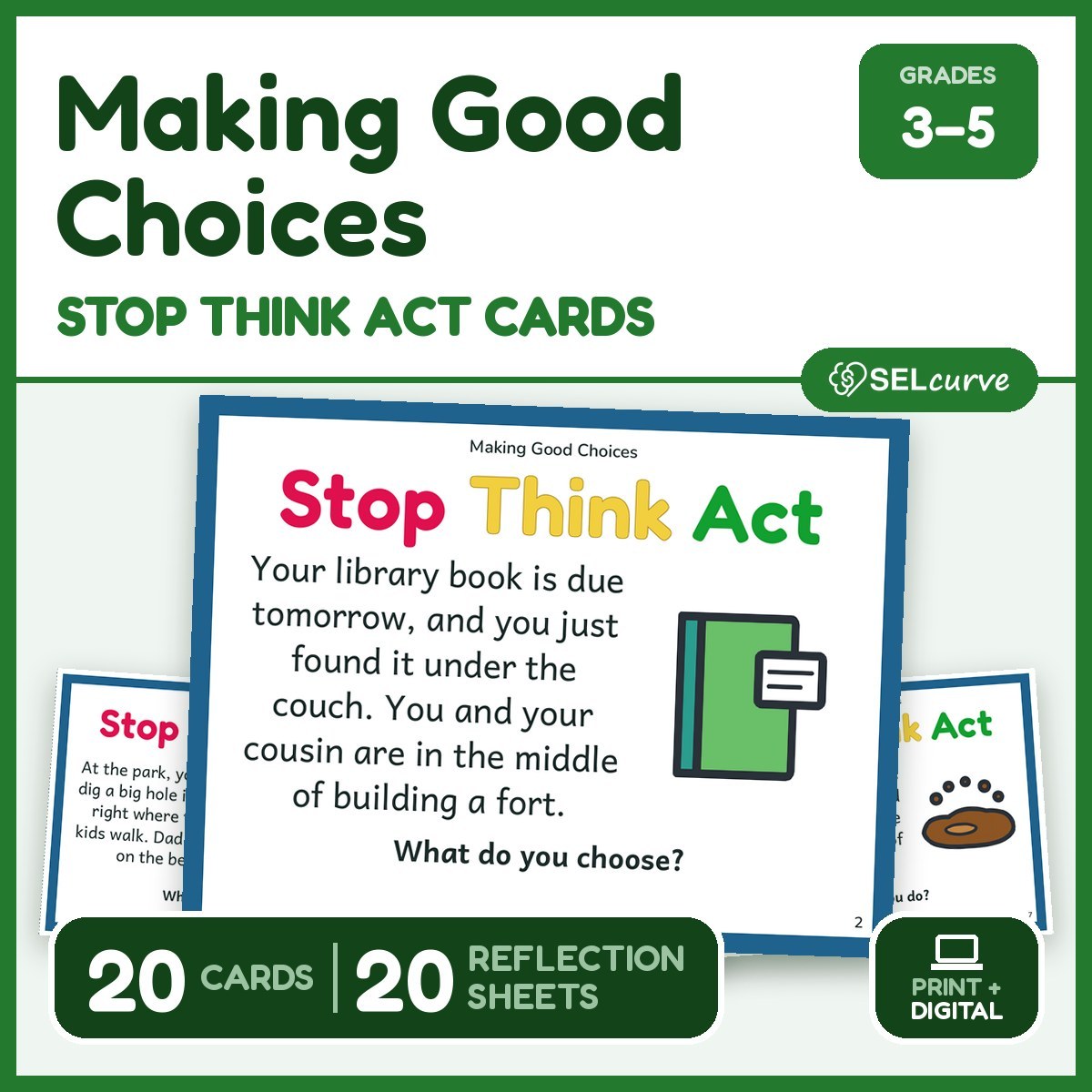
Making Good Choices Stop Think Act Cards
- 20 Stop Think Act cards
- 20 reflection sheets
- Print + digital
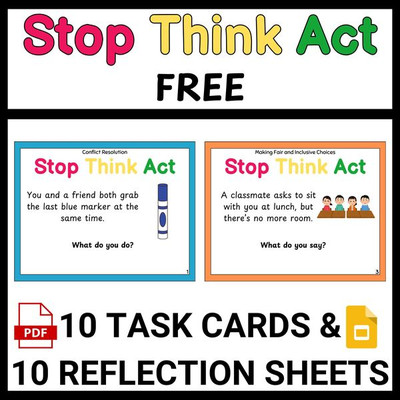
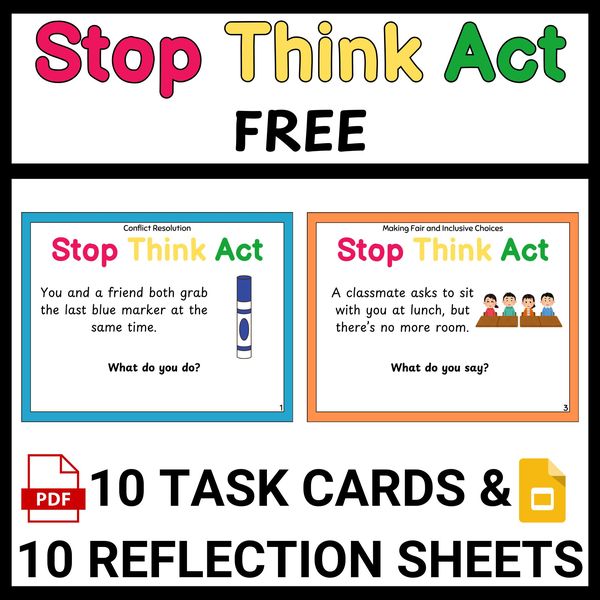 Free with a free accountStop Think Act Cards10 Stop Think Act cards · 10 reflection sheets · Print + digital
What a free account gives you
- 81 free resources across all five SEL areas, ready to print
- Digital activities: post them in Google Classroom or Teams. Any device · No student logins
- A planner and collections to keep your SEL week organized
- Grades
- 3–5
- What you get
- 20 Stop Think Act cards
- Use it
- Print + digitaldigital = any device, no student logins
- Competency
- Responsible Decision‑Making
About this resource
Grades 3–5 get twenty small choices with a little time to think in these making good choices stop think act cards: a library book due tomorrow turns up under the couch in the middle of fort building, a ball rolls under the playground fence where the rule says stay inside, you could take the last two glue sticks while three kids at your table still need one. For each card, students list every choice they can see, ask what happens next and who it affects, then pick one that works for them and the people around them. It is a Responsible Decision-Making resource. Find more in our making good choices activities.
What students practice
Thinking skills the cards build:
- Spotting that there is a choice in an everyday moment
- Thinking about what happens next before choosing
- Weighing what they want against what they should do
- Thinking about who their choice affects
Right for your grade
Grades 3–5
Younger students in Grades 3–5 use the starter “I could… Then…” and work through a card together with you. Older students name two choices and explain what might happen after each one. Some cards have two fine options, like pancakes or planting seeds, and the guide suggests praising students who can explain why they picked one.
Everything included
What’s inside these think before you act making good choices cards
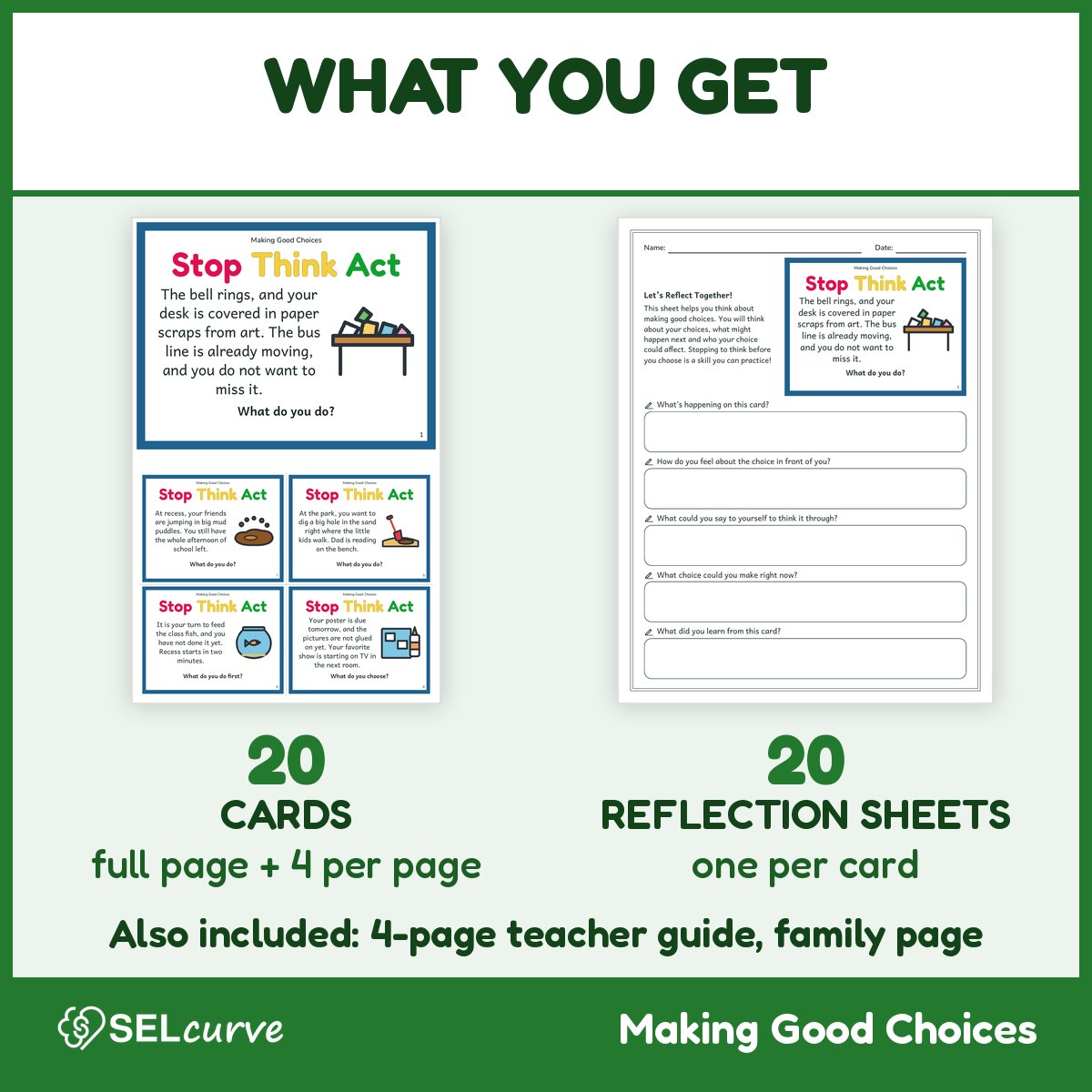
- 20 Stop Think Act cards, set at school, at home and at the park, each a moment with a choice to make and one question about it
- Two layouts: a full page per card for whole-class discussion or a display, and four cards per page for groups that each take a different card
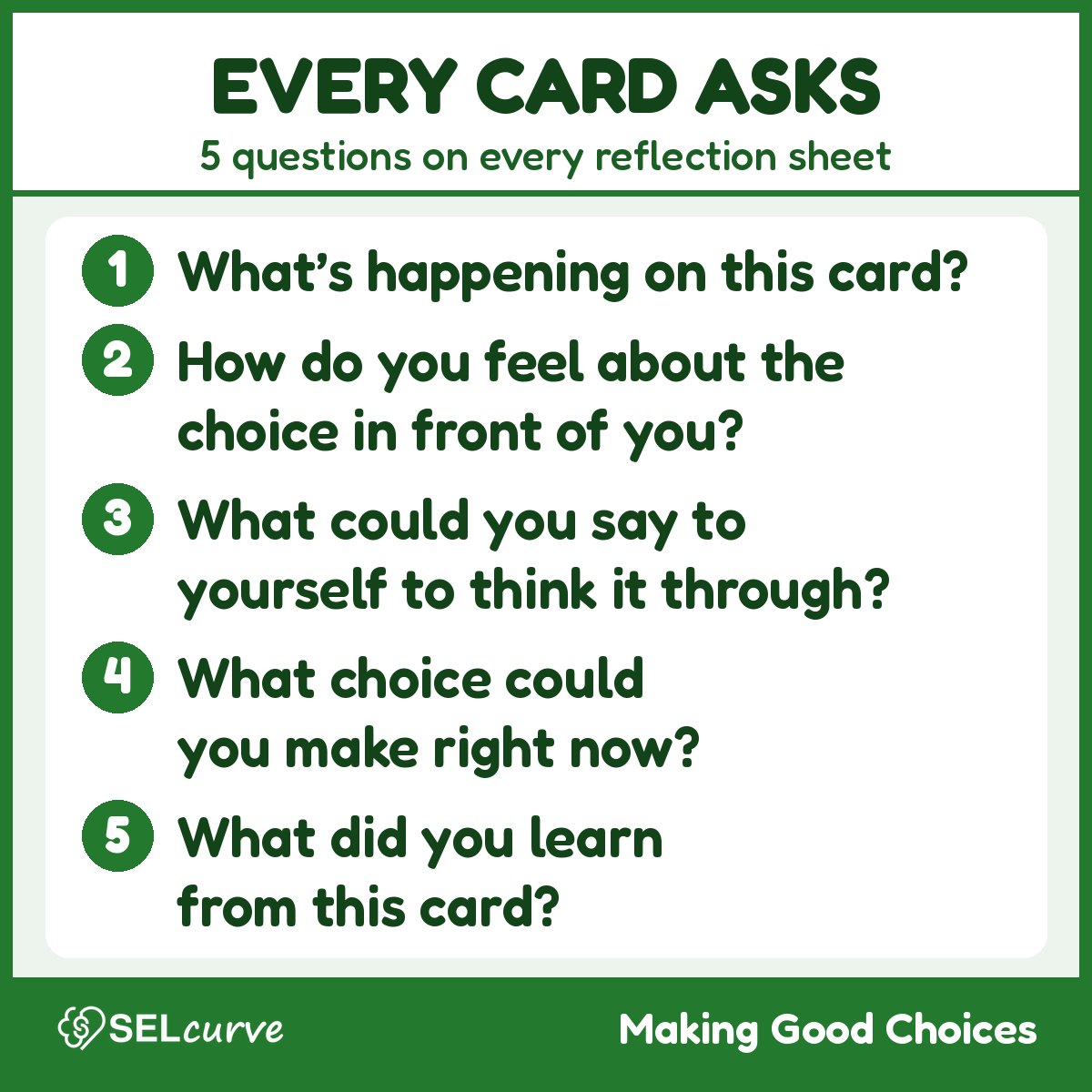
- 20 reflection sheets, a matching sheet for each card in a separate file, with five questions that walk students through the choice
- A 4-page teacher guide with five discussion steps, tips like Think One Step Ahead, and differentiation, plus Cards at a Glance and a printing guide
- A Family Connection page with a made-up story game for home, and a digital activity on any device, with no student logins
A look inside
Real pages, real moments
In the classroom
How to lead a making good choices discussion
- 1Set the scene: read one card aloud and let students picture the moment before anyone answers.
- 2Find the choices: ask, “What are all the things you could do?” Then, for each one, “And then what happens?” and who it would affect.
- 3Pick and play it out: brainstorm two or three choices, choose the one that works best for everyone, and act out two different choices to show what happens next.
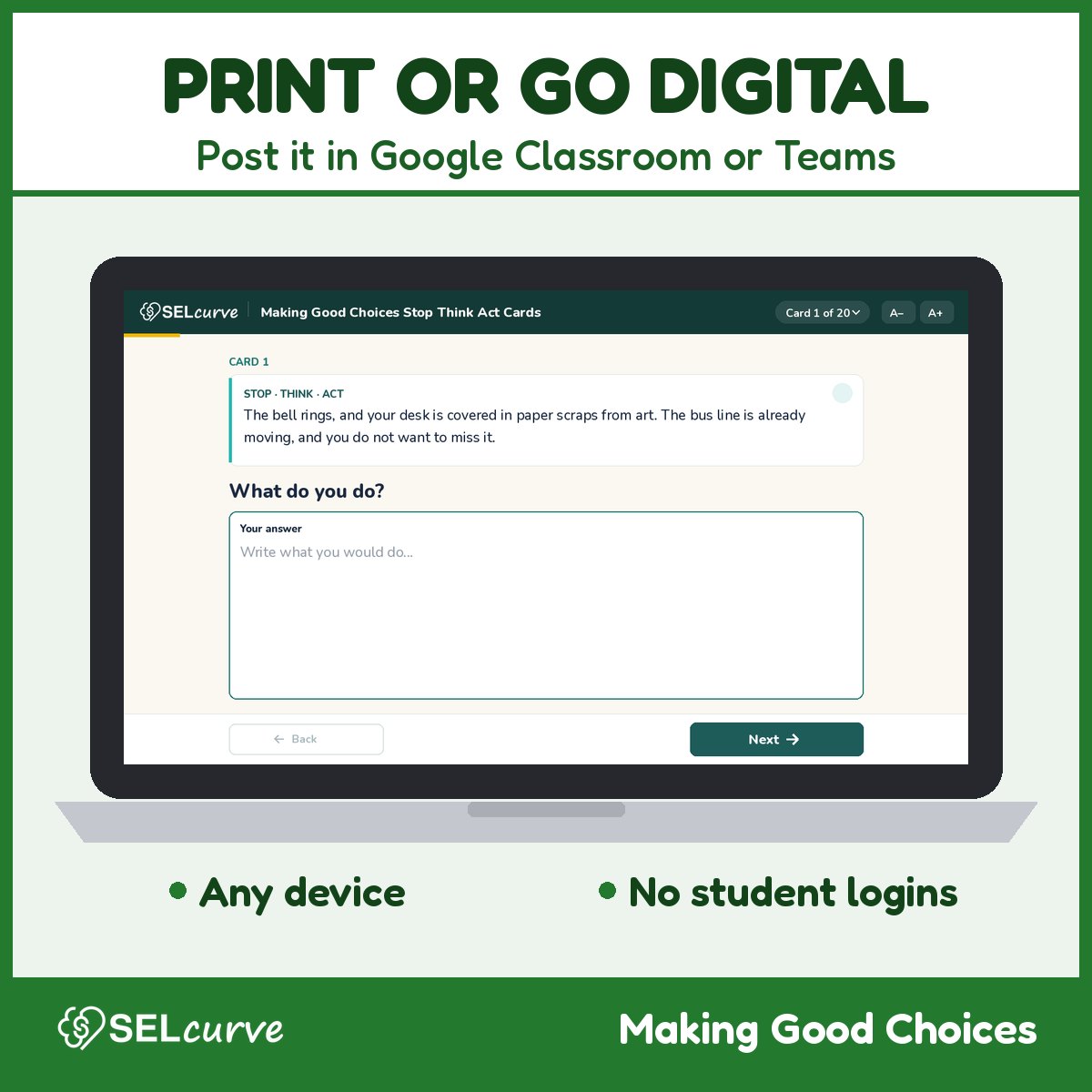
- 4Reflect: students write on the card’s reflection sheet, or post the digital activity in Google Classroom or Teams, or show a QR code. Students answer on any device and send you their answer sheet.
Print or digital
On paper, or on any device
This resource also works as a digital activity. Post it in Google Classroom or Teams, or show a QR code. Students answer on any device and send you their answer sheet.
Any deviceNo student logins
Printing and prep
Ready to print
- Full-page cards: cardstock or plain paper, one-sided, for the whole class, display or one card per group.
- Four-per-page cards: cardstock or plain paper, one-sided; cut on the dashed lines and laminate to keep them for next time.
- Reflection sheets: plain paper, one per student, matched to the card you discussed.
Questions teachers ask
FAQ
Is there always one right answer?
No. Some cards, like choosing to write about owls or whales, have two fine options. The guide suggests praising students who can explain why they picked one.
What grades are these making good choices stop think act cards for?
Grades 3–5. Younger students work with sentence starters, and older students compare what might happen after two different choices.
Is there a routine students can say to themselves?
Yes. The guide offers three questions to post by the door: “What are my choices? What happens next? Who does it affect?”
Is a digital activity included?
Yes. Post it in Google Classroom or Teams, or show a QR code. Students work on any device with no student logins and send you their answer sheet.
More for Responsible Decision‑Making
See all in the library →

Try it in class this week
Start with the free Stop Think Act Cards, or unlock it with Monthly.