
World Kindness Day Activities for the Classroom
World Kindness Day is Friday, November 13, 2026. Here are no-prep kindness activities for the day itself, a simple 5-day kindness week plan, and free kindness conversation cards you can use again in January and February.
What is World Kindness Day?
World Kindness Day is celebrated every year on November 13. It started with the World Kindness Movement, a group of organizations from around the world, and it’s a simple invitation: notice kindness, practice it, and talk about why it matters.
In a classroom, that’s a natural fit for social-emotional learning (SEL). Kindness sits right inside social awareness (noticing how others feel) and relationship skills (acting on it). The activities below work best when students do more than “be nice.” They notice, choose and reflect.
10 kindness activities for the day itself
All of these need little or no prep. Pick two or three for the day, or spread them across the week.
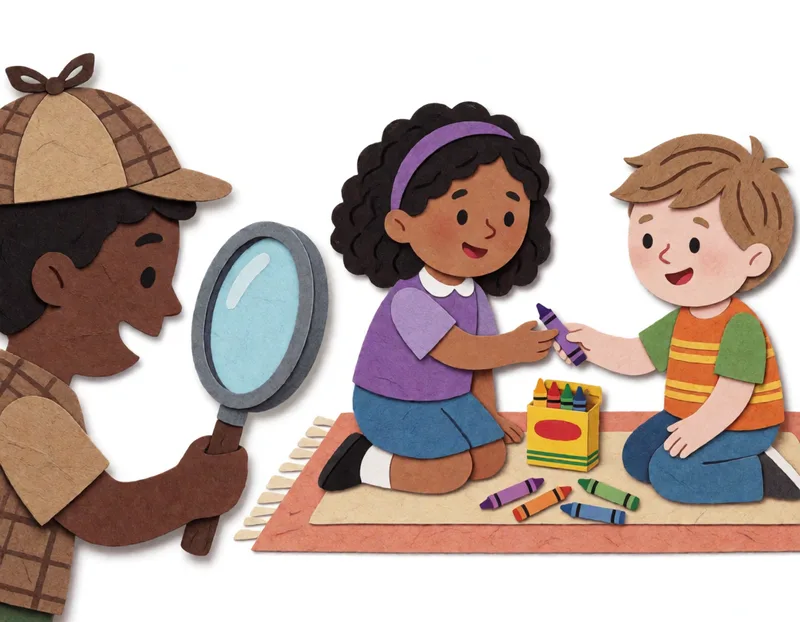
- Kindness detectives. In the morning, tell students to quietly watch for kind acts all day. At the end of the day, each student shares one they noticed, without naming themselves. noticing others
- Specific compliment circle. Sit in a circle and give each student a compliment about something they did, not how they look (“You helped me find my pencil”). Specific compliments feel real. genuine appreciation
- Secret kindness notes. Students draw a classmate’s name and write one sentence about something that classmate does well. Collect and hand out at the end of the day.
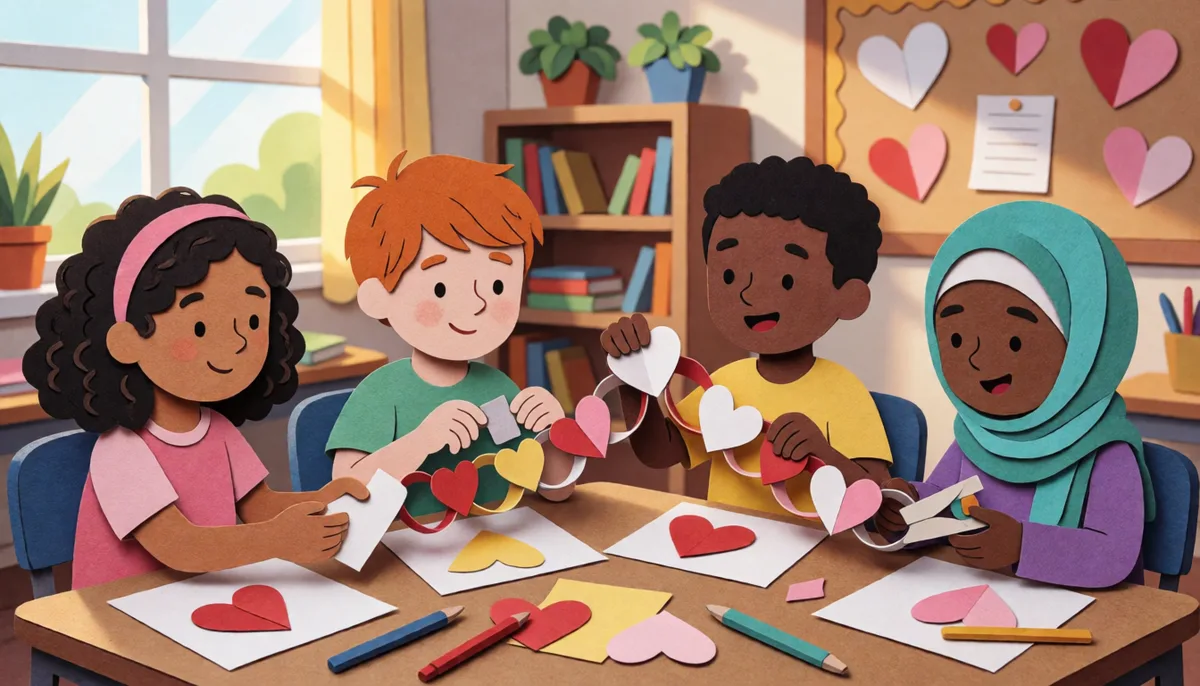
- Kindness chain. Every time someone does something kind, add a paper strip with a few words about it. Watch the chain grow across the room.
- “What kind thing could you do?” Read a short everyday situation aloud and ask students for kind choices. Talk about which choice would help most, and why. perspective taking
- Thank-you cards for school staff. Make cards for the custodian, cafeteria team, nurse or librarian. Ask students to name one specific thing that person does.
- Kind words, unkind words sort. Write short phrases on strips and have students sort them. Then rewrite the unkind ones together.
- Looks like, sounds like, feels like. Build a quick anchor chart: what does kindness look like, sound like and feel like in our room?
- Buddy class. Pair up with a younger class to read together or play a game. Older students plan one kind thing to do for their buddy.
- One-minute reflection. End the day with: “What’s one kind thing someone did for you today? How did it feel?”
Make kindness visible
Young students learn kindness faster when they can see it. A kindness chain, a compliment wall or a “kindness detectives” report at the end of the day turns small acts into something the whole class notices and celebrates.
A 5-day kindness week plan
Use this the week of November 9–13, and keep it for Random Acts of Kindness Week in February.
| Day | Focus | Activity |
|---|---|---|
| Monday | Notice | Kindness detectives: spot and share kind acts |
| Tuesday | Kind words | Specific compliment circle + secret kindness notes |
| Wednesday | Kind choices | “What kind thing could you do?” situations |
| Thursday | Thank you | Thank-you cards for school staff |
| Friday (Nov 13) | Celebrate | Kindness chain reveal + one-minute reflection |
How to make kindness stick
A single kindness day is a great start. These three habits help it last past November 13.
Name the kind act, not the child. “You waited for Sam to finish his sentence. That was patient.” Specific feedback shows students exactly what kindness looks like, and it works for every student, not just the ones who already shine.
Talk about how it felt on both sides. Ask the helper and the person who was helped how it felt. Students discover that kindness feels good for both people, which is a stronger reason than “because the teacher said so.”
Make it a little bit hard. Being kind to a friend is easy. Being kind to someone you don’t know well, or who wasn’t kind to you first, takes practice. Short situations to talk through give students that practice in a safe way.
Ideas for K–2 and for grades 3–5
Kindergarten to 2nd grade
Keep it concrete and short. Act out “kind hands, kind words” with a puppet, color a kindness coloring page while you talk about who you could give it to, and let students make one kind choice they can do before lunch.
3rd to 5th grade
Older students are ready for harder situations, where the kind choice isn’t the easy one. Try a “What would you do?” situation, read a short kindness passage and discuss the character’s choices, or plan a small class kindness project for the school.
Kindness questions for morning meeting
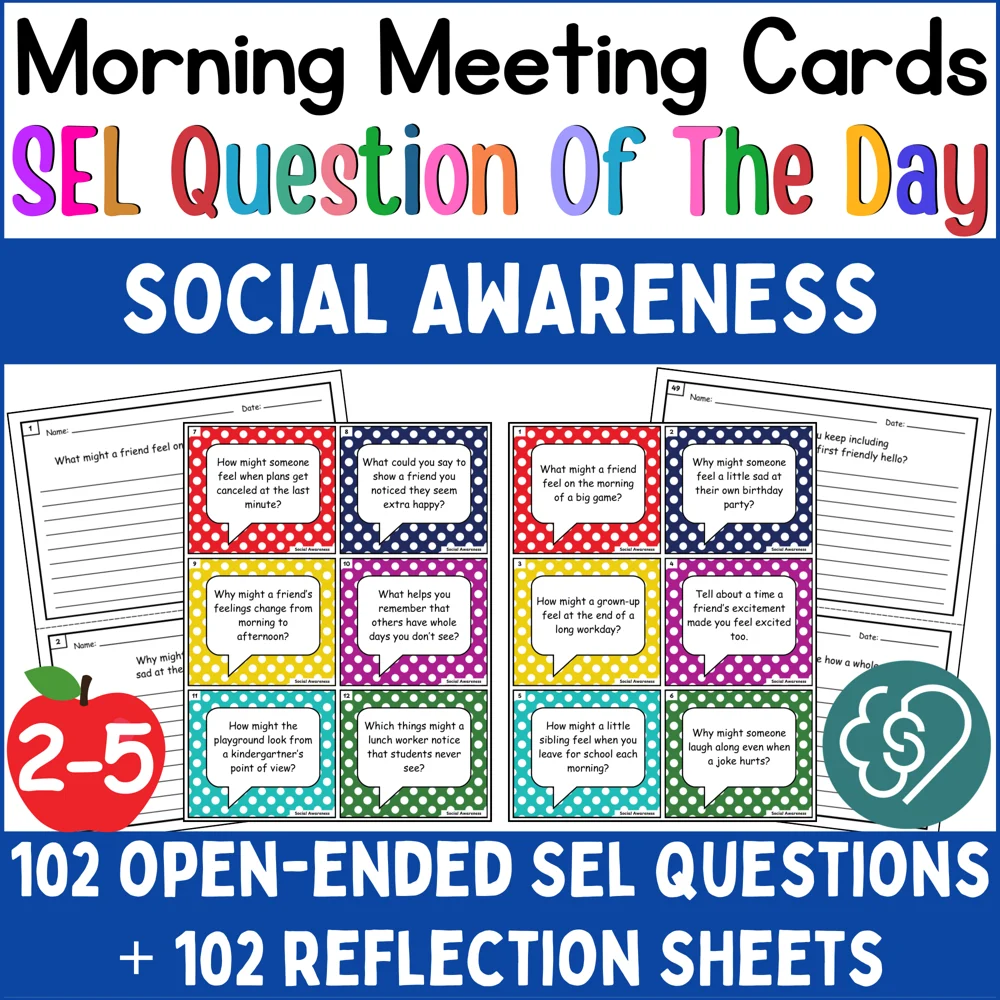
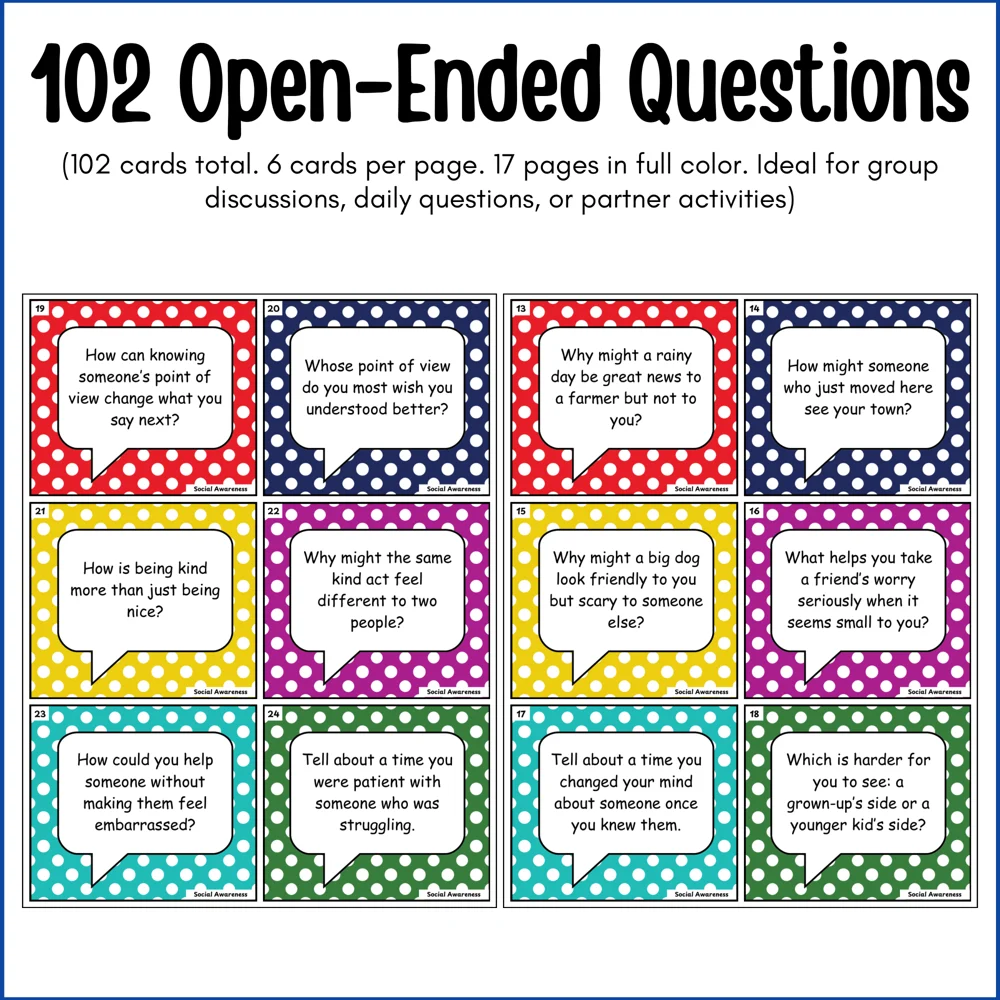
These come straight from the free Social Awareness Conversation Cards. Ask one at morning meeting and give students a minute to think before they share.
Whole-school kindness ideas
Want the whole school involved? Try a compliment wall in the hallway, a kindness quote on the morning announcements each day, painted kindness rocks for the playground, or kindness notes for every staff member left in the staff room on Friday.
Keep it going in January and February
Kindness doesn’t have to be a one-day event. The Great Kindness Challenge usually runs in the last week of January, and Random Acts of Kindness Week falls in February, around Random Acts of Kindness Day on February 17. Save this post. The week plan works for both.
Kindness resources for your classroom
 Free Social Awareness Conversation Cards — Morning Meeting QuestionsGrades 2–8 · Print + digitalFREE
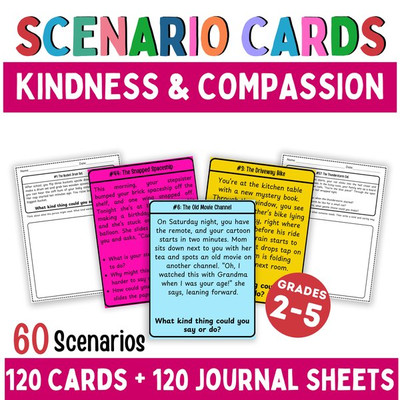 Kindness Scenario Cards — Printable & DigitalGrades 2–6 · Print + digitalPREMIUM
 Kindness What Would You Do? Cards — Think, Choose, ActGrades 2–5 · Print + digitalPREMIUM
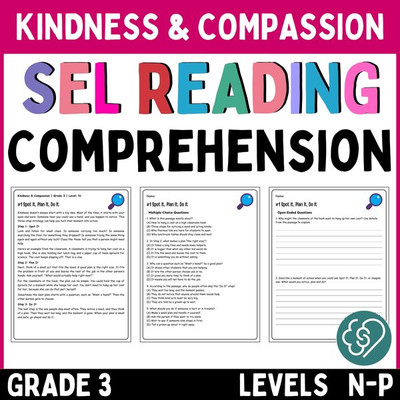 Kindness Reading Comprehension Passages — Grade 3Grade 3 · Print + digitalPREMIUM
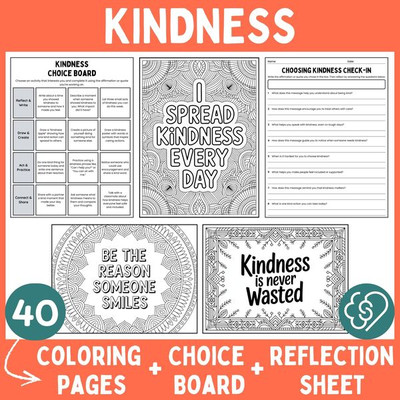 Kindness Coloring Pages — Affirmations and QuotesGrades 2–8 · PrintPREMIUM
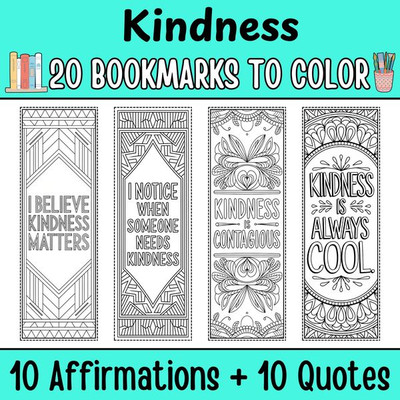 Kindness Bookmarks to ColorGrades 2–8 · PrintPREMIUM
See everything on the Kindness & Compassion resources page or browse all free SEL resources.
Frequently asked questions
When is World Kindness Day 2026?
World Kindness Day is Friday, November 13, 2026. It falls on November 13 every year.
What can students do for World Kindness Day?
Simple, specific actions work best: kindness notes, a compliment circle, thank-you cards for school staff, or noticing and sharing kind acts during the day.
How do you teach kindness to elementary students?
Make it concrete. Talk through real situations, practice kind words and choices, and reflect on how kindness feels for both people. Short daily practice works better than one big event.


