Full library·Grades 2–5·Self-Awareness·Task Cards · Stop Think Act Cards
Self-Esteem Stop Think Act Cards
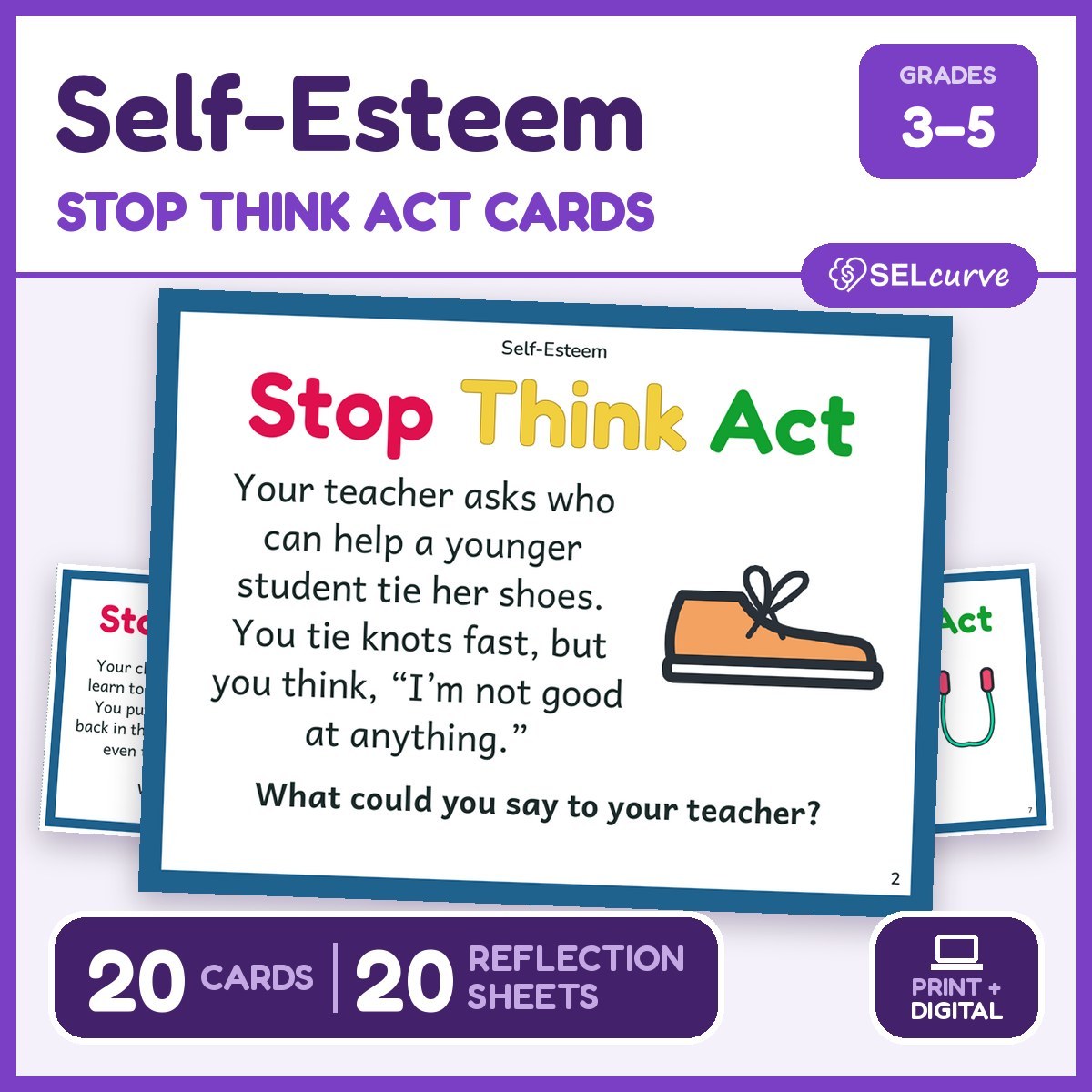
On the self-esteem stop think act cards, Grades 3–5 meet 20 moments of holding back: you tie knots fast but stay silent when the teacher needs a shoe-tying helper, you know where the tricky puzzle piece goes but keep it in your hand, a neig…
- 20 Stop Think Act cards
- 20 reflection sheets
- Print + digital
In the full library, with 38 more on Self-Esteem & Confidence
Scenario cards, worksheets, role play and more (grades K–12).
Get the free Self-Awareness Stop Think Act CardsFree account · school email works · See the full library
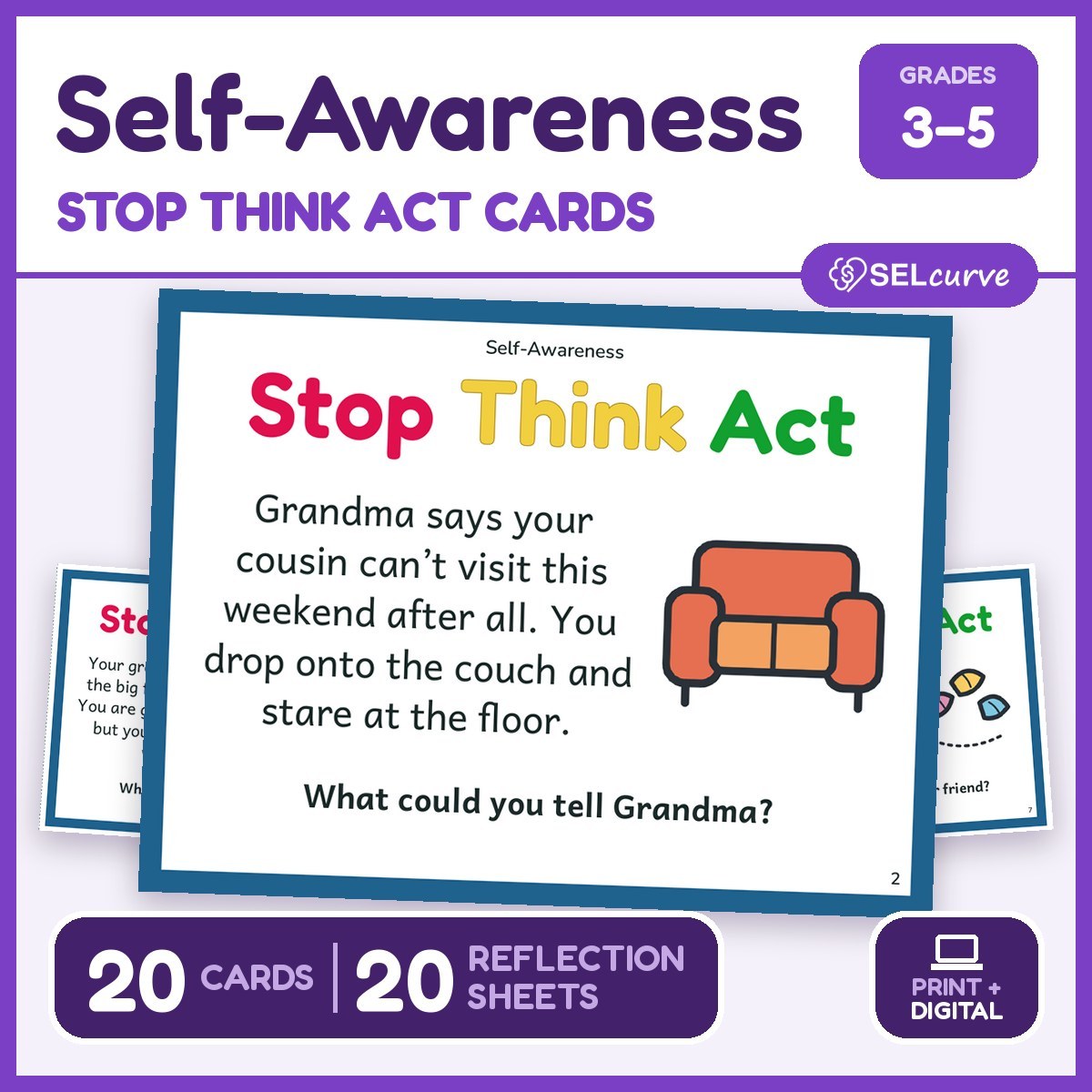 Same format, free with a free account: Self-Awareness Stop Think Act CardsOpen it →
- Grades
- 2–5
- What you get
- 20 Stop Think Act cards
- Type
- Task Cards
- Use it
- Print + digitaldigital = any device, no student logins
- Competency
- Self-Awareness
About this resource
On the self-esteem stop think act cards, Grades 3–5 meet 20 moments of holding back: you tie knots fast but stay silent when the teacher needs a shoe-tying helper, you know where the tricky puzzle piece goes but keep it in your hand, a neighbor praises your sidewalk chalk dragon and you rub it out with your shoe. Students practice noticing their strengths, trying before they give up, sharing an idea and accepting a compliment with a simple thank-you. It is a Self-Awareness resource. Find more in our self-esteem worksheets and activities.
What students practice
- Notice your strengths
- Believe you can do it before giving up
- Share an idea in class
- Show what you can do
- Accept a compliment
What’s inside these stop and think self-esteem cards
- Both card sizes: a full page each for the whole group or display, and four per page to cut for small groups, partners and stations
- A 4-page teacher guide with tips like try first and say thank you, a five-step routine, differentiation and Cards at a Glance
- A Family Connection page that starts a family Strengths List, and a digital activity on any device, with no student logins
A look inside
Card 11: “Your teacher asks how to make the hallway quieter. You have a plan, but you only whisper it to your desk partner.”
Card 17: your friend tells you your poem was so good, and you answer that it was bad. Students decide: “What could you say to your friend now?”
How to use these self-esteem cards in class
Grade fit
Younger students in Grades 3–5 work from the starter “I am good at… I can try…” and a card done together. Older students name a strength on the card and explain how it could help. In mixed-ability pairs, students name one strength for each other before acting out a card.
Printing
- Full-page cards: cardstock or plain paper, one-sided; the cards are printed sideways, so turn the sheet to read.
- Four-per-page cards: one-sided, cut along the dashed lines; laminate them for reuse.
- Reflection sheets: a single-sided plain-paper copy for each student.
- Family Connection: two take-home notes per page, cut in half.
Good to know
The guide asks you to celebrate trying, not only getting it right. Students may pass, and sharing a time they surprised themselves is optional, without naming anyone.
Questions teachers ask
How do students practice taking a compliment?
The last cards show someone brushing off kind words. The guide suggests practicing a simple thank-you and teaching the routine “I can try. I can share. I can say thank you.”
What grades are these self-esteem stop think act cards for?
Grades 3–5, as a whole class, in small groups or one on one. Younger students use a sentence starter, and older students explain how a strength on the card could help.
Is there a take-home page?
A Family Connection page that suggests starting a Strengths List together, where each person adds one strength they used this week, with an example.
Is there a digital self-esteem activity?
Yes. Post it in Google Classroom or Teams, or show a QR code. Students work on any device with no student logins and send you their answer sheet.
More for Self-Awareness
See all in the library →
Every resource, one library.
775 SEL resources for elementary classrooms — printables, digital activities and answer sheets, and every new one we add.