Full library·Grades 2–5·Self-Awareness·Task Cards · Stop Think Act Cards
Identifying Triggers Stop Think Act Cards
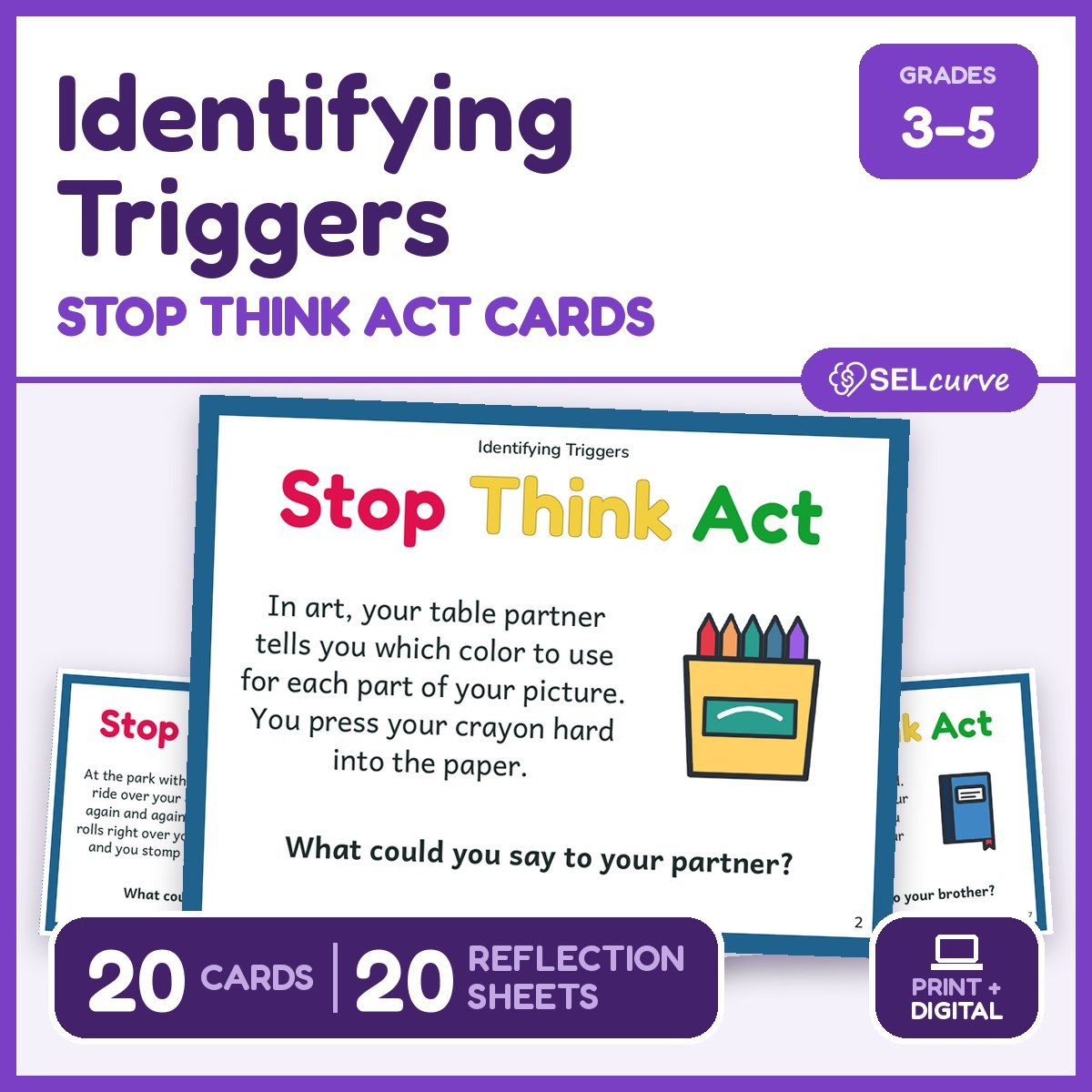
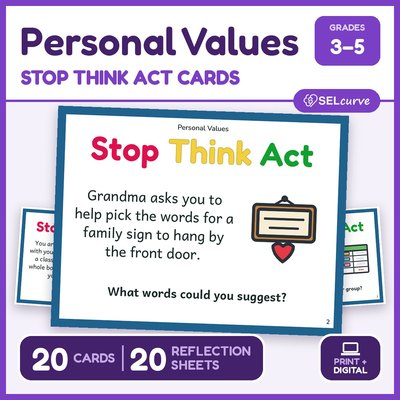
Something small starts a big feeling on each of the identifying triggers stop think act cards for Grades 3–5: a table partner who tells you which color to use for every part of your picture, a bus that pulls up full, the sun shining right i…
- 20 Stop Think Act cards
- 20 reflection sheets
- Print + digital
In the full library, with 9 more on Identifying Triggers
Worksheets, role play, reading passages and more (grades 2–8).
Get the free Self-Awareness Stop Think Act CardsFree account · school email works · See the full library
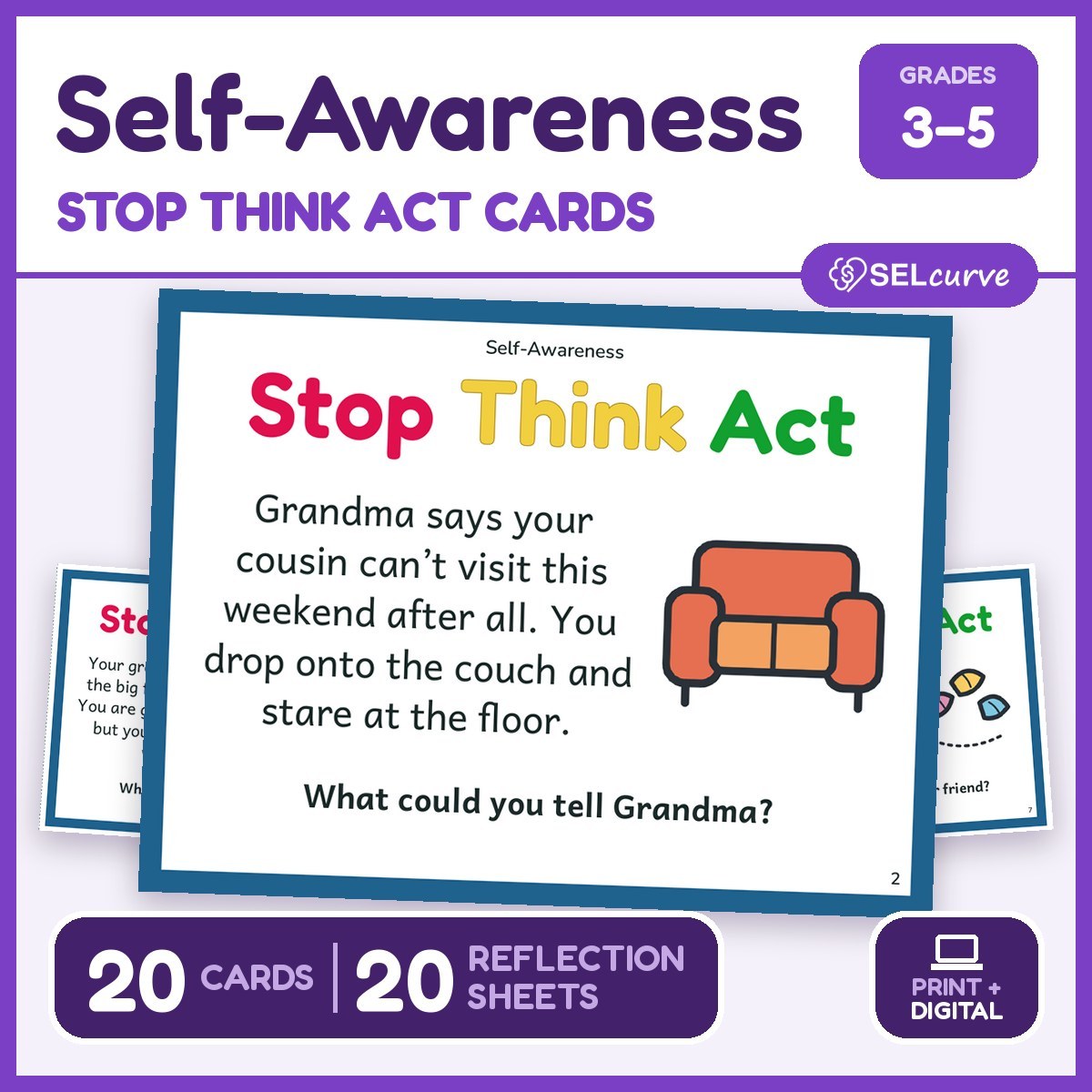 Same format, free with a free account: Self-Awareness Stop Think Act CardsOpen it →
- Grades
- 2–5
- What you get
- 20 Stop Think Act cards
- Type
- Task Cards
- Use it
- Print + digitaldigital = any device, no student logins
- Competency
- Self-Awareness
- Topic
- Identifying Triggers
About this resource
Something small starts a big feeling on each of the identifying triggers stop think act cards for Grades 3–5: a table partner who tells you which color to use for every part of your picture, a bus that pulls up full, the sun shining right in your eyes during your reading page. Across 20 moments, students name what started the feeling, notice when it happens again and change something small to make the moment easier. It is a Self-Awareness resource. Find more in our identifying triggers activities.
What students practice
- Noticing what upsets you in the moment
- Spotting when it happens again
- Getting ready for tricky places and times
- Changing something small to make a moment easier
What’s inside these stop and think cards for identifying triggers
- Cards in two sizes: one per page for whole-class talks or display, four per page to cut for small groups, partner talks and stations
- A 4-page teacher guide with a plan-ahead tip for repeat moments, a five-step routine, differentiation and Cards at a Glance
- A Family Connection page about planning ahead for tricky moments, and a digital activity on any device, with no student logins
A look inside
Card 10: “Dinner is almost ready, and your tummy growls.” When your brother asks you to play catch, you snap at him.
Card 14: Mom dumps a big basket of mixed-up socks on the bed, and you remember giving up last time. The question: “What could you do before you start?”
How to use these cards to spot triggers
Grade fit
Younger students in Grades 3–5 work from starters like “It bothers me when… It would help if… I can get ready by…” and solve a card with you first. Older students name a place or time of day that is tricky for them and one way to get ready for it. When a card shows a moment that happened before, ask what could be different this time.
Printing
- Full-page cards: one side of cardstock or plain paper, ready for a class talk, a display or one card per group.
- Four-per-page cards: one-sided; cut along the dashed lines and laminate them to reuse.
- Reflection sheets: one plain-paper copy per student once the card has been discussed.
- Section title pages don’t need printing; they only mark where each part starts.
Good to know
All feelings are okay, and the guide asks you to remind students that telling a teacher or another trusted grown-up when a feeling feels too big is always a good choice. Students may pass, and sharing something small that upsets them is optional, without naming anyone.
Questions teachers ask
What counts as a trigger on these cards?
Something small that starts a big feeling, like a crowded coat hook, a growling tummy or a partner who talks over you. The Family Connection page describes triggers as situations that set off strong feelings.
What grades are these identifying triggers stop think act cards for?
Grades 3–5. Younger students use sentence starters, and older students name a tricky place or time and plan how to get ready for it.
What can students say to themselves?
“What started it? Has it happened before? What can I change?” The guide suggests posting it near your classroom door or calm corner.
Can students work on the triggers cards digitally?
Yes. Post it in Google Classroom or Teams, or show a QR code. Students work on any device with no student logins and send you their answer sheet.
More for Self-Awareness
See all in the library →
Every resource, one library.
775 SEL resources for elementary classrooms — printables, digital activities and answer sheets, and every new one we add.