Paid·Grades 3–5·Self-Management·Stop Think Act Cards
Coping Skills Stop Think Act Cards
- 20 Stop Think Act cards
- 20 reflection sheets
- Print + digital
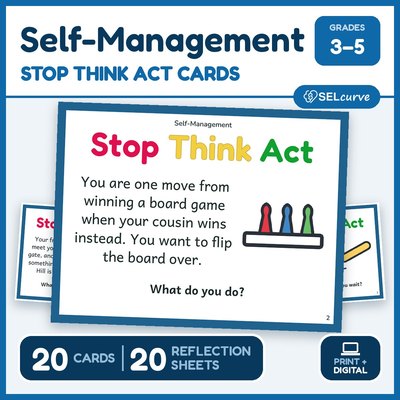
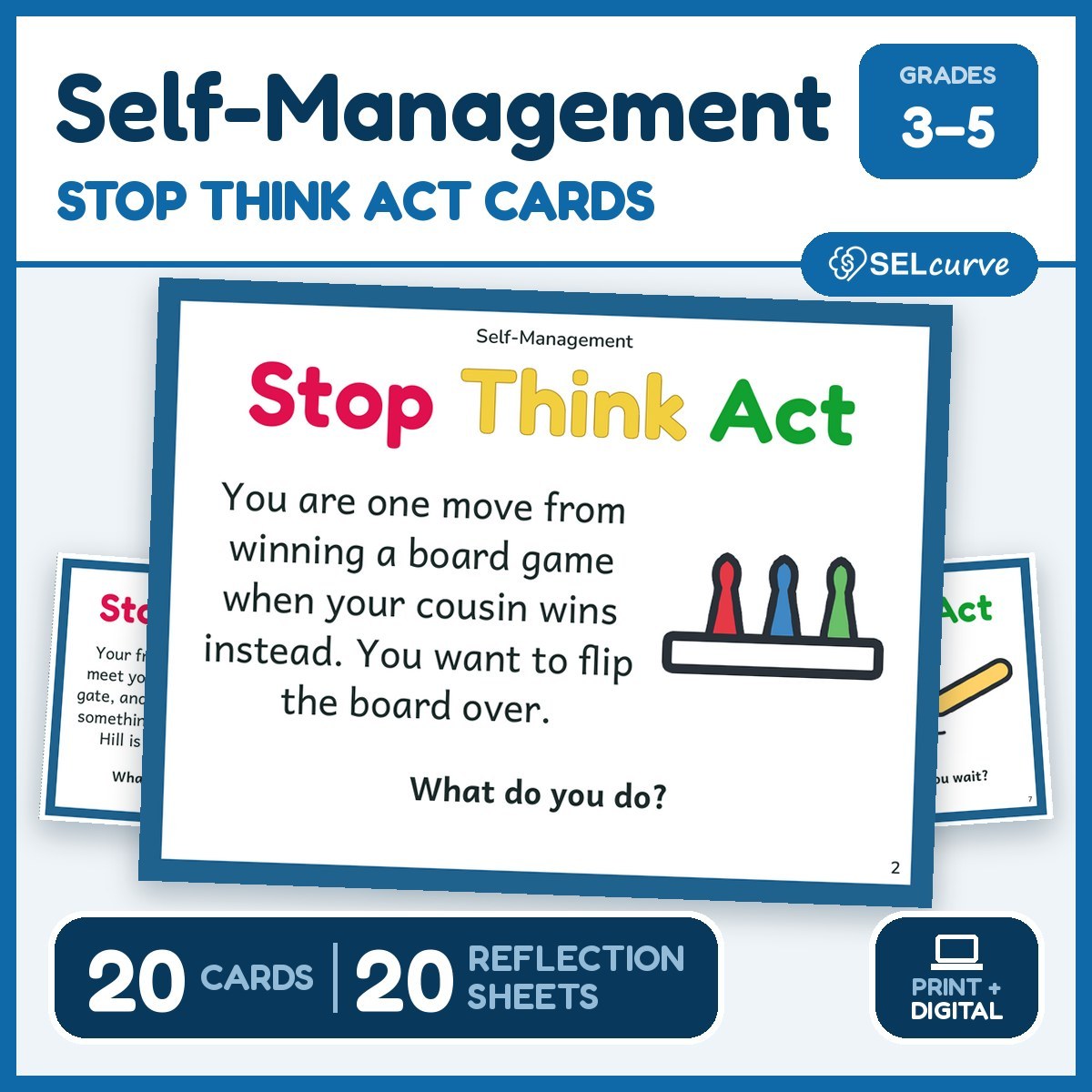 Free with a free accountSelf-Management Stop Think Act Cards20 Stop Think Act cards · Print + digital
What a free account gives you
- 81 free resources across all five SEL areas, ready to print
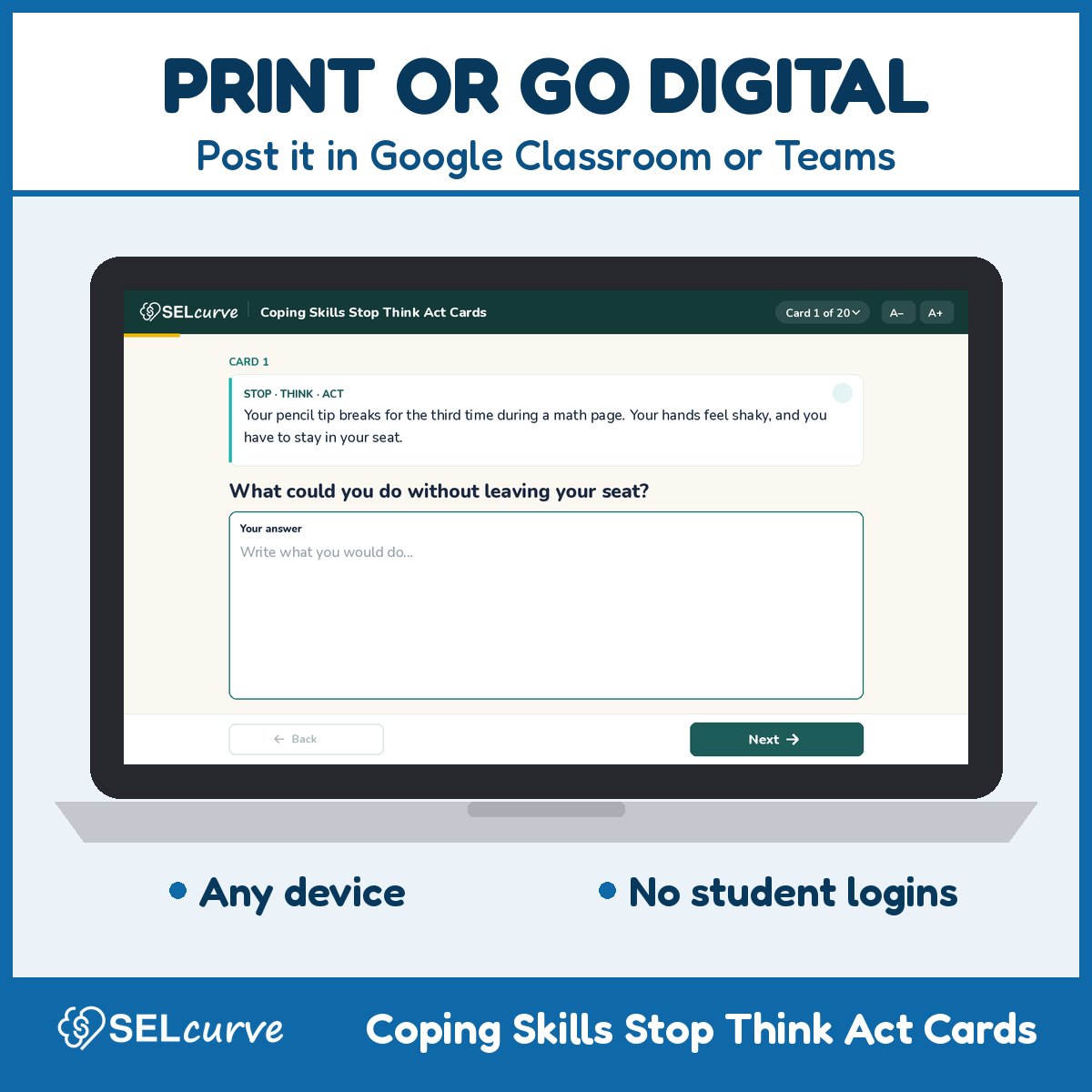
- Digital activities: post them in Google Classroom or Teams. Any device · No student logins
- A planner and collections to keep your SEL week organized
- Grades
- 3–5
- What you get
- 20 Stop Think Act cards
- Use it
- Print + digitaldigital = any device, no student logins
- Competency
- Self-Management
About this resource
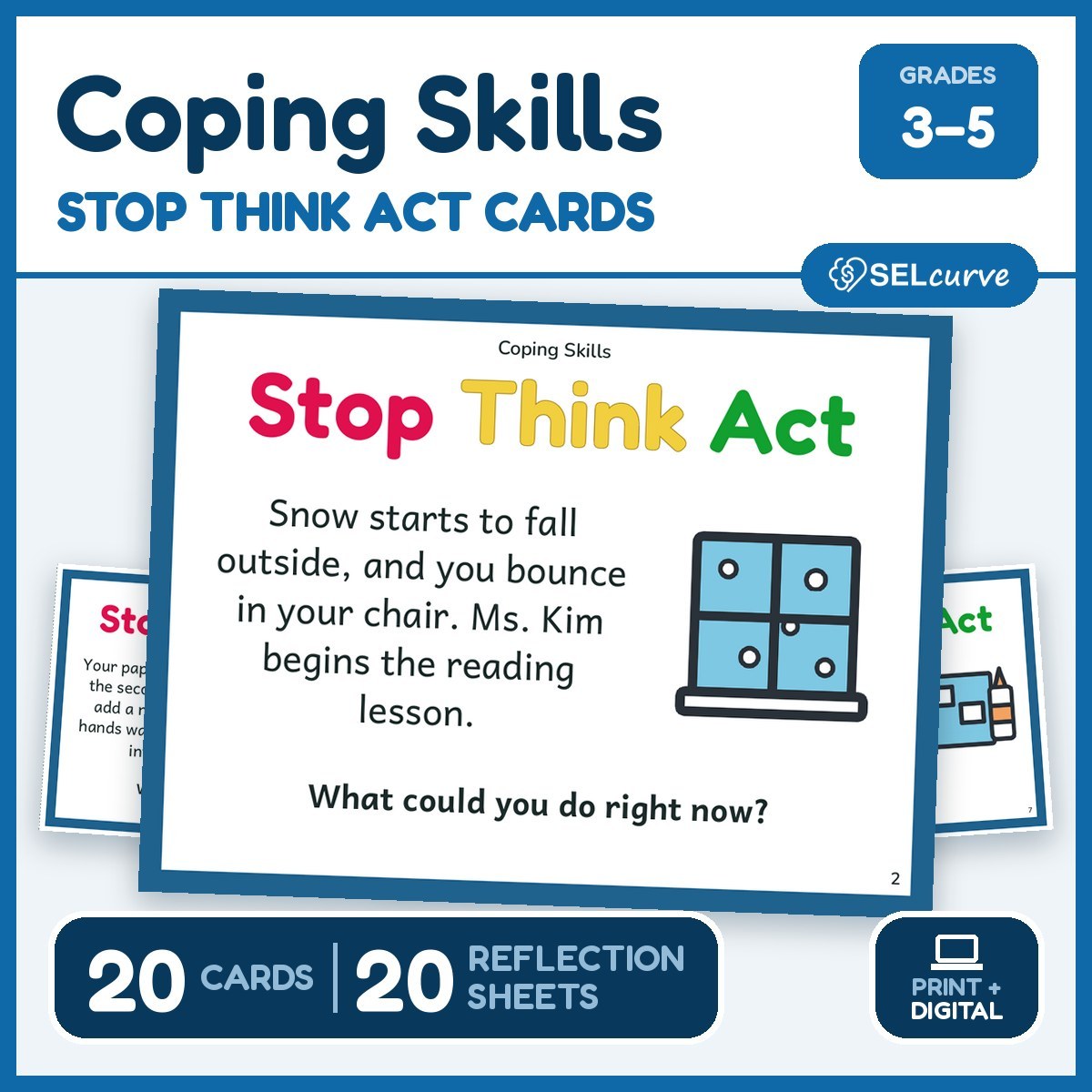
None of these 20 coping skills stop think act cards names the calming tool, so Grades 3–5 choose one for each moment: a paper chain that rips for the second time, snow that starts falling just as the reading lesson begins, a cafeteria so loud your ears ring with half your lunch still to eat. Students decide whether slow breaths, counting, a stretch, a calm spot or a short break fits where they are, then get back to what they were doing. It is a Self-Management resource. Find more in our coping skills activities and printables.
What students practice
Students practice how to:
- Calm down without leaving their seat
- Use calming tools in frustrating moments
- Find a calm spot or take a break and come back
- Choose the right tool for the moment
Right for your grade
Grades 3–5
Use the cards with the whole class, in small groups or one on one. Younger students in Grades 3–5 get the starter “My body feels… I could try…” and a card worked through together; older students compare two calming tools and explain which works best in that place.
Everything included
What’s inside these think before you act coping skills cards
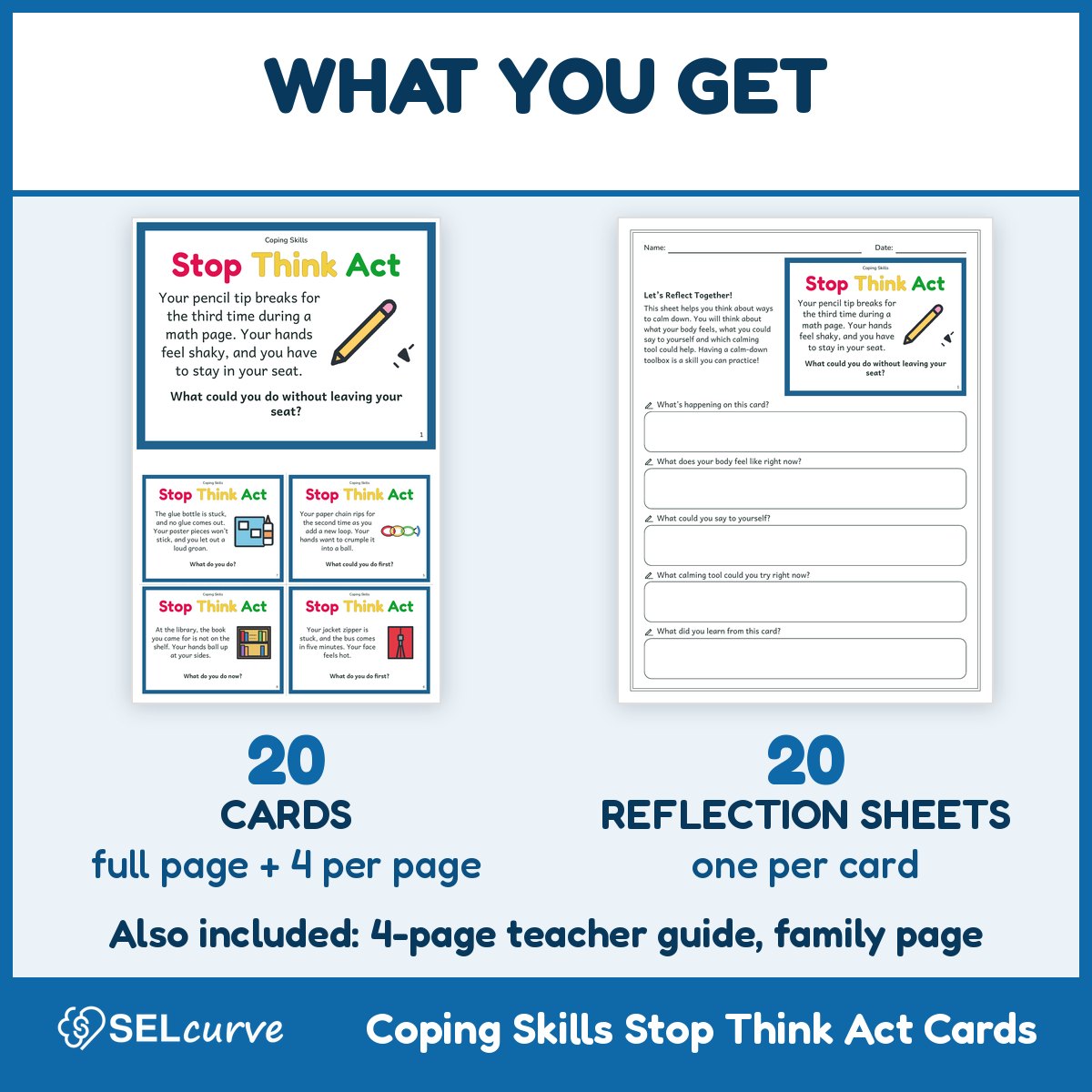
- 20 Stop Think Act cards showing everyday frustration or over-excitement, at a desk, on the bus, at a family party or at the park, each with one open question
- The same cards in two sizes: a full page each for whole-class talks, or four to a page for small groups and stations
- 20 reflection sheets, one per card, that ask what your body feels like and which calming tool you could try
- A 4-page teacher guide with a class toolbox of calming tools, a five-step routine, differentiation, Cards at a Glance and a printing guide
- A Family Connection page with a squeeze-and-release exercise to try at home, plus a digital activity for any device, with no student logins
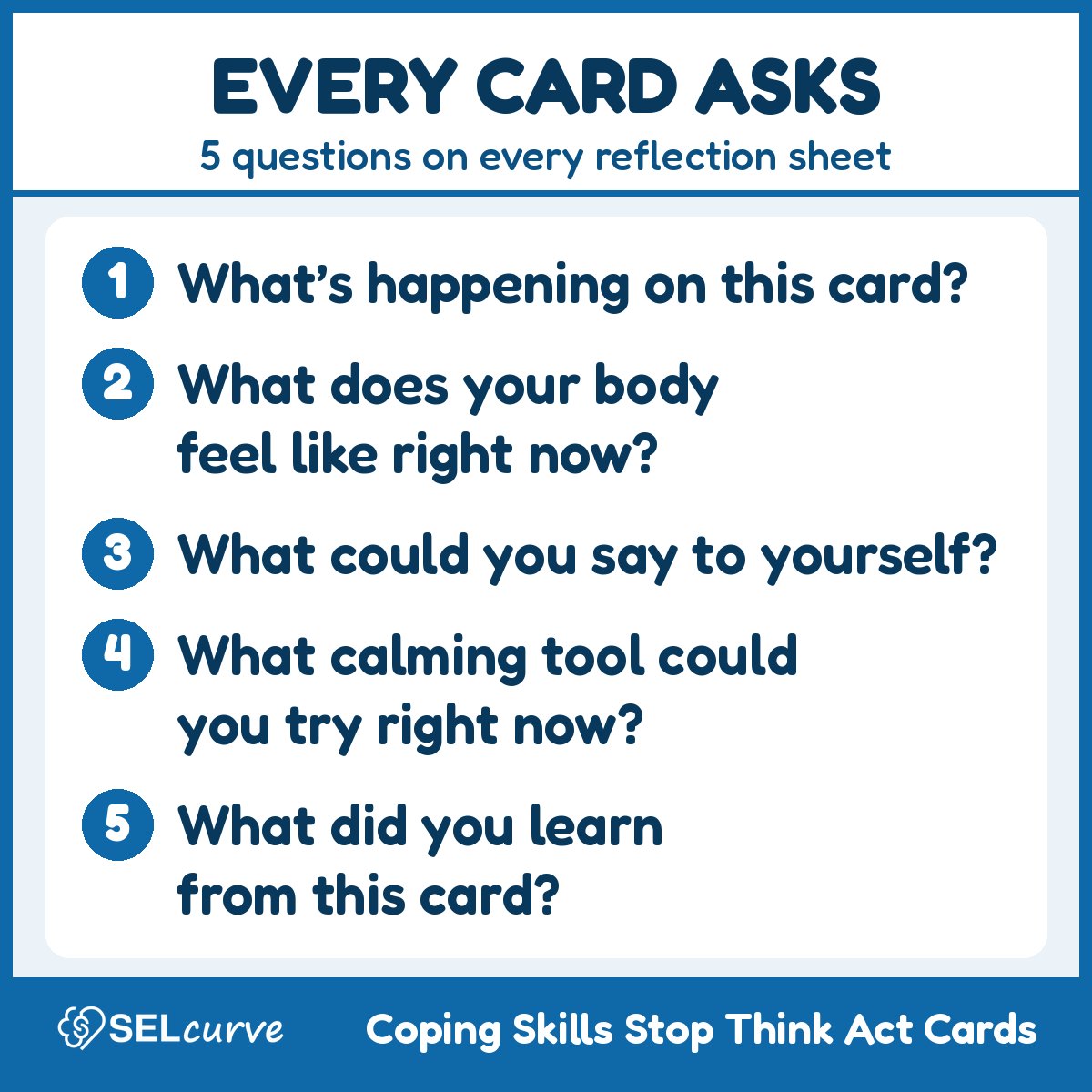
A look inside
Real pages, real moments
In the classroom
How to use the coping skills cards in class
- 1Build the toolbox first: post a class list of calming tools and practice each one together while everyone is calm.
- 2Read a card and check in: ask, “What is your body telling you right now?” and “Which calming tool would fit this moment, and why?”
- 3Choose and act it out: students brainstorm two or three tools, pick the one that fits where they are, then show using it and getting back to the task.
- 4Reflect on paper or a device: use the matching reflection sheet, or post the digital activity in Google Classroom or Teams, or show a QR code. Students work on any device and send you their answer sheet.
Print or digital
On paper, or on any device
This resource also works as a digital activity. Post it in Google Classroom or Teams, or show a QR code. Students answer on any device and send you their answer sheet.
Any deviceNo student logins
Printing and prep
Ready to print
- Full-page cards print one-sided on cardstock or plain paper; each card fills the page sideways, so turn the sheet to read it.
- 4-per-page cards: printed on one side of cardstock or plain paper. Cut on the dashed lines; laminated cards last for repeat use.
- The section title pages only mark where each part starts, so you can skip printing them.
Questions teachers ask
FAQ
Why don’t the cards name a calming tool?
So students do the choosing. The guide wants them to have several tools and pick the one that fits each moment: in their seat, on the move, in a calm spot or after a short break.
What grades are these coping skills stop think act cards for?
Grades 3–5. Younger students use sentence starters and work a card with you, and older students compare two tools and explain which fits the place best.
What self-talk does the guide teach?
Yes: “Notice my body. Pick a tool. Get back to it.” The guide suggests posting it next to your class list of calming tools.
Do students need devices?
No, the cards print. For a digital option, post it in Google Classroom or Teams, or show a QR code. Students work on any device with no student logins and send you their answer sheet.


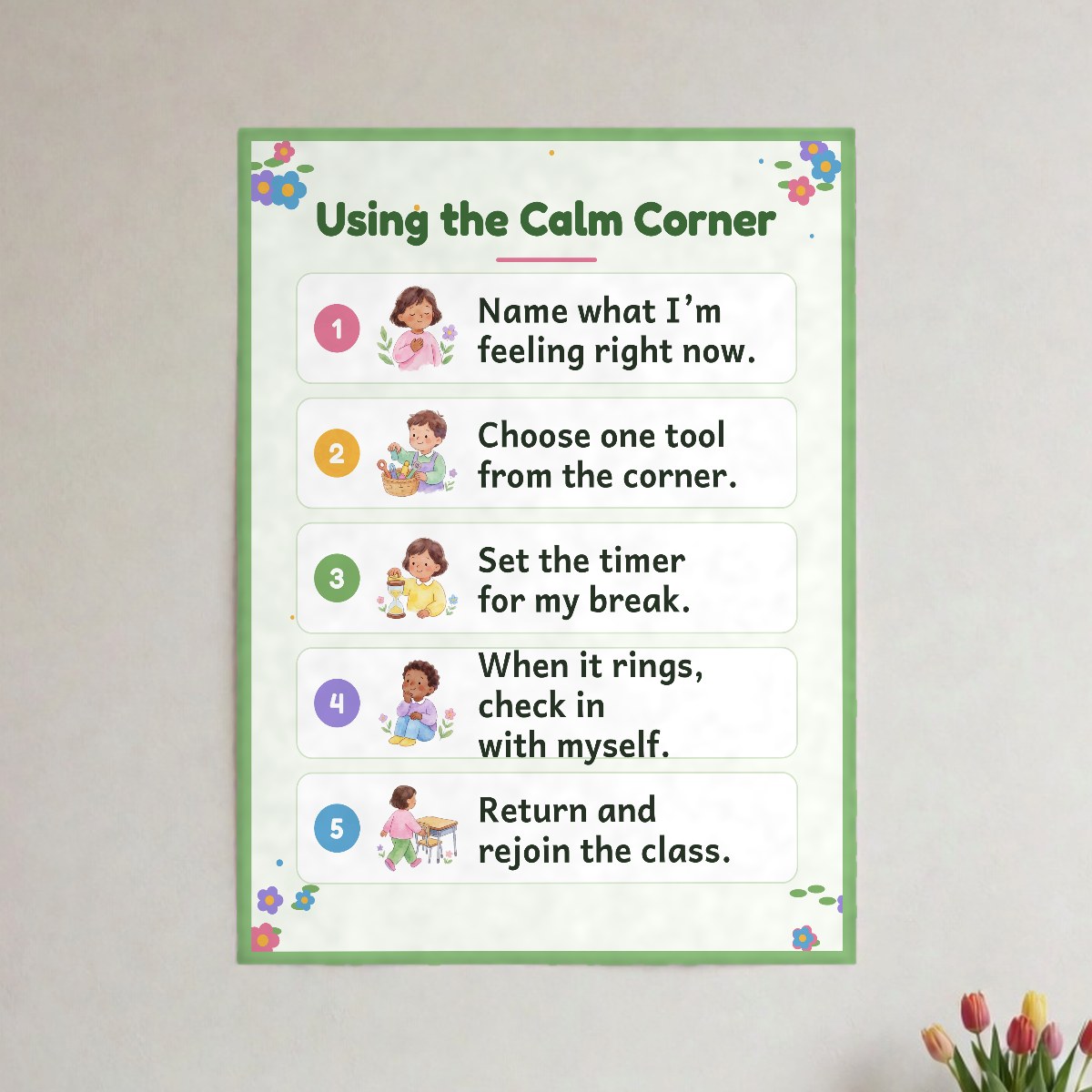 On the wallCalm down corner posters for the classroom76 printable posters in 7 styles →
More for Self-Management
See all in the library →
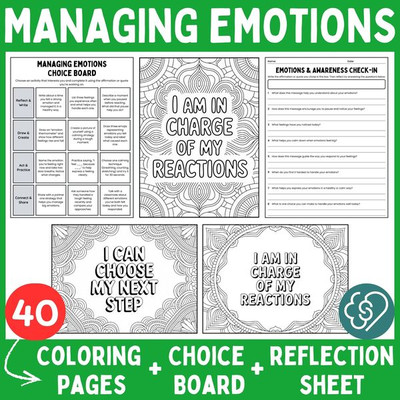
Try it in class this week
Start with the free Self-Management Stop Think Act Cards, or unlock it with Monthly.