
Full library·Grades 2–8·Self-Management·Conversation Cards
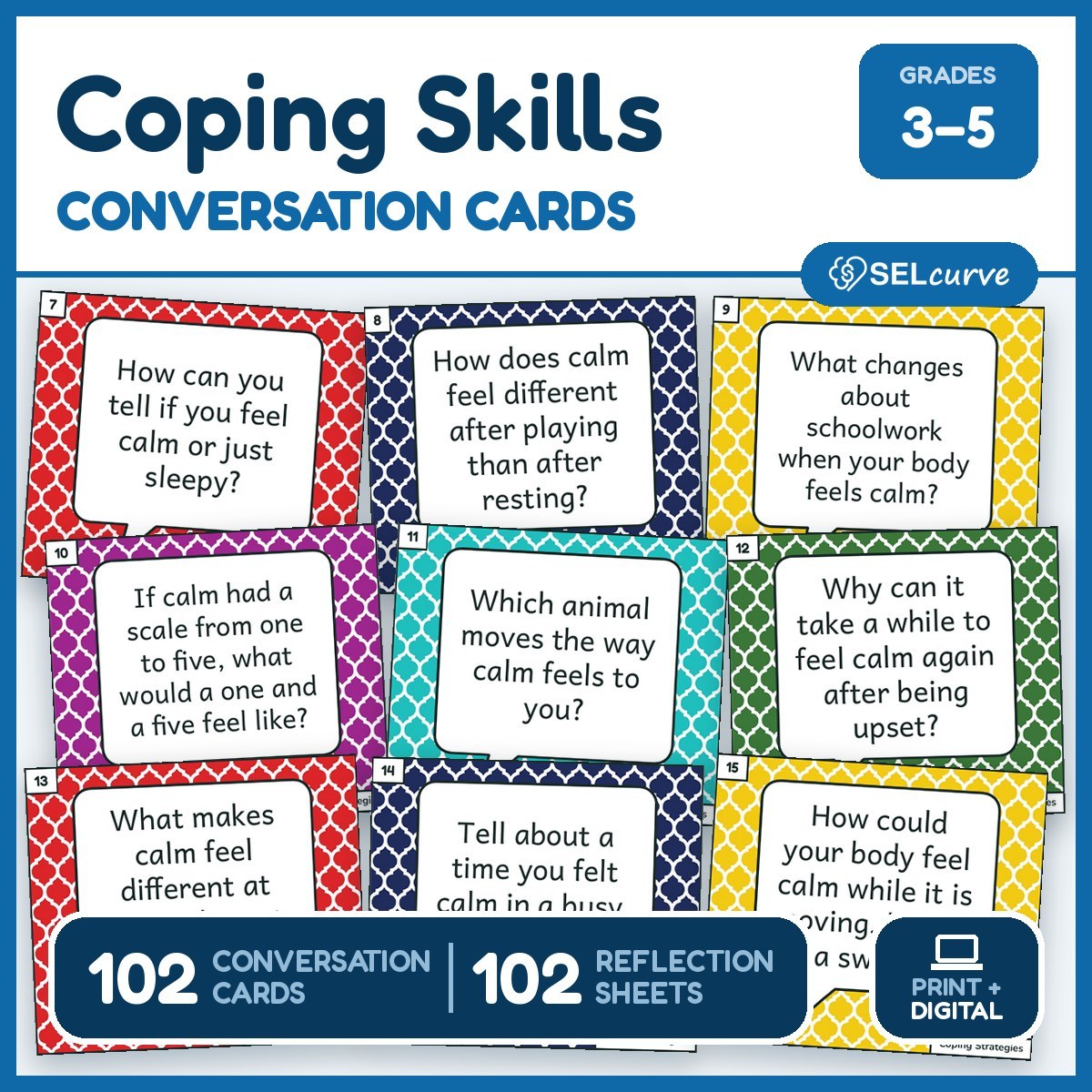
Coping Skills Conversation Cards
Asking a child to calm down only works if they know how. These coping skills conversation cards turn that know-how into 102 morning meeting questions, from slow belly breathing to a calm-down plan kept at the desk.
- 102 discussion questions
- 75 pages
- Print + digital
In the full library, with 37 more on Coping Strategies & Calming Techniques
Task cards, scenario cards, worksheets and more (grades K–12).
Get the free Self-Management Conversation CardsFree account · school email works · See the full library
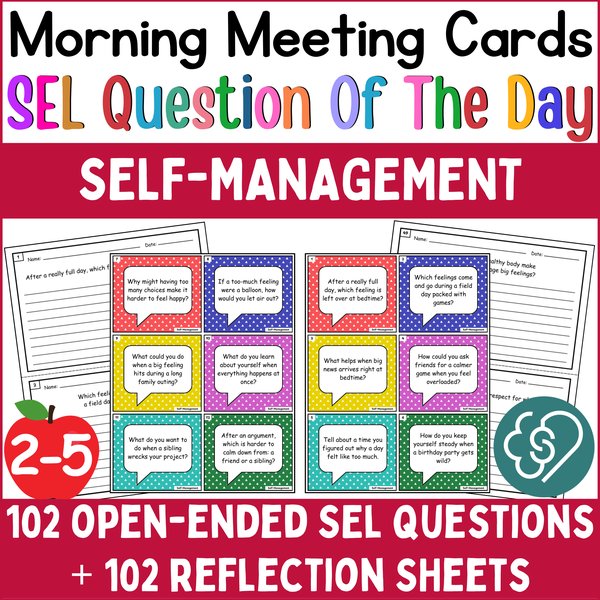 Same format, free with a free account: Self-Management Conversation CardsOpen it →
- Grades
- 2–8
- What you get
- 102 discussion questions75 pages
- Use it
- Print + digitaldigital = any device, no student logins
- Competency
- Self-Management
About this resource
Asking a child to calm down only works if they know how. These coping skills conversation cards turn that know-how into 102 morning meeting questions, from slow belly breathing to a calm-down plan kept at the desk. Written for Grades 2–8, they build Self-Management.
What students practice
- Noticing what calm feels like in their own body
- Using breathing, counting and calming movement
- Setting up calm spots and comfort objects
- Picturing a calm place and making a calm-down plan
- Choosing the right calming tool for the moment
What’s inside
- Strategy is the largest question type (20 questions), with observation, analytical, self-regulation and reflection questions alongside
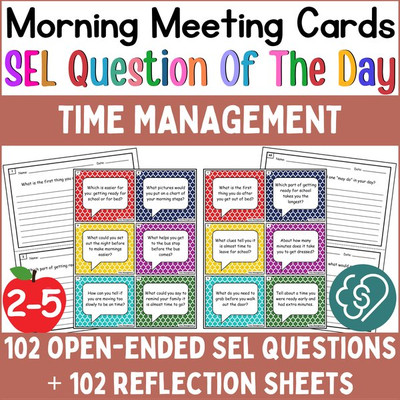
- Printable cards at six per page, plus a reflection sheet to match each question, two per page
A look inside
“What happens when you breathe out longer than you breathe in?”
“How could pretending to be a floppy noodle help your body relax?”
“Why does a calm spot work best as a place to reset, not to hide?”
“Which calming tool works best when you can’t leave the room?”
How to use these coping skills conversation cards in morning meeting
Grade fit
Younger students answer about squishy balls, glitter jars and blowing out pretend birthday candles. Older students weigh how to test a new tool, why two tools together might beat one, and what clues show which tool their body needs, which makes these useful conversation starters for middle school.
Digital version
In the digital version, students answer on any device with no student logins and download an answer sheet to hand in.
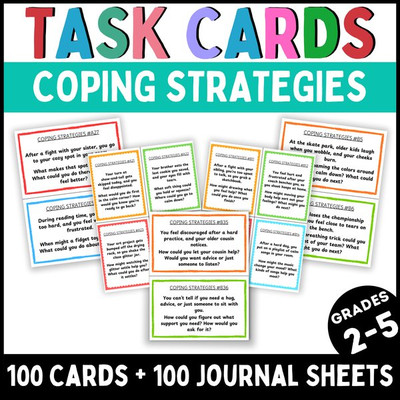
Pairs well with

Questions teachers ask
Which calming strategies come up in the questions?
Belly breathing, counting backward, stretches, squeezing and letting go, calm spots, comfort objects, picturing a calm place and making a calm-down plan, with a final focus area on choosing the right tool.
Is there an answer key?
No. The questions are open-ended, so students answer from their own experience.
More for Self-Management
See all in the library →
Every resource, one library.
710 SEL resources for elementary classrooms — printables, digital activities and answer sheets, and every new one we add.


