

Full library·Grades 2–5·Self-Awareness·What Would You Do? Cards
Body Awareness What Would You Do? Cards
A cousin says her mouth feels like paper while her water bottle waits on the porch step.
- 40 scenario cards
- 120 action cards
- 40 reflection sheets
- Print + digital
In the full library, with 3 more on Body Awareness
Task cards, worksheets and reading passages (grades 2–5).
Get the free Self-Awareness What Would You Do? CardsFree account · school email works · See the full library
 Same format, free with a free account: Self-Awareness What Would You Do? CardsOpen it →
- Grades
- 2–5
- What you get
- 40 scenario cards in five subtopics
- Use it
- Print + digitaldigital = one link, no student logins
- Competency
- Self-Awareness
- Topic
- Body Awareness
About this resource
A cousin says her mouth feels like paper while her water bottle waits on the porch step. These body awareness what would you do scenarios ask Grades 2–5 to read signals like that one: a growling stomach, heavy eyes, icy fingers, an achy ear. Each of the 40 Think, Choose, Act cards ends with three possible actions, building the Self-Awareness that turns a body signal into a sensible next step.
What students practice
- Noticing hunger, thirst and tiredness
- Telling a body need apart from a want
- Moving or resting when energy is off
- Making a change when it’s too hot, cold or loud
- Telling a grown-up when someone feels sick
What’s inside
- Teacher guide; 77 pages
A look inside
How to use these body awareness what would you do cards
Grade fit
The scenes run across 15 community, 13 school and 12 home settings, from a hiking lookout to the after-lunch slump in class. Signals come in kid language (wet-noodle arms, feeling as slow as a sloth), so the body awareness scenarios read easily in Grades 2–5.
Digital version
The interactive digital version shares as one link: students answer the think questions (or just read them in the quick format), choose an action card and say why, on any device with no student logins. At the end they download an answer sheet to hand in.
Good to know
In every one of these body awareness activities, a friend, sibling or cousin describes the signal and students help, so no child shares their own body details. The feeling-sick cards have no medical detail, and the strongest choice brings in a grown-up.
Pairs well with
Build on the set with Body Awareness Scenario Cards or Body Awareness Conversation Cards.
Questions teachers ask
Will students have to talk about their own bodies?
No. Each scenario is about a friend or family member, like a cousin with icy fingers or a friend with a scratchy throat, and students decide how to help.
What happens in the feeling-sick scenarios?
They describe a simple signal such as an achy ear or a wobbly tummy on the bus, and the strongest card is always telling a nearby grown-up.
More for Self-Awareness
See all in the library →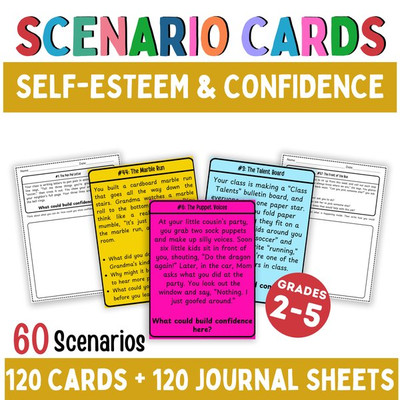


Every resource, one library.
672 SEL resources for elementary classrooms — printables, digital activities and answer sheets, and every new one we add.


