Impulse Control Games for Kids: 6 Ways to Practice the Pause in Grades 2–5
Kids don't learn to pause in the middle of a big feeling. They learn it in calm, playful practice first. These impulse control games build the pause, then a set of scenario cards lets students use it in moments that feel real.
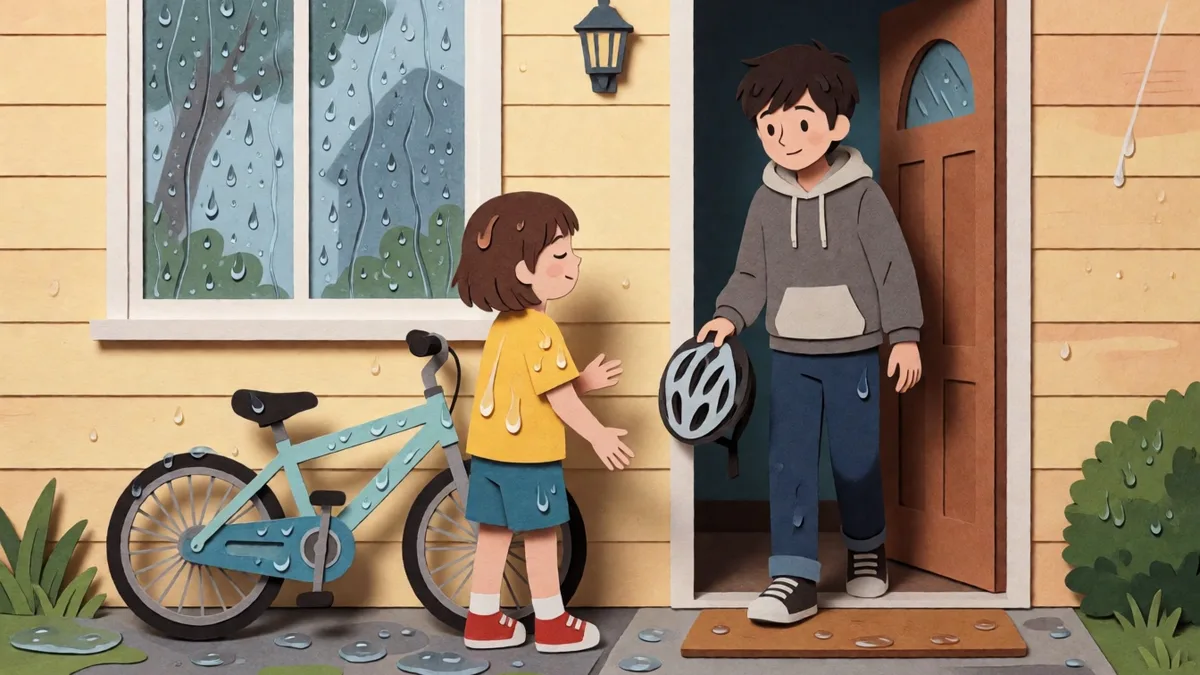
A brother leaves your new bike out in the rain, and before you know it, you’re yelling. That’s an impulse: the feeling arrives, and the body acts before the thinking part catches up. Kids can’t learn to pause in the middle of a big feeling, but they can practice the pause when everyone is calm, so it’s ready when they need it. Impulse control games make that practice playful. Below are six games for grades 2–5, starting with a card game built on real-life scenarios, plus questions to connect the games to real moments.
What impulse control means for kids
Impulse control isn’t about not feeling angry. The feeling is allowed to be there. The skill is noticing it, letting your body settle, and then choosing what to do. A simple way to say it to students: “Feel it, calm your body, then choose.”
The body usually warns us first. Hot cheeks, tight fists, a clenched jaw, shoulders creeping up. When students learn to spot those clues, they have a few seconds to choose a different move.
Impulse control games to start with: Pause and Pick
This game uses What Would You Do? scenario cards, where each situation comes with three action cards.
- Read the scenario. Read it aloud and ask students to find the body clues in the words. notice
- Pause together. Before anyone answers, the whole class takes three slow breaths. No talking until the third one. pause
- Show the three action cards. Teams talk about what happens next with each one. think ahead
- Pick and explain. Each team holds up its choice. A team scores a point when its reason says what the character did with their body first. choose
Four scenarios to play with, all about calming your body first when a brother, sister or cousin makes you angry:
What could you do before you talk to Jabari?
What could you do about the empty glitter glue?
What could you do when Nadia won’t give back the chair?
The fourth, “The Same Line Again,” has a brother singing one line of a song louder every time he’s asked to stop. For the bike, the action cards are “Breathe, Then Talk,” “Dry It Off Alone” and “Get Him Back.” Only one of them deals with the feeling and the problem. That’s a great question to ask the class.
5 self control games for elementary students
These quick games need no cards and fit into a transition or the last five minutes of the day.
- Pass the bell. Students sit in a circle and pass a jingle bell from hand to hand without letting it ring. When it rings, it starts over. Slow, careful hands are the whole point.
- Opposite moves. Call out a move, and students do the opposite: “Stand up” means sit, “Clap” means stay still, “Fast” means slow motion. Their brains have to stop the first move before doing the second.
- Hands down, count three. Ask a question that everyone wants to answer. Hands stay down until you’ve silently counted to three on your fingers. Then pick a name.
- Body clue detective. Read a short situation, and students point to where the character might feel it: fists, face, stomach, shoulders. Then they name one way to help that part relax.
- Slow-motion line. On the way to lunch, the line moves in slow motion for ten steps, then normal speed, then slow again. Switching on a signal is impulse control in action.
If your class already uses Stop, Think, Act, these self-control games give students extra practice with the “stop” step.
Questions to connect the games to real life
- Where in your body do you notice anger first?
- What is one thing you can do with your body in three seconds?
- When has acting fast made a problem bigger?
- What could you do first if someone takes your seat or uses up your things?
- What could you say after you’ve calmed your body?
- Which game helped you pause the most? Why?
About the free self-management scenario cards
The free Self-Management What Would You Do? Cards include thunder cracking over the kitchen table, a loud mall food court, a leaf pile with toy trucks hidden inside and a playroom that won’t tidy itself in two minutes, 40 situations in all. Three action cards go with every situation, along with a page for writing, and you can assign the cards on student devices too.


Working on a different skill after this one? The free SEL library covers all five SEL competencies.
More free self-management resources
 Self-Management Brain Breaks — SEL Movement Game (Grades 3–5)Grades 3–5 · PrintFREE
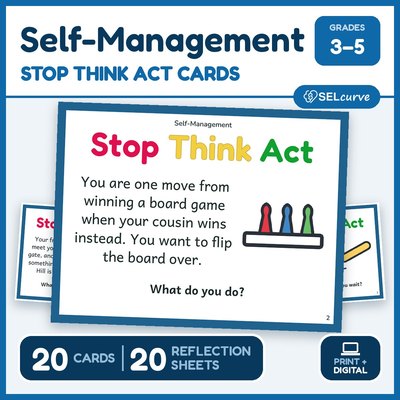 Free Self-Management Stop Think Act Cards — Printable & DigitalGrades 2–5 · Print + digitalFREE
 Free Self-Management Reading Comprehension Passages — Grade 3Grade 3 · Print + digitalFREE
Browse all free SEL resources.
Frequently asked questions
What are some impulse control games for kids?
Pause and Pick (scenario cards with a three-breath pause before choosing), pass the bell, opposite moves, hands down count three, body clue detective and a slow-motion line. All of them practice stopping the first move before choosing the next one.
How do you teach impulse control to kids?
Teach the body clues that come before an impulse, practice a short pause when everyone is calm, and use scenarios so students can choose what to do with the feeling before it happens for real.
What grade are these games for?
Second through fifth grade. With second graders, keep the quick games short and the commands simple.
Are the scenario cards free?
Yes. The complete set is free to print or share on screens, with every scenario, action card and writing page.
More SEL ideas