Self-Regulation Strategies for Students: 6 Ways to Handle Big Feelings in the Moment
Self-regulation isn't about making a big feeling disappear. It's about what a child does while the feeling is still there, whether it's a letdown, a hurt or a squeal of excitement.
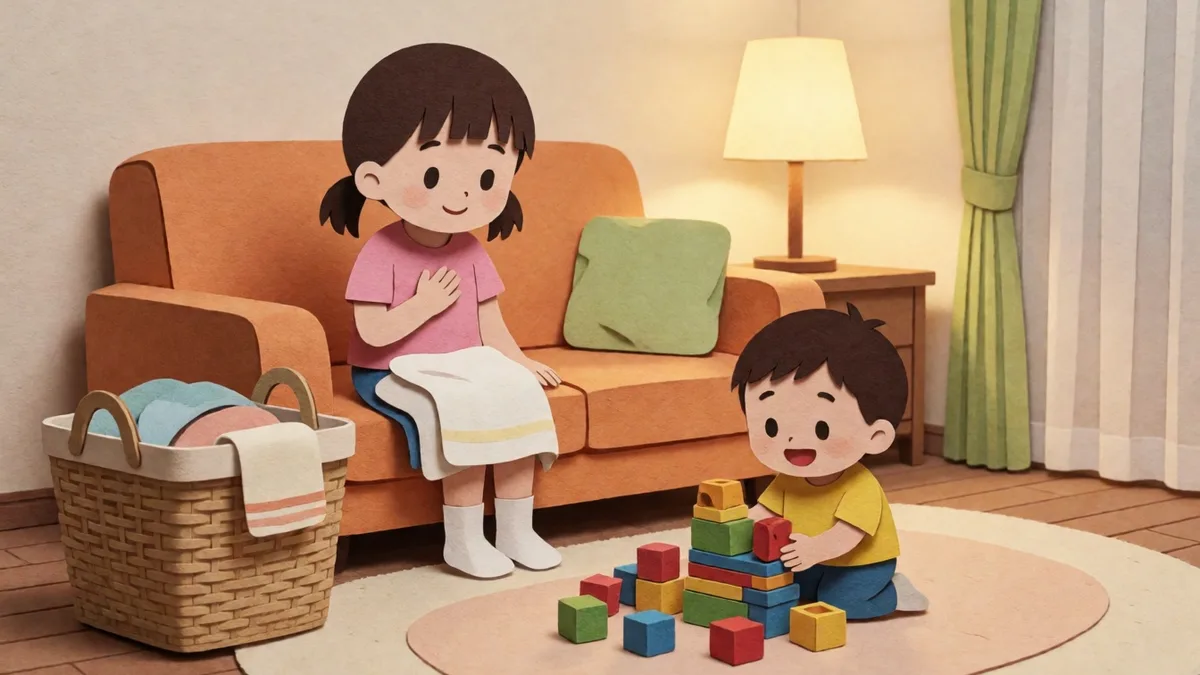
“Calm down” is one of the least useful things we can say to a child in the middle of a big feeling, and most teachers know it. What helps more is a short list of things to actually do. Good self-regulation strategies for students are small, concrete moves a child can make while the feeling is still there: notice it early, breathe, set down the glass before squealing. Below are six of them, with real scenarios to practice and the in-between answers that make the best discussions.
What are self-regulation strategies?
They’re the skills a person uses to manage how they respond to a feeling. The feeling itself is allowed to stay. A student who is still disappointed but chooses a new cake instead of refusing to have any has regulated. A student who pretends they aren’t disappointed at all hasn’t regulated. They’ve just hidden it, and hidden feelings tend to come out later.
It helps to remember that regulation isn’t only for anger. Big excitement needs managing too. Ask any teacher on the last day before winter break.
For elementary students, these skills are still under construction. A third grader who melts down over a canceled sleepover isn’t being difficult; their brain is still learning to put a gap between the feeling and the reaction. Self-regulation strategies give them something to put in that gap. The more often students practice when things are calm, the more likely one of those moves shows up when things aren’t.
6 self-regulation strategies for students
- Catch it early. Feelings grow. Noticing “I’m getting upset” at a 3 is much easier to handle than noticing it at a 10. noticing
- Take a slow breath. One long breath out gives the body a moment before the next move. breathing
- Set it down first. When excitement hits, put down the wet glass, step back from the tea tray, wash the glue off your hands, then celebrate. safety
- Pause before deciding. Big feelings make big announcements. “I’ll never help again” can wait until the hurt has settled. waiting
- Ask for a minute. “Can I have a quiet minute in my room?” is a skill, not a way of getting out of things. asking
- Notice when you’re settled. Knowing the feeling has passed matters as much as handling it. Then you can rejoin the game. checking in
Practice scenarios: pick the move, then explain why
These three come from a free worksheet set about managing strong emotions. Students pick the best choice and write why.
(A) Let it grow until she snaps at her little brother.
(B) Sense something is off and fold on, not checking.
(C) Catch it growing early and take a slow breath.
(A) Wave the wet glass around while she shrieks.
(B) Set the glass down, then tell Mom the big news.
(C) Hurry the last glasses to go tell her friends.
(A) Keep vacuuming and say nothing to anyone yet.
(B) Ask Dad for a quiet minute in his room, then help.
(C) Shout over everyone that the whole day is ruined.
Sami’s option A deserves a closer look. On the outside he looks fine: he keeps working and doesn’t shout. But the hurt hasn’t gone anywhere, and nobody knows it’s there. Ask students how that’s different from option B, where Sami takes care of the feeling and then comes back to help. That difference is what self-regulation strategies are for.
Check-in questions about big feelings
- How does your body tell you a feeling is starting to grow?
- Which strategy would help you most when you’re really excited?
- What’s something you said in a big feeling that you’d say differently later?
- How could you ask for a quiet minute at school? At home?
- How do you know when a feeling has passed?
- Who can you go to when a feeling is too big to handle alone?
Inside the free worksheets
The free Self-Management Worksheets pack 180 multiple-choice moments into 30 pages. Big feelings come first; later sets cover anger and worry, staying focused, thinking before acting, bouncing back, building habits and keeping track of your things. Students back up every pick with a written reason, and the same scenarios also work on Chromebooks and iPads with no student logins.

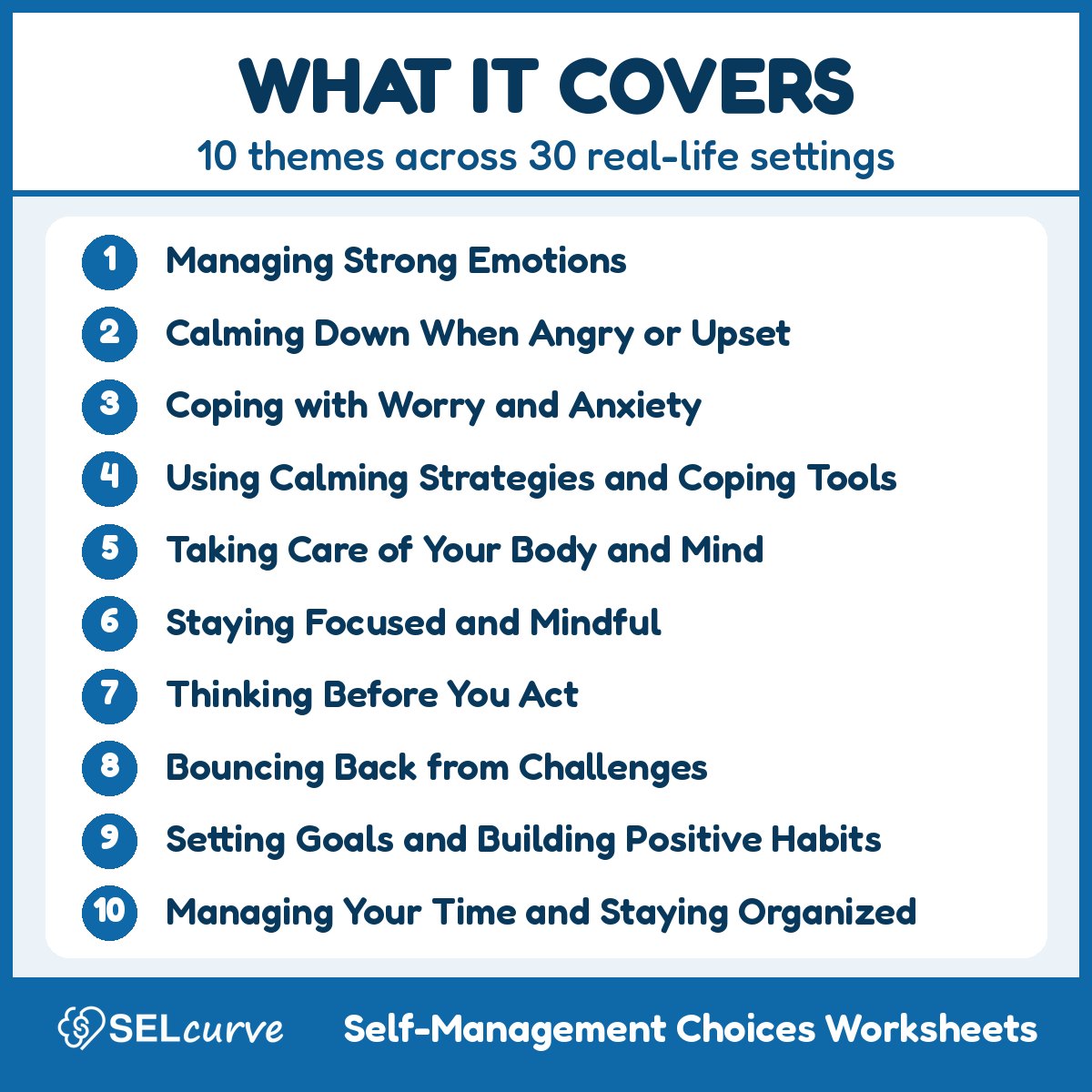
Need something for a different part of your SEL week? Head to the free SEL resources.
More free self-management resources
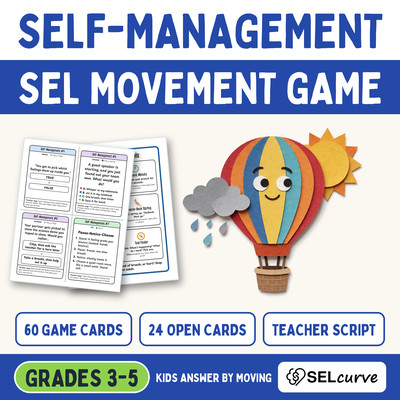 Self-Management Brain Breaks — SEL Movement Game (Grades 3–5)Grades 3–5 · PrintFREE
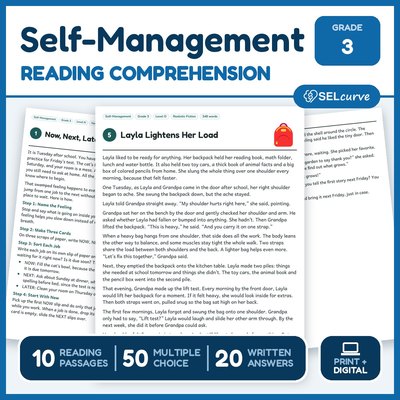 Free Self-Management Reading Comprehension Passages — Grade 3Grade 3 · Print + digitalFREE
 Free Self-Management Scenario Cards — Printable & DigitalGrades 2–6 · Print + digitalFREE
Browse all free SEL resources.
Frequently asked questions
What are some self-regulation strategies for kids?
Catching a feeling early, taking a slow breath, putting things down before reacting, pausing before a decision, asking for a quiet minute and noticing when the feeling has passed.
Is self-regulation the same as calming down?
Not quite. Calming down is one part of it. Self-regulation is choosing how to respond while a feeling is there, including big happy feelings like excitement, not making the feeling go away.
What grades are these scenarios for?
They’re built for second through fifth graders. For a younger group, read the scenario and choices aloud and let them answer by pointing or talking it through.
Are the self-management worksheets free?
Yes. All 30 worksheets and 180 scenarios are free to print, and there’s a digital version too.
More SEL ideas