Paid·Grades K–2·Self-Management·Brain Breaks
Impulse Control Brain Breaks
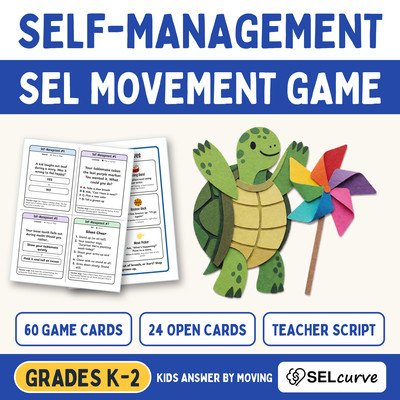
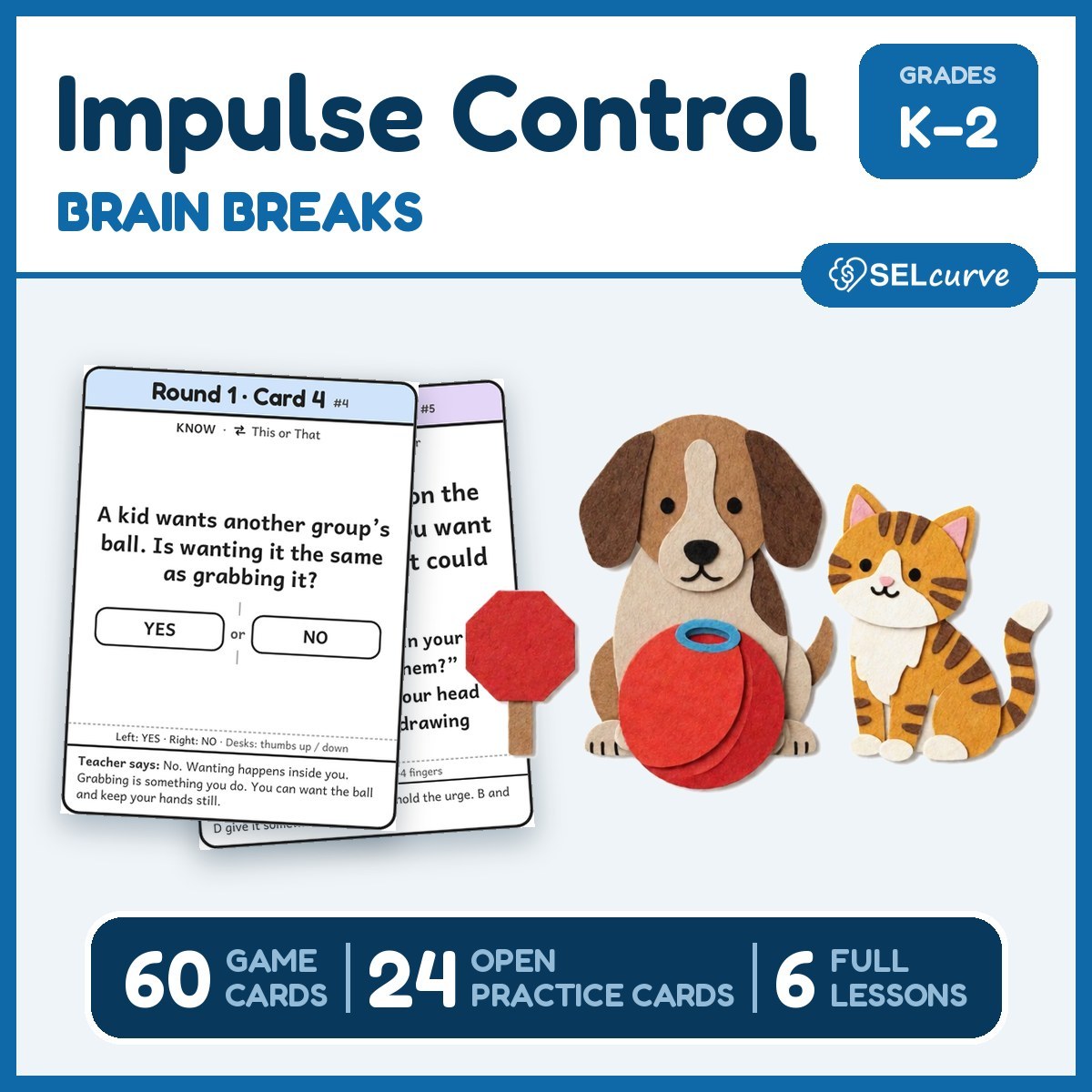
- 60 game cards
- 24 Open Practice Cards
- 6 Round Cards
- Printable
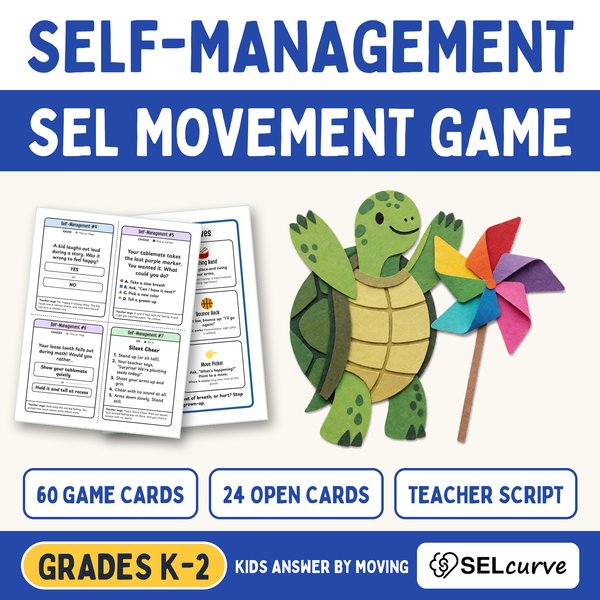 Free with a free accountSelf-Management Brain Breaks24 Open Practice Cards · 60 game cards · Printable
What a free account gives you
- 81 free resources across all five SEL areas, ready to print
- Digital activities: post them in Google Classroom or Teams. Any device · No student logins
- A planner and collections to keep your SEL week organized
- Grades
- K–2
- What you get
- 60 game cards, 10 for each of 6 rounds
- Type
- Brain Breaks
- Use it
- PrintView & Print in your browser
- Competency
- Self-Management
About this resource
Waiting for the slide, holding a shouted answer and keeping hands still near the new markers all get practice in these impulse control brain breaks for Grades K–2, which pair 60 game cards for six 15–20 minute lessons with 24 Open Practice Cards for a 3-minute break. Children wiggle their fingers if they have ever wanted to press a big button right away, and in Stand-Sit Switch they move only on the two real calls and stay still when you slip in a trick word like Stamp. It is a Self-Management resource. Find more in our impulse control and self-control activities.
What students practice
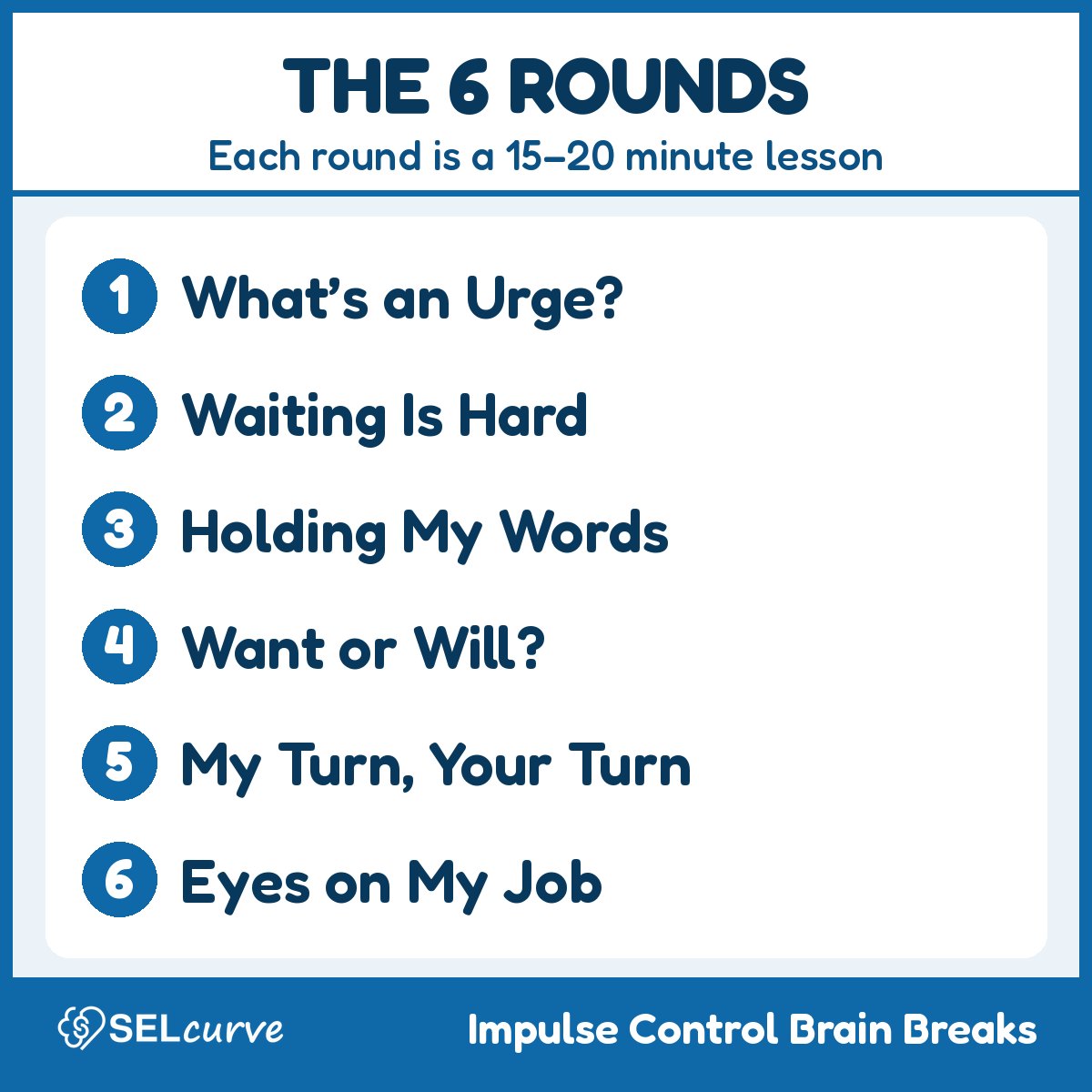
Six rounds, each about one kind of urge:
- What’s an urge?
- Waiting is hard
- Holding my words
- Want or will?
- My turn, your turn
- Eyes on my job
Right for your grade
Grades K–2
You read each short card aloud, and every moment is a familiar one: new markers, the slide, a friend’s story, a jump rope turn and a bird outside the window. Answers are simple movements, the corner signs use colors and shapes, and the games have no outs, so an oops gets a smile and everyone keeps playing.
Everything included
What’s inside these movement activities
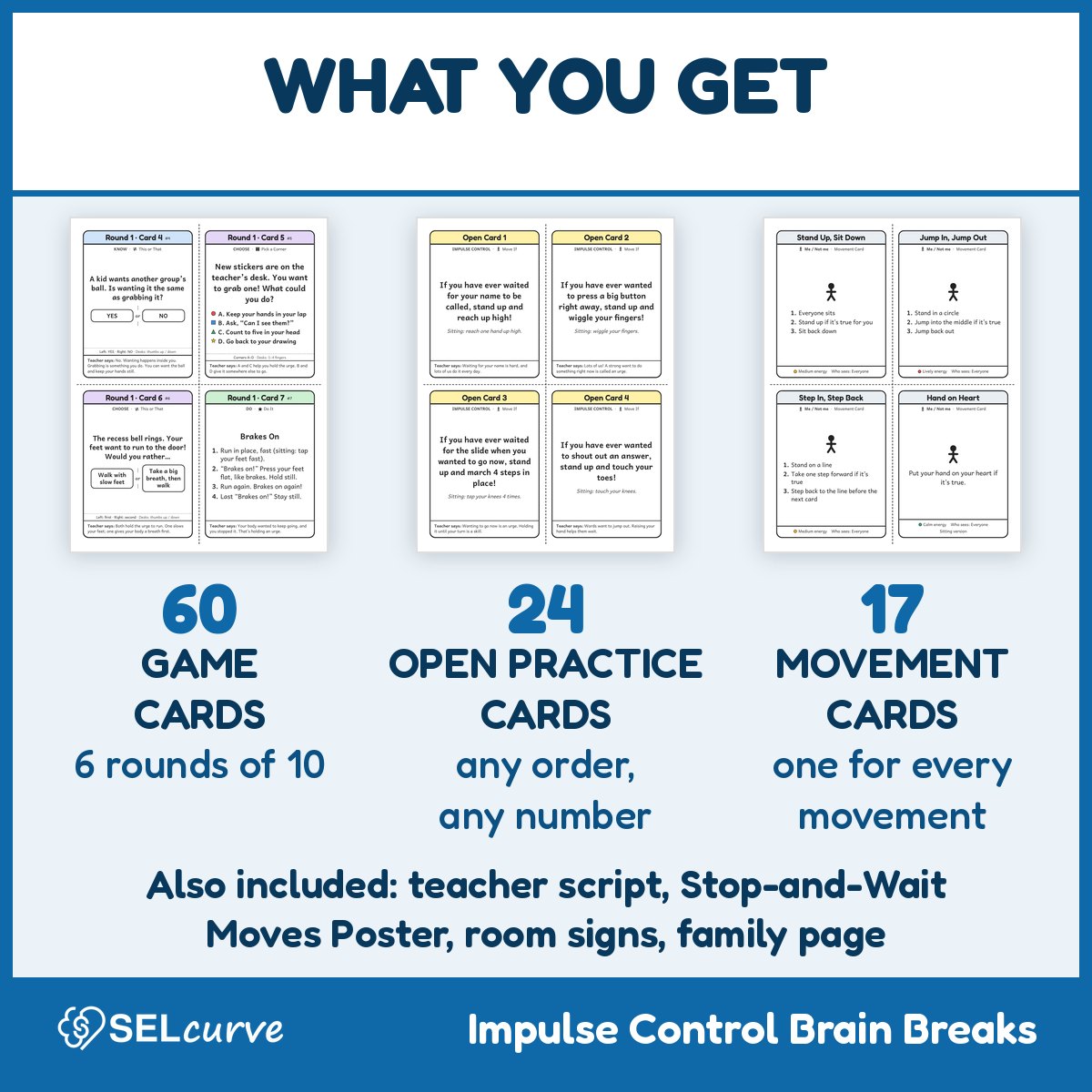
- 60 game cards, 10 for each of 6 rounds, laid out four to a page in the order you play them, with three Stop-and-Wait games in every round
- 24 Open Practice Cards for a short break before something exciting, each with a sitting move and a teaching line
- 6 Round Cards naming the Do cards, what you need and where to stop, plus 6 Make Your Own cards
- A Detailed Script for Teachers and a Movement Menu with other ways to answer each kind of card
- The Stop-and-Wait Moves Poster with the six moves, plus 17 Movement Cards, corner and Small/Big signs, and a Family Connection page to send home
A look inside
Real pages, real moments
In the classroom
How to use these Stop-and-Wait games
- 1Before something exciting: read 3–5 Open Practice Cards as written, let the class do each move, and share the short teaching point.
- 2Lesson time: the Round Card tells you the setup; play the cards in order and use the default moves from the Quick Start page.
- 3In the moment: the guide suggests naming the urge first and then the move, such as offering Brakes On to a child who wants to go first.
- 4Kindergarten: start with 4–5 cards and practice each movement before the first game.
Printing and prep
Ready to print
- Every round takes 3 pages: its Round Card, its ten cards in playing order and one blank card to fill in.
- Print on US Letter at actual size, one side only, or choose Fit to page for A4 paper.
- Laminated or cardstock cards survive a full year of play, and they work in color or in black and white.
Questions teachers ask
FAQ
Are these impulse control brain breaks elimination games?
No. The guide says nobody is ever out. When a child moves on a trick word, you laugh at the trick, not the child, and keep going.
What does a child practice in a Do card?
A Stop-and-Wait Move, such as holding a star pose while you count slowly to 5 or keeping lips together while a partner talks.
What if a child often has a hard time waiting?
Check in privately and talk with the family and your counselor, the guide says. Self-control is easier for some children than others.
Does the upper-grade version go further?
Yes. The Grades 3–5 version builds on these ideas with where urges come from, matching a waiting tool to the wait, and right-now wants versus bigger wants.
More for Self-Management
See all in the library →
Try it in class this week
Start with the free Self-Management Brain Breaks, or unlock it with Monthly.