Paid·Grades 3–5·Relationship Skills·Stop Think Act Cards
Teamwork Stop Think Act Cards
- 20 Stop Think Act cards
- 20 reflection sheets
- Print + digital
 Free with a free accountRelationship Skills Stop Think Act Cards20 Stop Think Act cards · 20 reflection sheets · Print + digital
What a free account gives you
- 81 free resources across all five SEL areas, ready to print
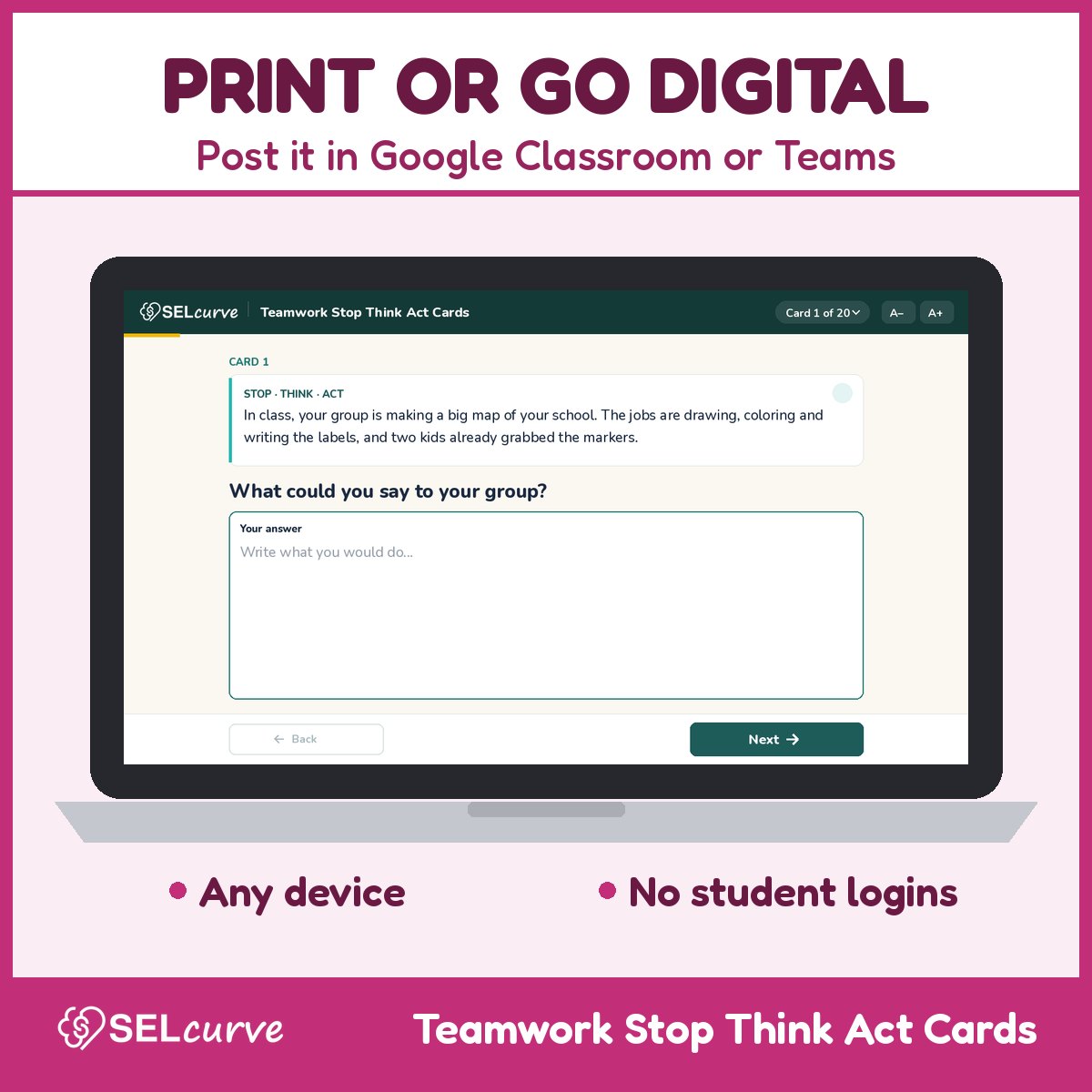
- Digital activities: post them in Google Classroom or Teams. Any device · No student logins
- A planner and collections to keep your SEL week organized
- Grades
- 3–5
- What you get
- 20 Stop Think Act cards
- Use it
- Print + digitaldigital = any device, no student logins
- Competency
- Relationship Skills
About this resource
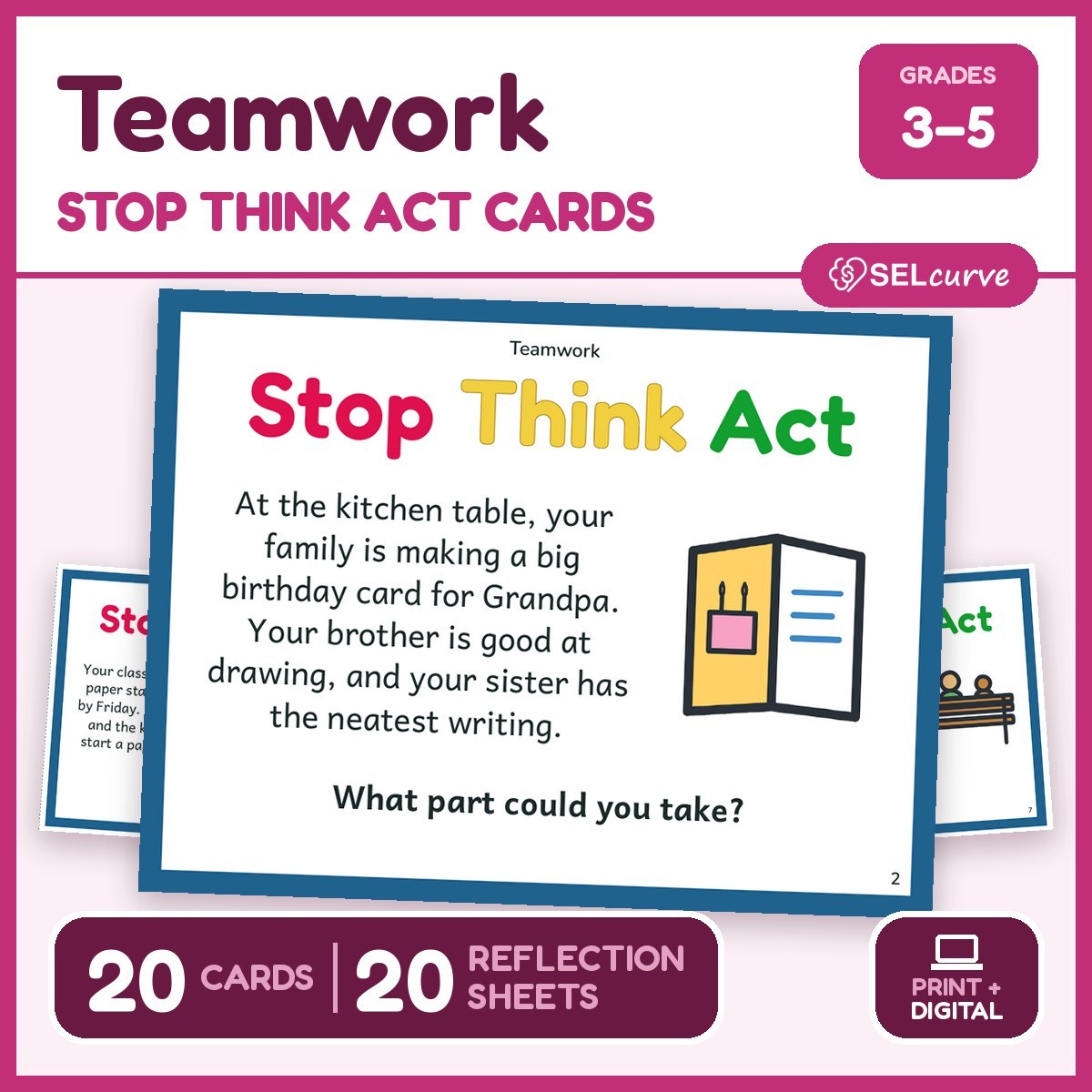
Everyone on the relay team wants to run last with one minute before the whistle, the poster vote is tied two to two and yours is the last vote, Diego kicks the grass after letting in a goal at the park: these teamwork stop think act cards put Grades 3–5 in twenty moments of working with others toward a shared goal. Students name what the team is trying to do, find their own part, mix everyone’s ideas and cheer teammates on when it gets hard. It is a Relationship Skills resource. Find more in our teamwork and cooperation activities.
What students practice
What it takes to be a good teammate:
- Finding your part on a team
- Keeping the team’s goal in mind
- Mixing everyone’s ideas
- Doing your share
- Cheering on teammates when a task gets hard
Right for your grade
Grades 3–5
Younger students in Grades 3–5 use the starter “Our team needs… so I can…” and work through a card with you first. Older students name what each person on the card could do so the whole team reaches its goal. The guide suggests posting its three questions near your group tables: “What’s our goal? What’s my part? How can I help the team?”
Everything included
What’s inside these think before you act teamwork cards
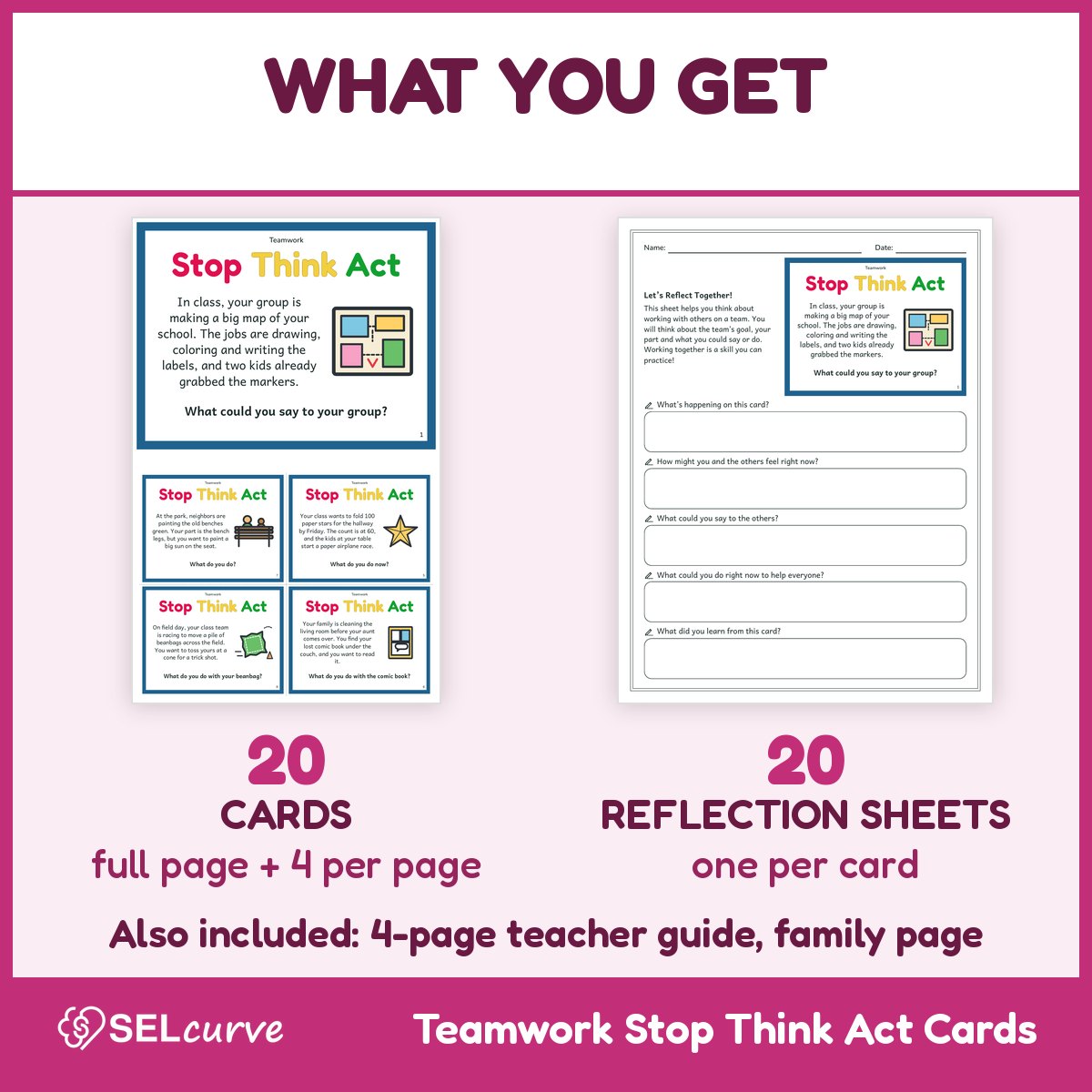
- 20 Stop Think Act cards, from group projects and field day to family chores and neighbors raking leaves, each with one question about what to say or do
- One card per page or four per page: the big size for the whole class, display or one per group, the small size for groups that plan what a good teammate would do
- 20 reflection sheets, one to go with each card, in their own file, asking what you could do right now to help everyone
- A 4-page teacher guide with five discussion steps, tips such as Every Part Counts and Mix, Don’t Pick, and differentiation, then Cards at a Glance and a printing guide
- A Family Connection page for planning a small job together, and a digital activity students can open on any device, with no student logins
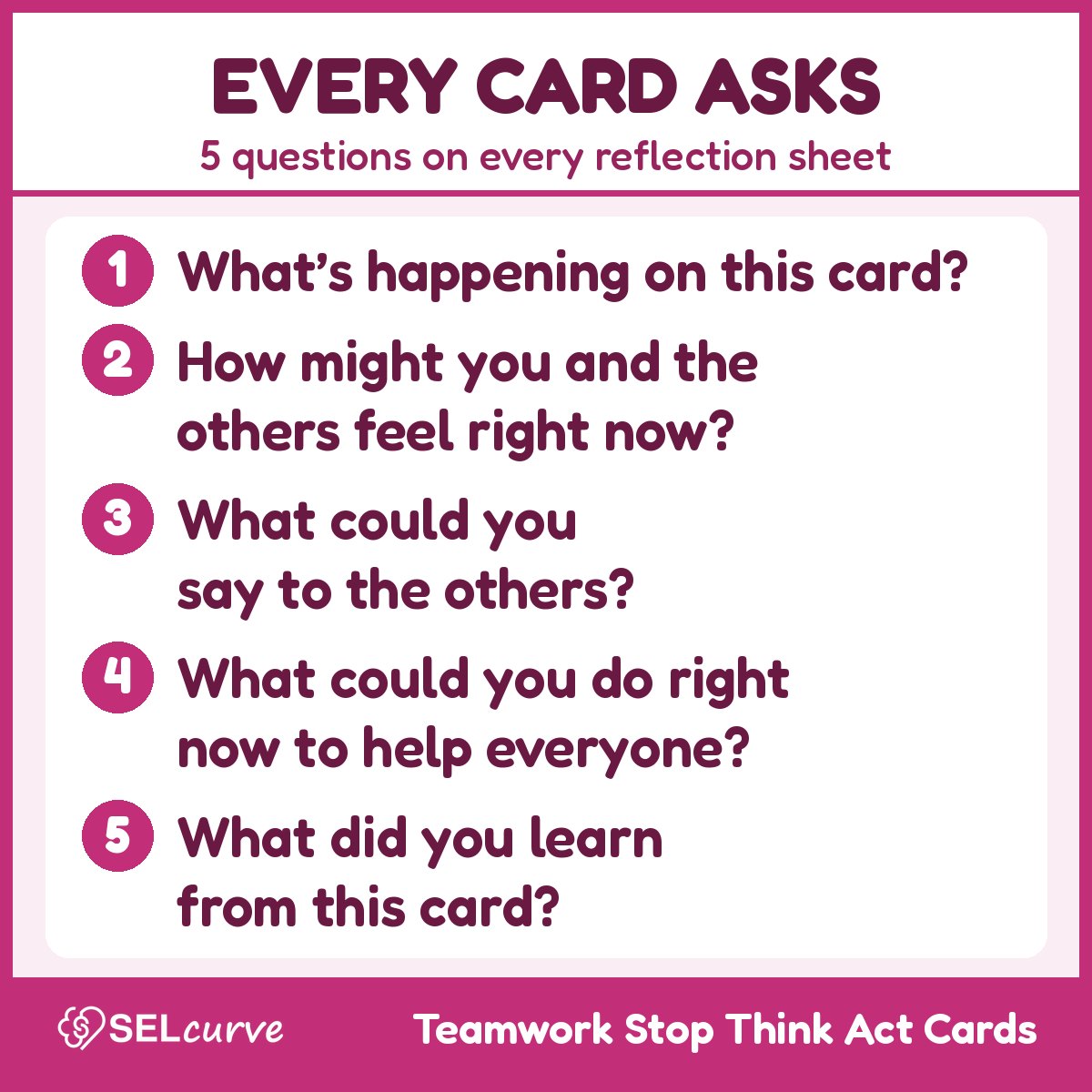
A look inside
Real pages, real moments
In the classroom
How to lead a teamwork discussion
- 1Name the goal: read a card aloud and, before anyone answers, ask what the whole team is trying to do.
- 2Find your part: ask what part you could play right now, and point out that small jobs, like writing labels, help as much as big ones.
- 3Pick the team move: brainstorm two or three things a teammate could say or do, choose the one that helps the whole team most, and act it out. Praise answers that use more than one person’s idea.
- 4Reflect: students complete the card’s reflection sheet, or post the digital activity in Google Classroom or Teams, or show a QR code. Students answer on any device and send you their answer sheet.
Print or digital
On paper, or on any device
This resource also works as a digital activity. Post it in Google Classroom or Teams, or show a QR code. Students answer on any device and send you their answer sheet.
Any deviceNo student logins
Printing and prep
Ready to print
- Full-page cards: cardstock or plain paper, one-sided, printed sideways so a card fills each page.
- Four-per-page cards: cardstock or plain paper, one-sided; cut apart on the dashed lines and laminate to reuse in group work.
- Reflection sheets: plain paper, one-sided, one for each student after the card talk.
Questions teachers ask
FAQ
What does Mix, Don’t Pick mean?
It is one of the guide’s tips: when a group has different ideas, praise answers that use more than one person’s idea instead of choosing just one.
What grades are these teamwork stop think act cards for?
Grades 3–5. Younger students use a sentence starter, and older students plan a part for each person on the card.
Are all the cards set at school?
No. Many are group work in class or gym, and others take place at home and around the neighborhood, like cleaning before a visit or painting park benches with neighbors.
Is the digital activity part of the set?
Yes. Post it in Google Classroom or Teams, or show a QR code. Students work on any device with no student logins and send you their answer sheet.
More for Relationship Skills
See all in the library →

Try it in class this week
Start with the free Relationship Skills Stop Think Act Cards, or unlock it with Monthly.