Full library·Grades 2–5·Self-Management·Task Cards · Stop Think Act Cards
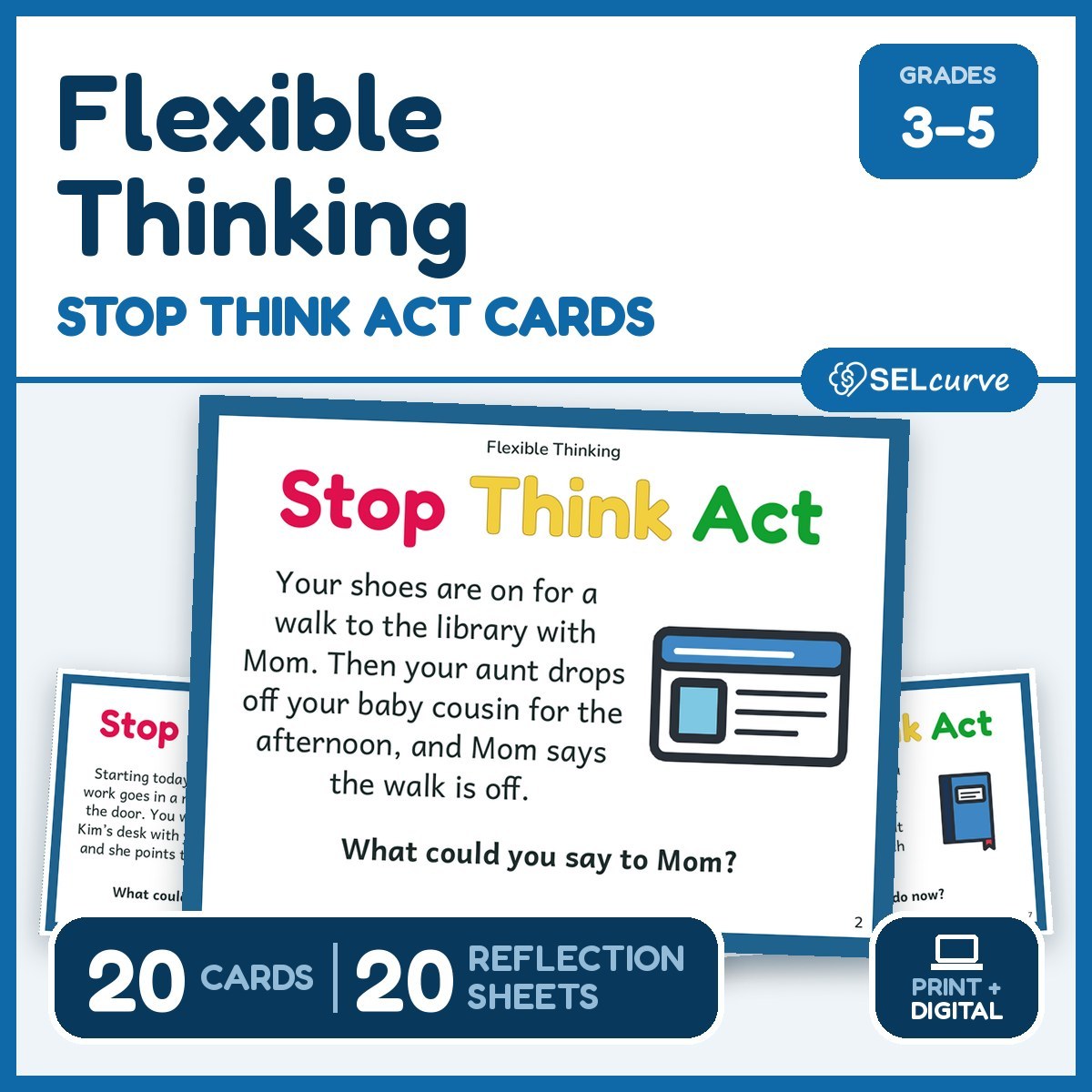
Flexible Thinking Stop Think Act Cards
In these flexible thinking stop think act cards, a plan, a rule or a routine changes on every one of the 20 cards for Grades 3–5: scooter tag turns into a beanbag game because another class needs the scooters, the bus stop moves down the bl…
- 20 Stop Think Act cards
- 20 reflection sheets
- Print + digital
In the full library, with 10 more on Flexibility & Adaptability
Scenario cards, worksheets, role play and more (grades 2–8).
Get the free Self-Management Stop Think Act CardsFree account · school email works · See the full library
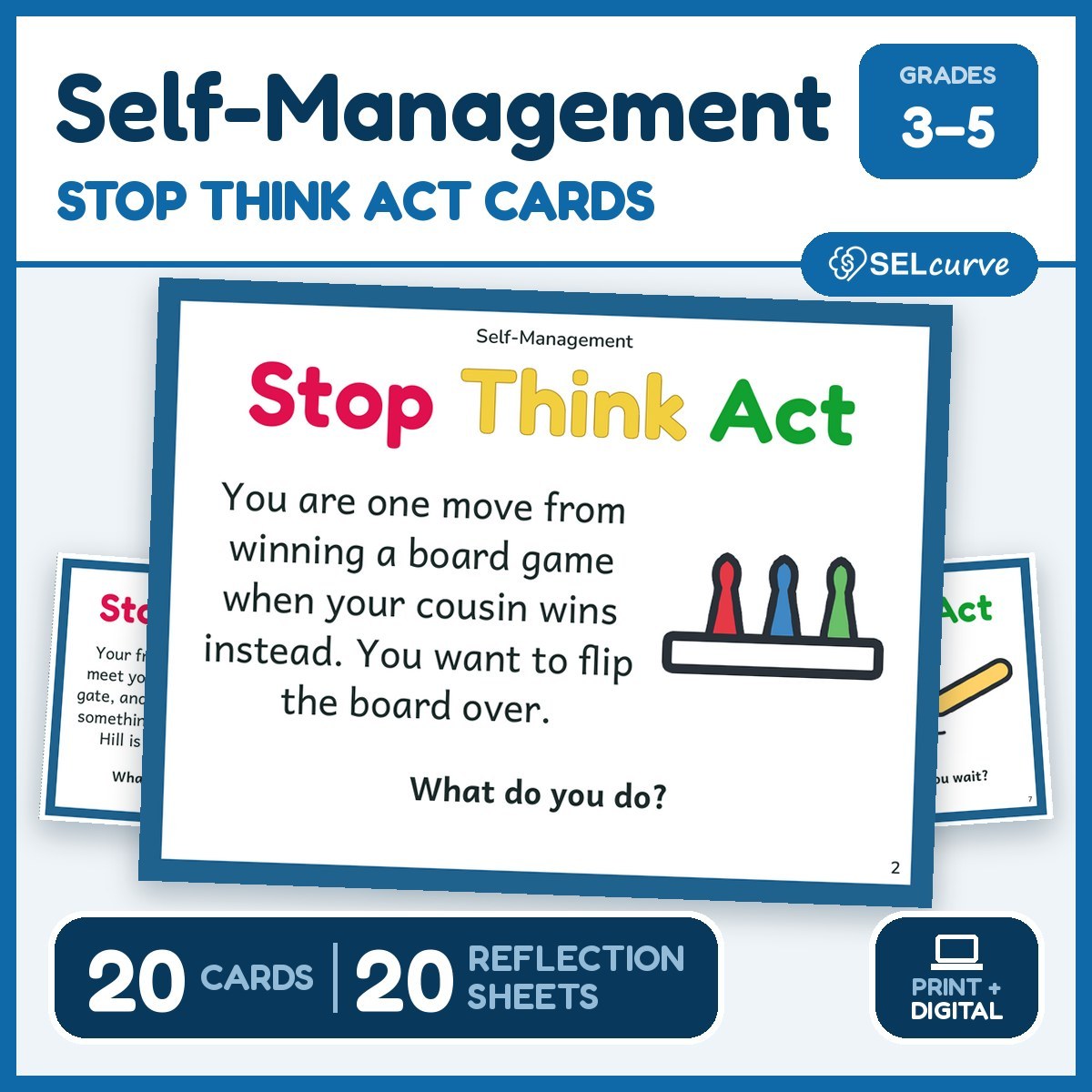 Same format, free with a free account: Self-Management Stop Think Act CardsOpen it →
- Grades
- 2–5
- What you get
- 20 Stop Think Act cards set at school
- Type
- Task Cards
- Use it
- Print + digitaldigital = any device, no student logins
- Competency
- Self-Management
About this resource
In these flexible thinking stop think act cards, a plan, a rule or a routine changes on every one of the 20 cards for Grades 3–5: scooter tag turns into a beanbag game because another class needs the scooters, the bus stop moves down the block, Dad needs the kitchen table for laundry just as you set out your paints. Students name what changed, think about what can still happen, and come up with a plan B. It is a Self-Management resource. Find more in our flexible thinking activities.
What students practice
- Last-minute changes
- New routines and new ways of doing things
- Changed rules
- Making a plan B
- Finding a new plan together with others
What’s inside these think before you act flexible thinking cards
- Two card formats: one per page for whole-class talks or display, and 4 per page to cut apart for small groups, partners and stations
- A 4-page teacher guide with ideas like acting a card out twice, implementation tips, a step-by-step guide and differentiation, then Cards at a Glance and a printing guide
- A Family Connection page and a digital activity students open on any device with no student logins
A look inside
Card 13: “You and Grandma walk to the park so you can swing. Every swing is taken, and three kids are waiting in line.” Then: “What could you play instead?”
How to lead a plan B talk with these cards
- Start with the card: read it aloud and let students picture themselves in the moment.
- Stop and ask: what changed, and what can still happen? What could you say or do to go along with the new plan?
- Make a new plan: brainstorm two or three plans, choose the one that works best for everyone, then act it out. The guide also suggests acting a card out twice, once stuck on the old plan and once going along with the new one.
- Reflect: use the card’s reflection sheet, or post the digital activity in Google Classroom or Teams, or show a QR code, so students answer on any device and send you their answer sheet.
Grade fit
Changed rules, moved tables and closed fields are part of every school week in Grades 3–5. Younger students get starters like “Okay, so now we can…” and work through a card together first, and older students come up with two backup plans and explain which one fits better. In mixed-ability pairs, students list what changed and one new plan for each card.
Printing
- Full-page cards: cardstock or plain paper, one-sided, large enough for the whole class, a display or a group.
- 4-per-page cards: one-sided on cardstock or plain paper; cut the dashed lines, and laminate so the set lasts.
- Reflection sheets: plain paper, one-sided; give each student the sheet for the card you just discussed.
- All cards read clearly in black and white.
Good to know
Students can pass on any card, and talk stays on the situation, not on people. The guide reminds students that it is okay to feel let down first, and that asking a grown-up how a new rule or routine works is always a good choice.
Questions teachers ask
What routine can students use when plans change?
The guide’s three-step routine is “Stop. Think: what changed, and what can I do now? Act with a new plan.” Post it near your daily schedule.
What grades are these flexible thinking stop think act cards for?
Grades 3–5. Younger students use sentence starters with your support, and older students plan two backups and choose the better one.
How do small groups use the cards?
Each group takes a different 4-per-page card and comes up with two new plans for it.
How does the digital activity work?
Yes. Post it in Google Classroom or Teams, or show a QR code. Students work on any device with no student logins and send you their answer sheet.
More for Self-Management
See all in the library →

Every resource, one library.
775 SEL resources for elementary classrooms — printables, digital activities and answer sheets, and every new one we add.