Self-Care Questions for Students: 36 Questions About Rest, Food, Moods and Bouncing Back
Kids rarely connect a bad afternoon with a short night or a skipped snack. These self-care questions for students help them notice what their bodies and minds need, and what they can do about it themselves.

For kids, self-care isn’t bubble baths and journaling apps. It’s noticing they’re cranky because they’re hungry, choosing to wind down before bed, or knowing that a walk outside helps after a hard morning. Self-care questions get students thinking about those everyday choices without a lecture. The 36 questions below are grouped by topic and work as partner talk, journal prompts or a quick class circle, from second grade up to eighth.
Why ask kids about self-care?
Students can’t manage their feelings well when their basic needs are running low. A child who slept four hours will struggle to stay calm no matter how many strategies they know. Asking about self-care helps students connect the dots between how they treat their bodies and how their day goes, and it gives you a window into needs you might not see otherwise. Keep it light and curious: these are questions to wonder about, not a health quiz.
Self-care questions about sleep, food and moving
- How do you feel the day after a really good night’s sleep?
- What helps you fall asleep when your mind won’t slow down?
- Which snack gives you energy that lasts?
- How can you tell when your body needs water?
- What kind of moving makes you feel best: running, dancing, stretching or something else?
- What do you notice about your mood when you skip breakfast?
- How long can you sit still before your body asks to move?
- What is one healthy habit you’d like to try this month?
- What does your body tell you when you’ve been sitting too long?
- Which meal of the day matters most to how you feel, and why?
Self-care questions about feelings and quiet time
- What does your body do when you’re tired of being around people?
- Where is a quiet spot you like to go when you need a break?
- Which activity makes you forget about time in a good way?
- Who do you like to talk to when something is bothering you?
- What helps you feel better after a hard day at school?
- How do you know when you need some time alone?
- What is something small that always cheers you up?
- What song, place or smell helps you feel calm?
Self-care questions about screens and busy days
- How do you feel after a long time on a screen compared to a long time outside?
- What could you do instead of a screen when you’re bored?
- What helps you get ready for a busy day the night before?
- How do you know when you’ve said yes to too many things?
- What is one way you could make your mornings less rushed?
- What do you do to take a break in the middle of a long day?
- How can you tell when a screen is making you more tired instead of rested?
- What does a good evening routine look like for you?
Resilience questions for students: bouncing back
Self-care also means treating yourself kindly when things go wrong. These questions help students practice bouncing back:
- What do you say to yourself after a mistake?
- Who reminds you that you can try again?
- What is something you got better at by sticking with it?
- How do you take care of yourself after a disappointment?
- What would you tell a friend who just had a bad day?
- When did something hard turn out better than you expected?
- What helps you start again when you want to give up?
- How do you know you’re ready to try again?
- What is one kind thing you can do for yourself after losing a game?
- Which person, place or activity helps you feel strong again?
How to use self-care questions to ask students
- Monday check-in: one question about rest or weekend routines starts the week with a clear picture of who’s running on empty.
- Partner talk: students answer, then name one idea they’d borrow from their partner.
- Journal prompt: students write for three minutes, then circle one thing they will actually try.
- Family link: send one question home for students to ask a grown-up, and share answers the next day.
Free self-care question cards
For a print-ready stack, the free Self-Management Conversation Cards hold 102 questions on calming down, waiting for big days, pausing before acting, taking care of body and mind, staying focused, setting goals and staying organized. Ten of the cards are about self-care:
Every card comes with its own writing sheet, so a question can turn into a journal entry in seconds. Students can also answer the cards on Chromebooks, iPads or laptops, with no student logins needed.


Other skills on your list this term? See what else is free in the SEL resource library.
More free self-management resources
 Self-Management Brain Breaks — SEL Movement Game (Grades 3–5)Grades 3–5 · PrintFREE
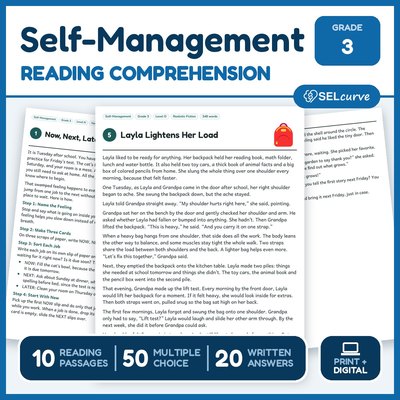 Free Self-Management Reading Comprehension Passages — Grade 3Grade 3 · Print + digitalFREE
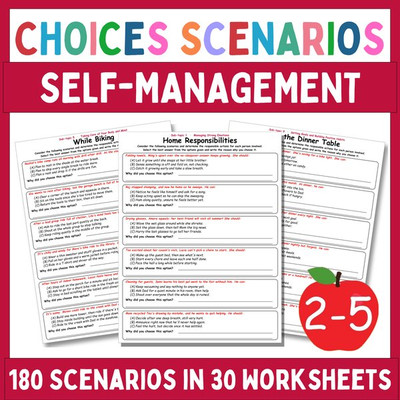 Free Self-Management Worksheets — Multiple-Choice ScenariosGrades 2–5 · Print + digitalFREE
Browse all free SEL resources.
Frequently asked questions
What are self-care questions for kids?
Open questions that help children notice what their bodies and minds need, like “Which snack gives you energy that lasts?” or “Where is a quiet spot you like to go when you need a break?”
How do you teach self-care to students?
Keep it practical: talk about sleep, food, moving, quiet time and bouncing back, ask students what works for them, and let them pick one small thing to try.
What grades are these questions for?
Grades 2 to 8. Read questions aloud for younger students; older students can answer in writing or lead the discussion themselves.
Are the self-care question cards free?
Yes, there is no charge for the Self-Management Conversation Cards. You get 102 printable questions (ten on looking after body and mind), a matching page for writing, and a version students open on a tablet or laptop.
More SEL ideas