
Full library·Grades 2–5·Social Awareness·Worksheets · Choices Scenarios
Gratitude Worksheets
Saying thanks is easy; saying it to the right person, soon and specifically, takes practice.
- 30 printable worksheets
- 180 gratitude scenarios
- 4 teacher pages
- Print + digital
In the full library, with 16 more on Gratitude & Appreciation
Task cards, scenario cards, role play and more (grades K–8).
Get the free Social Awareness WorksheetsFree account · school email works · See the full library
 Same format, free with a free account: Social Awareness WorksheetsOpen it →
- Grades
- 2–5
- What you get
- 30 printable worksheets35 pages
- Type
- Worksheets
- Use it
- Print + digitaldigital = any device, no student logins
- Competency
- Social Awareness
About this resource
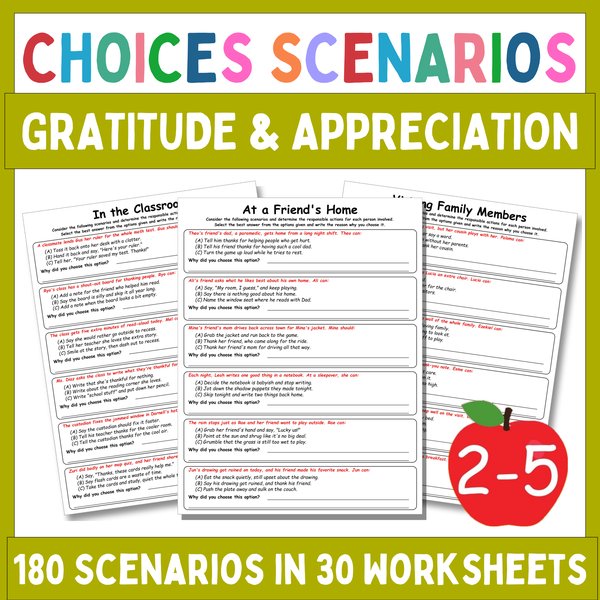
Saying thanks is easy; saying it to the right person, soon and specifically, takes practice. These gratitude worksheets give Grades 2–5 180 chances, from a lifeguard who brings back a runaway float to a seatmate who saves a spot on the bus. Your students pick A, B or C and write why, building Social Awareness by noticing the people and small good things around them.
What students practice
- Naming specific things they’re thankful for
- Giving a timely, specific thank-you
- Appreciating the people who help them
- Enjoying little good things
- Finding something good on a hard day while still naming the feeling
- Making gratitude a habit
What’s inside
A look inside
- ASay he could have set it all up in five minutes.
- BGrab the tablet with a “Thanks, it works great!”
- CSay, “Thanks for all the time you spent on it!”
Hard-day items keep the feeling real: “Nell lost her relay team spot, and at dinner Dad asks for one good thing.” One choice tells Dad it hurt, but a new friend sat with her.
How to use these gratitude worksheets
Grade fit
The helpers are people Grades 2–5 meet every week, a crossing guard, a cashier, a librarian, a coach, so the scenarios need little setup. Second graders can answer aloud; older students can explain in writing why a specific thank-you means more than a vague one.
Digital version
In the interactive digital version, students pick A, B or C and type their reason, or just pick if you choose the choices-only format, on any device with no student logins. At the end they download an answer sheet to hand in.
Pairs well with

Questions teachers ask
Several choices include a thank-you. How do students pick?
That’s the point of the set. The scoring note says a specific, timely thanks to the person who helped is strongest, a vague, late or misdirected thanks is weaker, and complaining or ignoring the good is poorest.
Does it ask students to be grateful for everything?
No. On hard days, the strongest choice shares the real feeling and also gives thanks, so students aren’t asked to pretend things are fine.
More for Social Awareness
See all in the library →


Every resource, one library.
701 SEL resources for elementary classrooms — printables, digital activities and answer sheets, and every new one we add.


