

Paid·Grades 3–5·Relationship Skills·Brain Breaks
Communication Skills Brain Breaks
- 24 Open Practice Cards
- 6 Round Cards
- 20 Movement Cards
- Printable
 Free with a free accountRelationship Skills Brain Breaks60 game cards · 24 Open Practice Cards · Printable
What a free account gives you
- 71 free resources across all five SEL areas, ready to print
- Digital activities: post them in Google Classroom or Teams. Any device · No student logins
- A planner and collections to keep your SEL week organized
- Grades
- 3–5
- What you get
- 24 Open Practice Cards
- Type
- Brain Breaks
- Use it
- PrintView & Print in your browser
- Competency
- Relationship Skills
About this resource
Holding long directions, asking what a word meant and checking a tone are the skills Grades 3–5 practice in these communication skills brain breaks, spread over 60 game cards in six 15–20 minute lessons, with 24 Open Practice Cards ready for a 3-minute break. Students march 5 steps in place if they have ever explained a game to someone new, choose a corner for what to ask when the group is told to finish by the end, and decide whether a voice that sounds annoyed means the speaker is annoyed with them. It is a Relationship Skills resource. Find more in our communication and active listening activities.
What students practice
The big ideas behind the six rounds:
- Listening your way
- Longer directions
- Clarifying questions
- Paraphrasing
- Tone of voice
- Drawing-directions relay
Right for your grade
Grades 3–5
The cards use situations older students meet every day: multi-step directions, group projects, science partners, a message for the office and a flat Fine. Students think about what helps them listen, what a word meant and whether a tone is a fact or a guess, and students who feel too old to move can use the seated versions or lead the round.
Everything included
What’s inside these SEL games on listening and speaking
- Ten game cards for each of 6 rounds, 60 in all, printed 4 per page from the first Connect card to the closing Reflect
- 24 Open Practice Cards on doodling, context clues, clear directions and more, every one with a seated option
- 6 Round Cards plus 6 Make Your Own cards, one plan and one blank card per round
- A Detailed Script for Teachers with a set-up list, opening words, card-by-card notes and a calm finish for each round
- The Talk & Listen Skills Poster, which shows each of the six skills with when to use it, plus a Family Connection page, 6 Room Signs and 20 Movement Cards


A look inside
Real pages, real moments
In the classroom
How to use these communication skills brain breaks in Grades 3–5
- 1Quick break: a short stack of Open Practice Cards, three to five, read as written, gives students a 3-minute reset with a teaching point after each.
- 2Lesson: play a round from its Round Card at about a minute per card, and when a Know card splits the room, ask one student from each side to explain.
- 3Round 6 relay: the script asks you to make groups of three and copy two or three simple shape pictures for each group, with two minutes per describer.
- 4Hand over the cards: after Round 1, student leaders can read and choose the movement.
Printing and prep
Ready to print
- Print single-sided at Actual size on US Letter. A4 printers: choose Fit to page.
- Any printer works, color or black and white, and cardstock or lamination adds life to the cards.
- Cut along the dashed lines and file each round, Round Card first, so it is ready to play.
Questions teachers ask
FAQ
What do students practice in these communication skills brain breaks?
Holding steps, asking meaning questions, paraphrasing, checking tone and using precise words, with one skill added each round until they come together in a drawing-directions relay.
How are students who speak very little included?
They can write, sketch, point or show for any speaking step. The guide asks you to wait rather than finish their words and to use turns instead of calling on quiet students.
Why do the cards treat tone as a guess?
Students read tone differently, and some voices sound flat when the speaker doesn’t mean it. Talkers add words, and listeners ask when they are not sure.
What does the K–2 pack practice?
The Grades K–2 version focuses on listening your way, answering back, asking what someone means, saying it back and clear words.
More for Relationship Skills
See all in the library →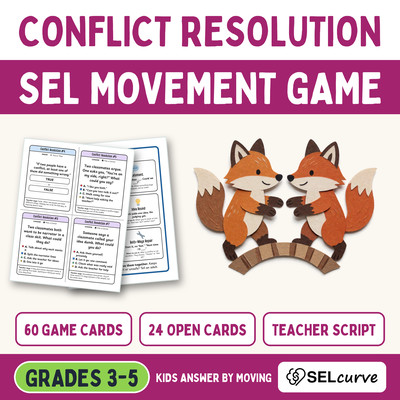


Try it in class this week
Start with the free Relationship Skills Brain Breaks, or unlock it with Monthly.

