Paid·Grades 3–5·Self-Management·Stop Think Act Cards
Anxiety and Worry Stop Think Act Cards
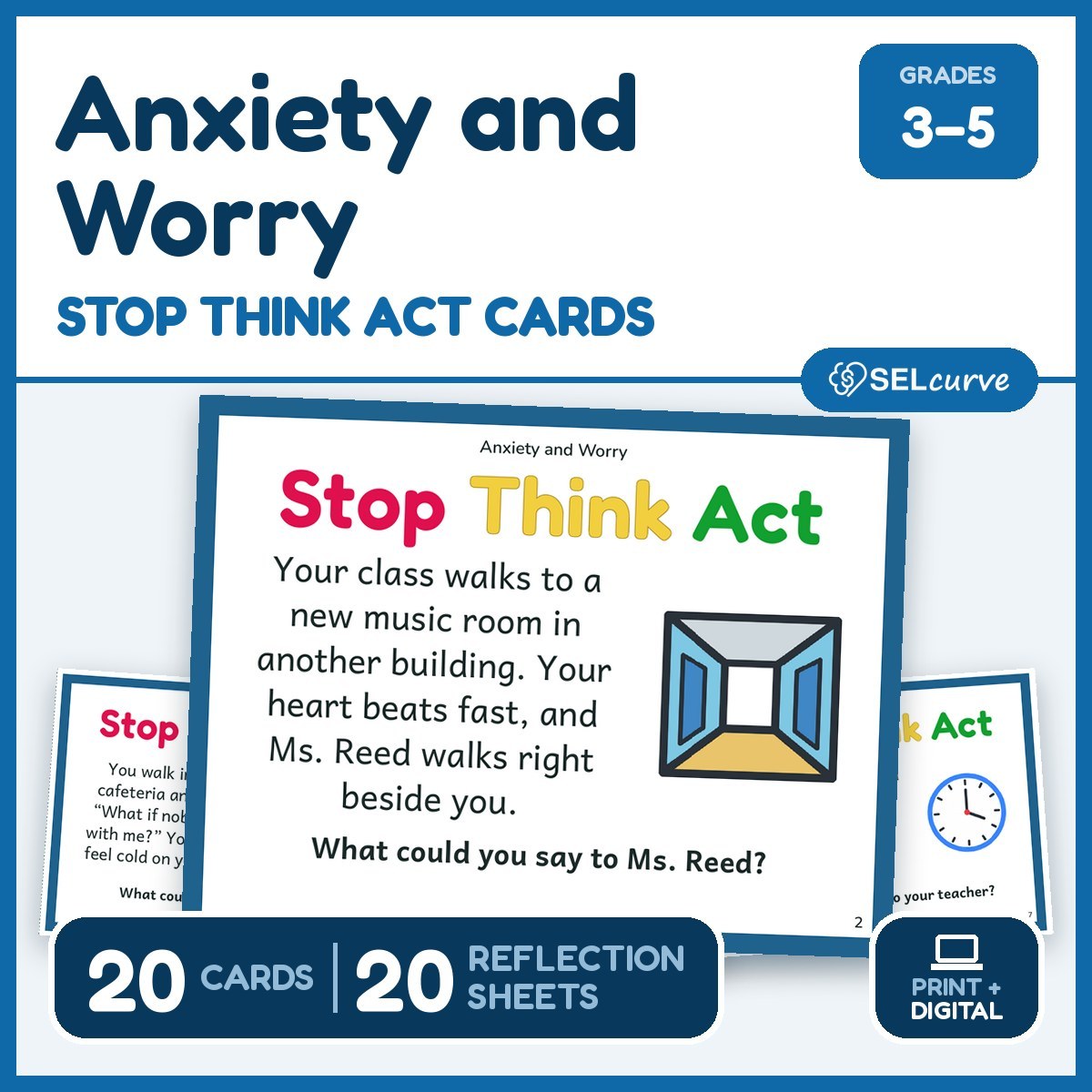
- 20 Stop Think Act cards
- 20 reflection sheets
- Print + digital
 Free with a free accountSelf-Management Stop Think Act Cards20 Stop Think Act cards · Print + digital
What a free account gives you
- 81 free resources across all five SEL areas, ready to print
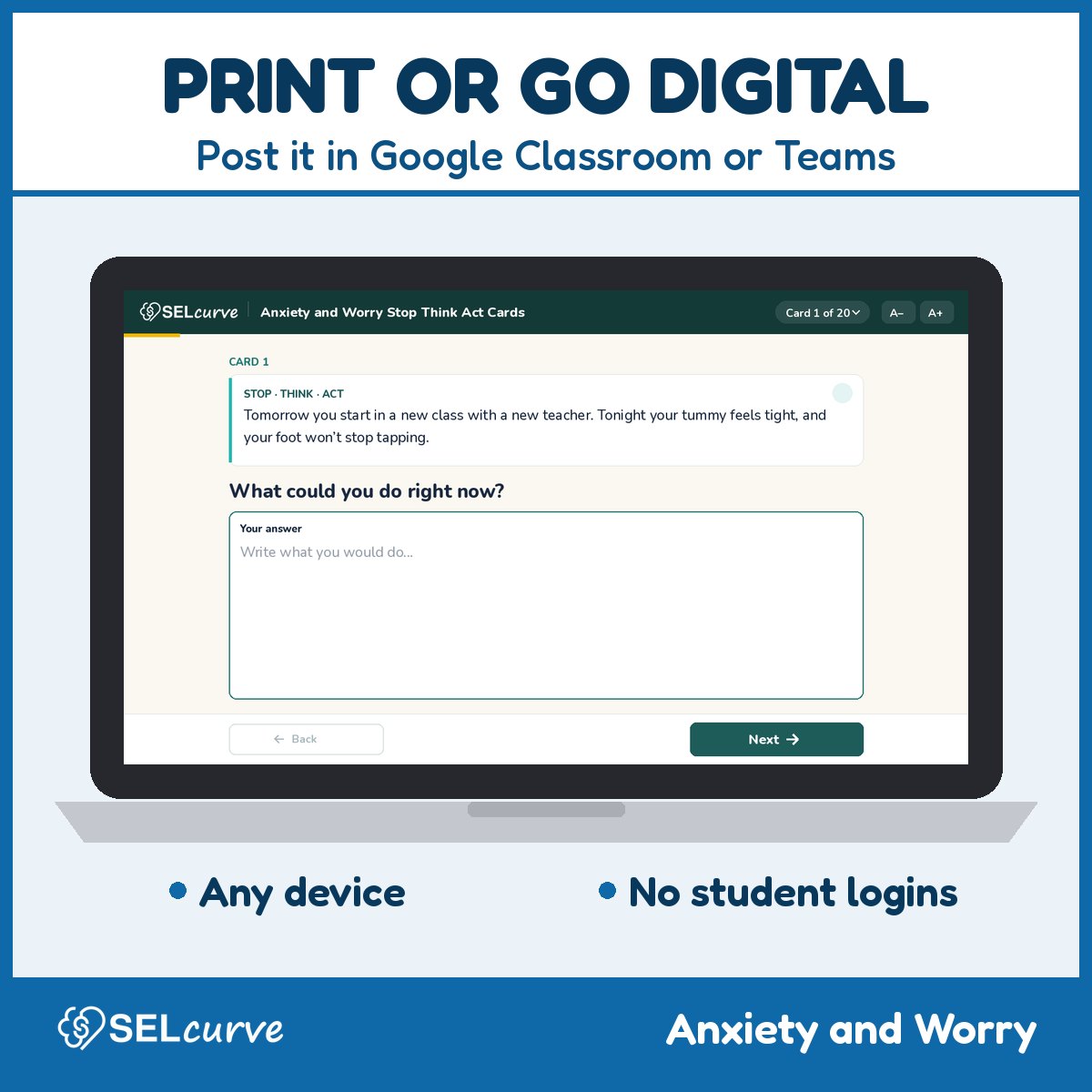
- Digital activities: post them in Google Classroom or Teams. Any device · No student logins
- A planner and collections to keep your SEL week organized
- Grades
- 3–5
- What you get
- 20 Stop Think Act cards
- Use it
- Print + digitaldigital = any device, no student logins
- Competency
- Self-Management
- Topic
- Anxiety & Worry
About this resource
Our anxiety and worry stop think act cards bring Grades 3–5 twenty everyday moments when a worry shows up: your aunt offers to push the big tire swing slowly the first time you try it, a neighbor’s new puppy runs up wagging its tail, thunder booms while Mom folds laundry in the next room. On each card students notice where the worry sits in their body, name who they could tell, and pick one small brave step. It is a Self-Management resource. Find more in our anxiety and worry activities.
What students practice
Each card works on one or more of these:
- Noticing worry signals in the body
- Catching what-if thoughts
- Sharing a worry with someone you trust
- Taking one small brave step
Right for your grade
Grades 3–5
The cards stay with small, everyday worries like a new seat, a late pickup or a first try on the swing, which suits Grades 3–5. Younger students get sentence starters and work through a card with you first; older students explain how likely the worry is and what they could do if it did happen. Mixed-ability pairs can plan one brave step for the same card.
Everything included
What’s inside these think before you act anxiety and worry cards
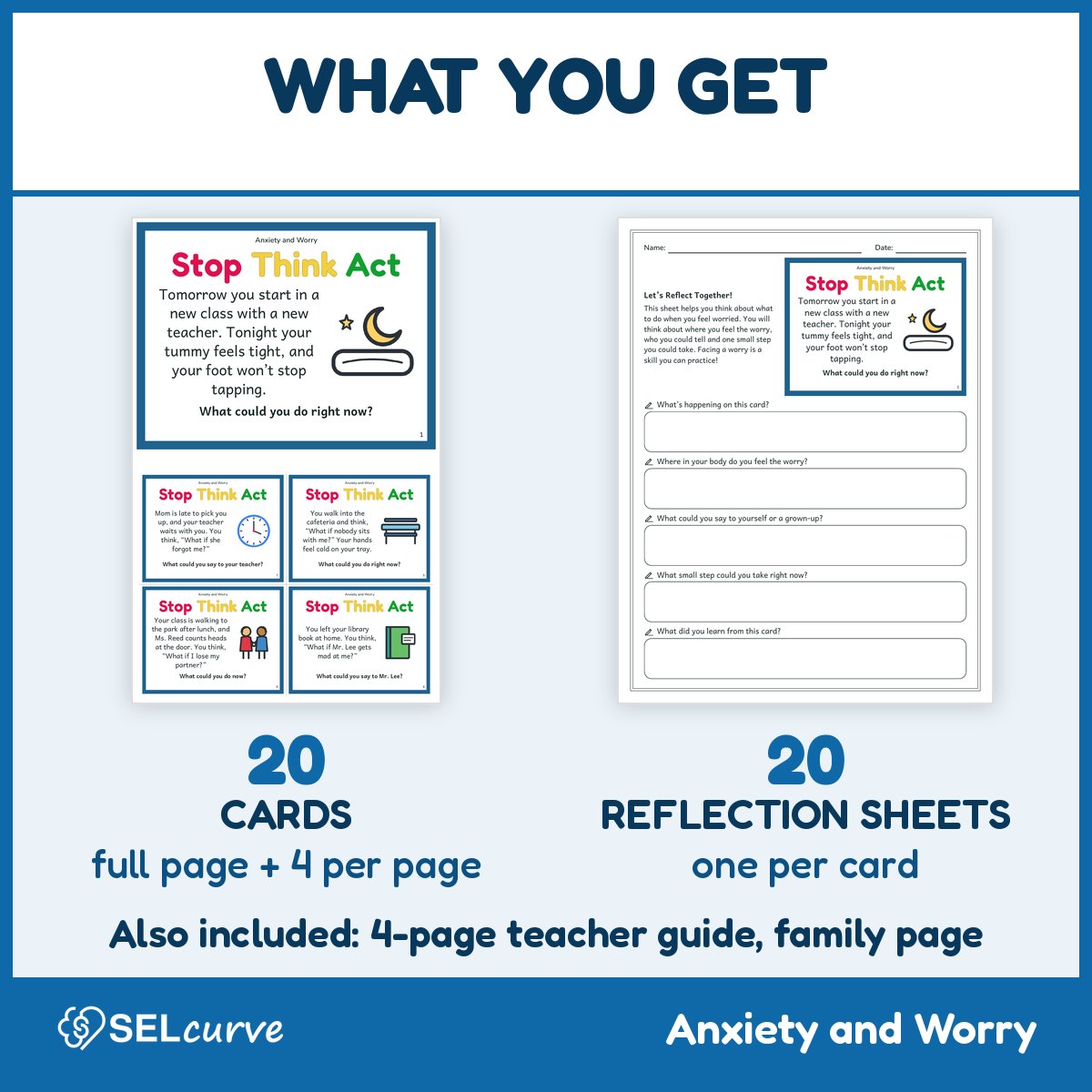
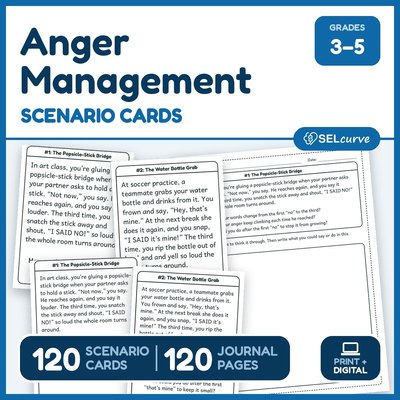
- 20 Stop Think Act cards, each an everyday worry at school, at home or around the neighborhood, with one open question about what to say or do now
- Two formats: full-page cards for whole-class talks and display, and the same cards 4 per page for small groups, partner talks and stations
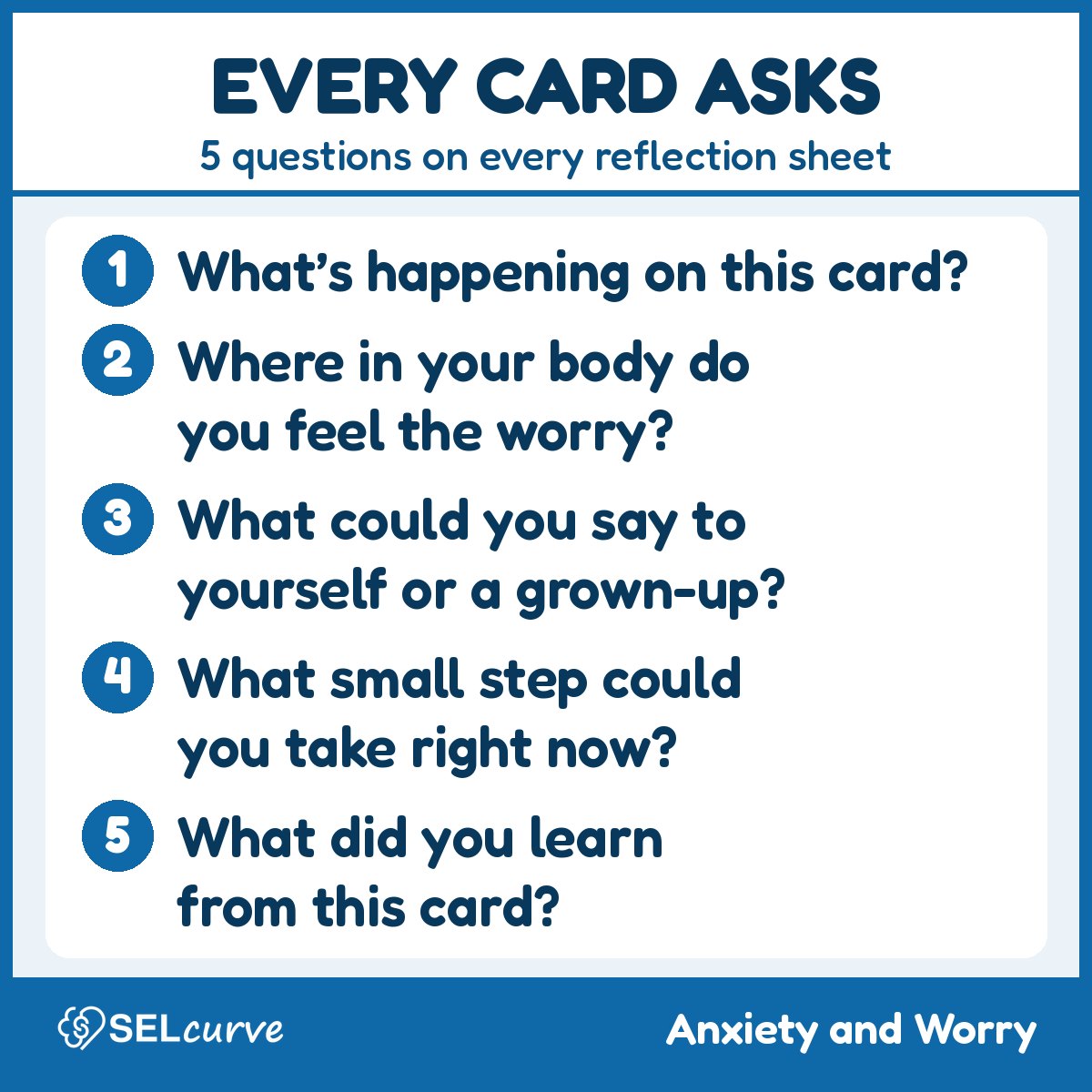
- 20 reflection sheets in a second file, one per card, each with five questions from what is happening to one small step to try
- A 4-page teacher guide with a step-by-step discussion plan, a teacher note on choosing cards, differentiation, Cards at a Glance and a printing guide
- A Family Connection page with a breathing idea to try at home, and a digital activity on any device with no student logins
A look inside
Real pages, real moments
In the classroom
How to use these stop and think cards for everyday worries
- 1Set the scene: pick a card, read it aloud and let students picture themselves in the moment.
- 2Pause and reflect: what clues show you might be worried? Who could you tell, and what small step could you take?
- 3Choose and practice a step: brainstorm two or three small steps, pick the one that feels doable right now, then act out sharing the worry or taking that first step.
- 4Reflect: hand out the card’s reflection sheet, or post the digital activity in Google Classroom or Teams, or show a QR code, so students answer on any device and send you their answer sheet.
Print or digital
On paper, or on any device
This resource also works as a digital activity. Post it in Google Classroom or Teams, or show a QR code. Students answer on any device and send you their answer sheet.
Any deviceNo student logins
Printing and prep
Ready to print
- Full-page cards: one card fills each one-sided page of cardstock or plain paper, for group talk or the wall.
- 4-per-page cards: cardstock or plain paper, one-sided; cut along the dashed lines and laminate to reuse.
- Reflection sheets: one per student on plain paper, one-sided, once the class has talked through the card.
- Family Connection: plain paper, one-sided, two take-home notes per page to cut in half.
Questions teachers ask
FAQ
What do students say to themselves when a worry shows up?
The guide suggests a short three-step routine students say to themselves: “Notice it. Share it. Take one small step.” Post it near your calm corner or classroom door.
What grades are these anxiety and worry stop think act cards for?
Grades 3–5. Younger students use sentence starters and work through a card together, and older students think about how likely a worry is and what they could do if it happened.
What if a student shares something that worries me?
The guide says to thank them, follow up privately, and follow your school’s reporting steps. It also reminds students that big or lasting worries are always worth sharing with a trusted grown-up.
Is there a digital way to respond?
Yes. Post it in Google Classroom or Teams, or show a QR code. Students work on any device with no student logins and send you their answer sheet.
More for Self-Management
See all in the library →
Try it in class this week
Start with the free Self-Management Stop Think Act Cards, or unlock it with Monthly.