Social Skills Role Play: 6 Scenarios for Grades 2–5 and How to Run Them
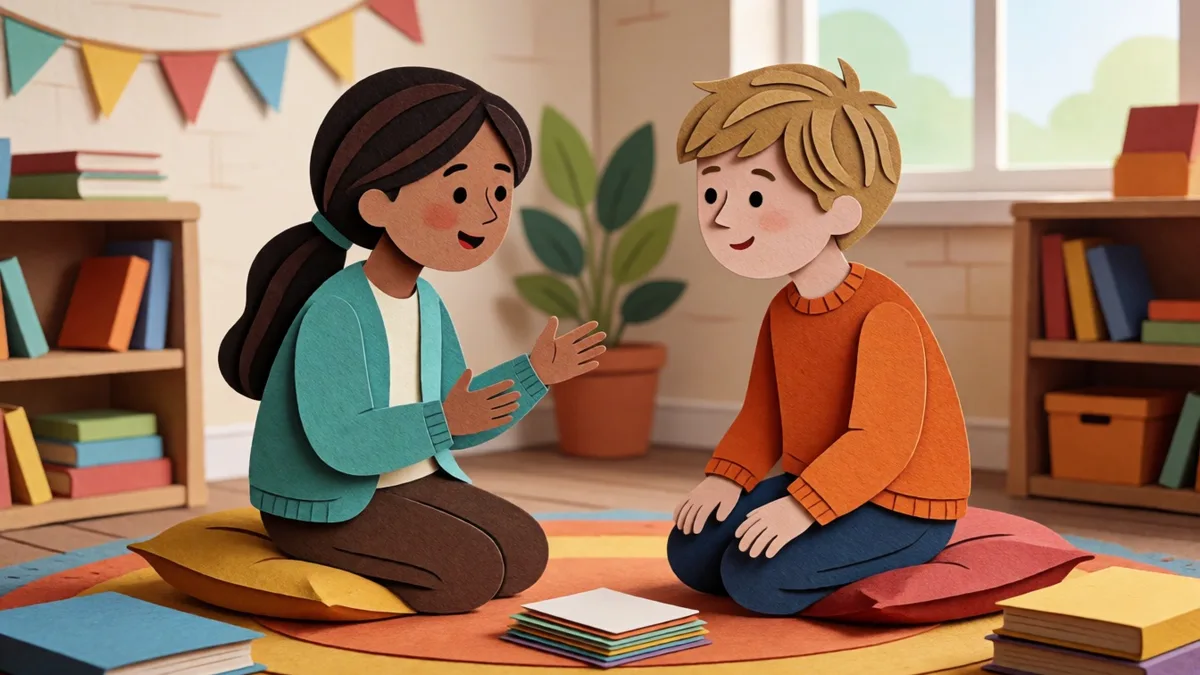
Students can tell you what a good friend does. Saying it out loud in the moment is harder. A social skills role play lets them practice the actual words first, in a pretend scene where getting it wrong costs nothing.
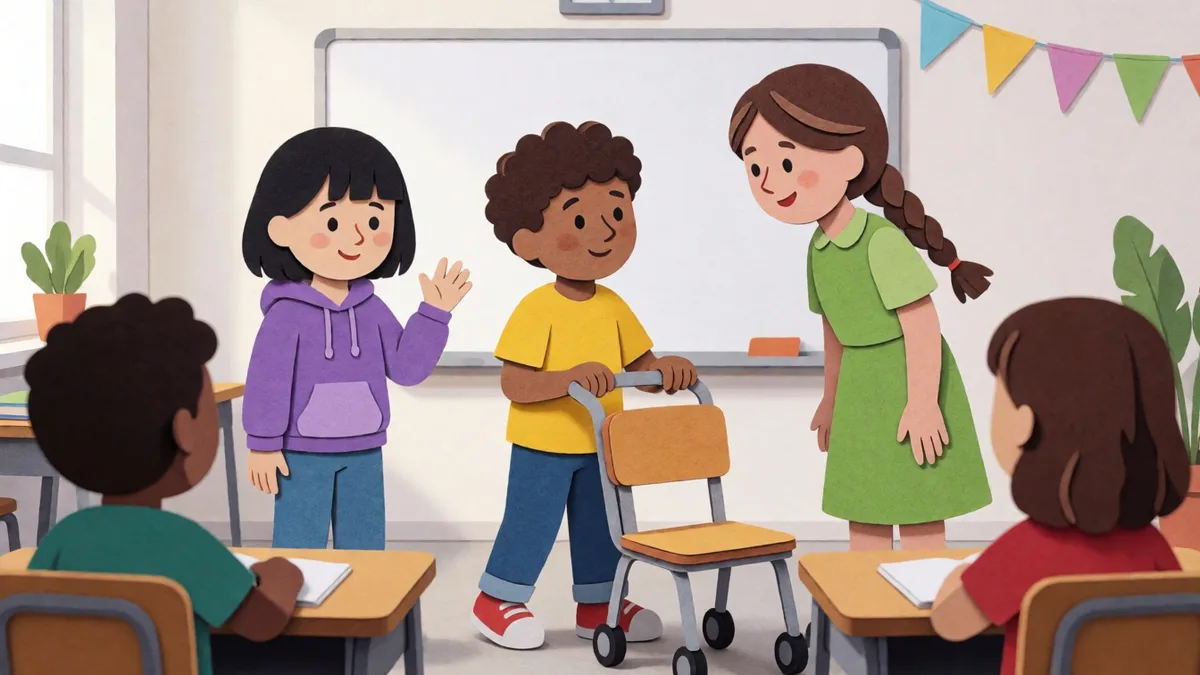
Ask a class what to say when someone new says hi, and hands go up with good answers. Then the moment comes for real, in a grocery store or at the lunch table, and the words disappear. Role play closes that gap. Students try the words out loud, with classmates playing the other people, and then talk about what worked. Below you’ll find a simple 15-minute routine, six social skills role play scenarios for grades 2–5, and a template for writing your own.
Why role play works for social skills
Social skills are things kids do, not things they know. A role play gives them a rehearsal: a safe, low-stakes scene where they can try a sentence, notice how the other person reacts, and try again. It also lets students see a skill from the other side. The student who plays the friend telling a story feels what it’s like when someone keeps interrupting, and that lesson sticks longer than any rule on a poster.
The best scenes are small and familiar: a story at the library, a name you forgot, a goodbye before pickup. Students recognize these moments from their own week, so what they practice transfers.
How to run a social skills role play in 15 minutes
- Set the scene. Read who is in it, where they are and what’s happening. Keep it to a minute. context
- Hand out roles. One student plays the main character, others play the friend, the parent or the teacher. Volunteers first; everyone gets a turn over the week. participation
- Act it out. Students read the script or improvise. Stop at the moment of choice. practice
- Talk it through. Ask what the main character said and did, and what they noticed that helped. reflection
- Replay it. A new group acts the scene with different words. Compare the two versions. flexibility
6 social skills role play scenarios
These six scenes come from a free printable set and cover three everyday skills: listening, making friends and getting through small social moments. Each has a full script, a setting students can picture, and discussion questions.
| Scenario | Skill | The moment |
|---|---|---|
| 1. Lucas’s Hailstorm Story | Listening | A friend tells a big story, and the main character keeps topping it. |
| 2. Calling Down the Stairs | Communicating clearly | Questions shouted from upstairs keep getting mixed up. |
| 3. A Question About My Map | Making friends | A classmate she hardly knows asks about her drawing. |
| 4. Whose Turn to Knock? | Keeping friends | The same friend always does the asking. |
| 5. The Name I Forgot | Everyday social skills | Someone from swim class says hi in a store, and the name is gone. |
| 6. A Goodbye Before I Go | Everyday social skills | Pickup arrives in the middle of a game with a friend. |
Scenes 1 and 2 pair well in one lesson about listening and speaking clearly. Scenes 3 and 4 are about reaching out, which is often harder for quiet students than for anyone else. Scenes 5 and 6 cover the small moments that make kids anxious because nobody ever teaches them: what to do when you forget a name, and how to leave a friend kindly.
Write your own social skills role play scenarios
Once students know the routine, they can write scenes from their own week. A good scenario needs four parts:
- Who: two or three characters, with one main character who has to decide what to say.
- Where: a real place: the bus stop, the lunch line, a cousin’s house.
- The moment: one small problem, not a big one. “A friend didn’t save you a seat” works better than “your friend is mad at you.”
- The open end: stop before the main character speaks, so the class decides the words.
Five starters to try:
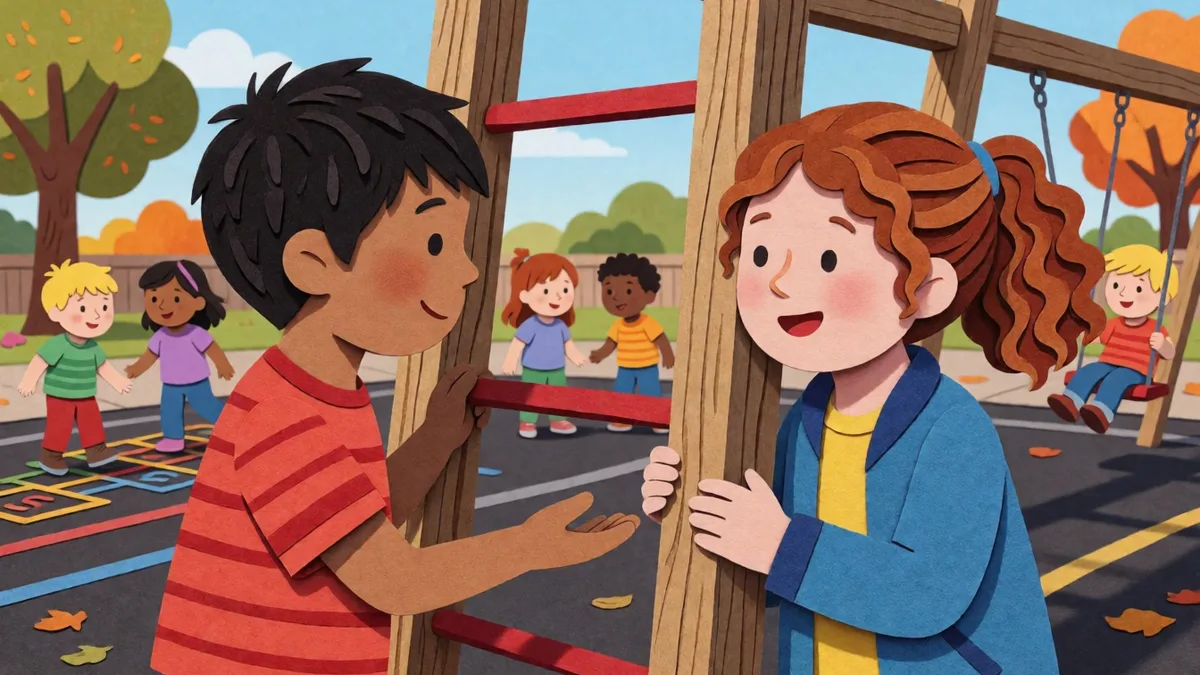
- A new student is standing alone at the edge of the four-square game.
- Your partner for a project has an idea you don’t like.
- You bump into a classmate’s tower of blocks by accident.
- A friend shows you a drawing and asks if it’s good.
- You want to join a group already talking at lunch.
Inside the free role-play scripts
The free Relationship Skills Role Play Scenarios hold 20 scripted scenes from everyday life, from a friend’s hailstorm story and a forgotten name to a teammate who missed the plan and mean words chalked on the blacktop. Each scene comes with five discussion cards, and a teacher script and a shorter outline walk you through the lesson. The last card of each scene brings the skill back to the student’s own life. Three of them:


Looking for something for another skill? The whole free SEL library is one click away.
More free relationship skills resources
 Free Relationship Skills Posters: FriendshipGrades K–5 · PrintFREE
 Free Relationship Skills Reading Comprehension Passages — Grade 5Grade 5 · Print + digitalFREE
 Relationship Skills Brain Breaks — SEL Movement Game (Grades 3–5)Grades 3–5 · PrintFREE
Browse all free SEL resources.
Frequently asked questions
What is a social skills role play?
A short scene where students act out an everyday social moment, like joining a game or forgetting a name, and practice what to say. The class then talks about what worked and tries another version.
How long should a role play take?
About 15 minutes for one scene: set it up, act it, discuss it and replay it. Many teachers run one scene a day for a week rather than a long session.
What if students are silly during role plays?
Keep scenes short, stop at the moment of choice, and give the audience a job, like watching for one thing the main character did well. Silliness usually fades once students know a discussion follows every scene.
Can I get the role-play scripts free?
Yes. The Relationship Skills Role Play Scenarios are free to print: 20 scripted scenes with five discussion cards each, plus a teacher script and a shorter outline.
More SEL ideas