Free Reading Comprehension Worksheets for 4th Graders That Teach SEL
Fourth graders face longer texts, trickier vocabulary and written answers that need evidence. These free sets give them two-page stories at levels Q–S with test-style questions, and every story opens a real conversation about getting along, staying calm or making a fair choice.
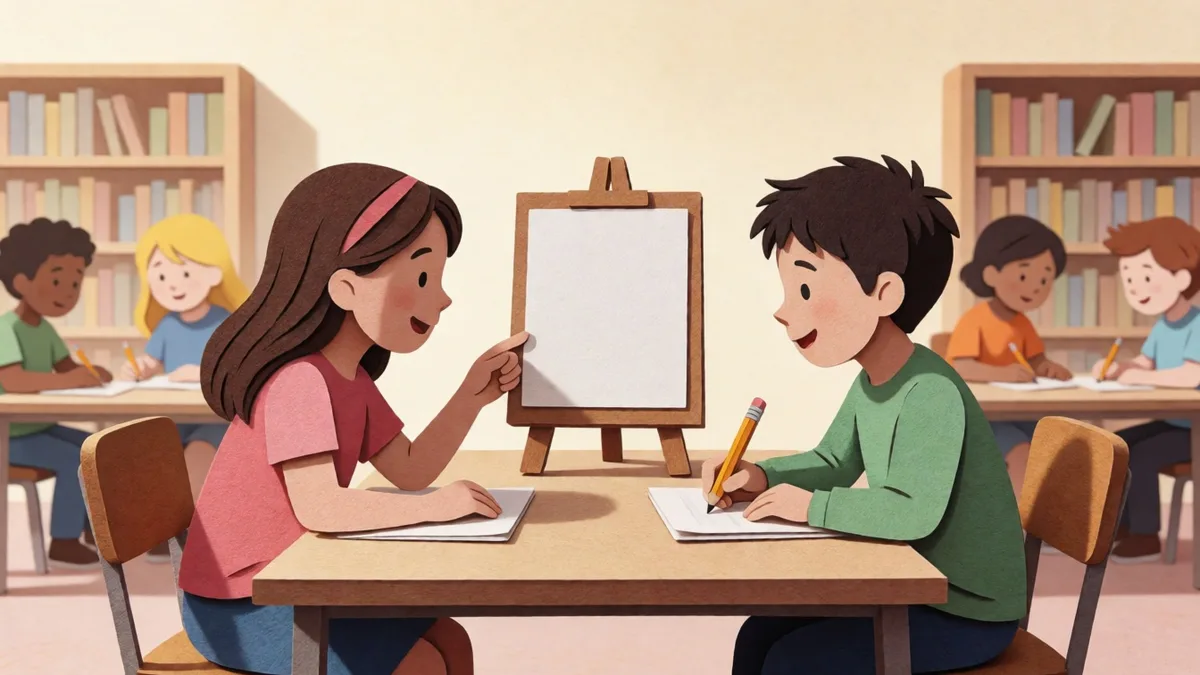


Every Thursday, Josie and her partner Cody play library trivia. Cody is the funny one, until the final round, when he stops joking and his eyes keep flicking to the scoreboard. Josie decides he is bored. She is wrong, and finding out why is the heart of the first story in these free reading comprehension worksheets for 4th graders. Students practice exactly what spring reading tests expect, like word meaning in context, main idea and answers backed by the text, while they think about something just as useful: checking a guess about how someone else feels.
The collection has five free sets, one per SEL competency, with ten passages in every set. All 50 are original, at guided reading levels Q to S, and ready to print.
Inside these free reading comprehension worksheets for 4th graders
Each passage runs about two pages. Two question pages follow: one multiple-choice page and one page for written answers. At the back of every set are an answer key for the multiple-choice questions, a Takeaways to Share page with the big idea of each passage (read it aloud after the questions, so students find the lesson themselves first) and a take-home page for families.
Every set mixes eight or nine kinds of text: realistic stories, a fable, a first-person reflection, a science article, a how-to guide, a school news story, a student profile and an informational explainer, with a compare-and-contrast piece in some sets. That range is useful in fourth grade, when students are expected to handle informational text as confidently as fiction.
A digital version is part of each set too: students work on a Chromebook, tablet or phone, can choose “Listen to the passage” to hear the text, with no student logins needed.
The five sets and what they cover
| Set | Three passages from the set | The SEL thread |
|---|---|---|
| Self-Awareness | The Word I Didn’t Say at the Sleepover · Milo the Bowerbird Picks His Own Colors · Why Hot, Sticky Days Can Make You Cranky | Naming feelings honestly, knowing what you like, spotting what sets you off |
| Self-Management | Seven Cousins, One Small Apartment · The Hedge Maze Countdown · How Prairie Grass Springs Back | Taking a break when it gets loud, planning for a nervous outing, bouncing back |
| Social Awareness | Why My Trivia Partner Went Quiet · The Lefty Supply Box · Seven Things on Mina’s Table | Checking a guess about feelings, noticing who gets left out, learning about a neighbor’s traditions |
| Relationship Skills | Back-to-Back Drawing Day · The Comic Plan Rachel Forgot · How Army Ants Build Bridges | Giving clear directions, making a real apology, working as a team |
| Responsible Decision-Making | When Thunder Roars, Go Indoors · Covering or Caring? · Two Seconds on Bird Count Day | Putting safety first, saying no to a cover story, being honest about what you’re not sure of |
Test-style questions that also start a conversation
The multiple-choice page mirrors what state reading tests ask: a detail question, a vocabulary-in-context item, a why question and a main lesson. Here is the vocabulary item from Josie’s story, next to the open-ended prompts from two sets:
(A) Glancing quickly, again and again
(B) Tapping lightly with a finger
(C) Switching on, like a light
(D) Closing slowly from tiredness
Every written-answer page opens with the same line: “Use details from the passage.” That is the written-response skill fourth graders get graded on, and here it is attached to questions kids actually want to argue about. The second Josie prompt goes one step further and asks students to turn what they read into a plan for a real moment.
A weekly cycle for January to April
From winter break to testing season, one passage a week fits most schedules:
- Monday: read and mark. Students read the passage once for the story and again with a pencil, circling one word they aren’t sure of and starring one sentence that shows a character’s feeling. close reading
- Tuesday: multiple choice, timed. Give about ten minutes, like a test section. Go over the answers with the key the same day. test practice
- Wednesday: written response. Students answer one open-ended prompt in three to five sentences with at least one detail from the text. text evidence
- Thursday or Friday: talk circle. Ten minutes on the second prompt. Students compare plans and push back on each other’s ideas. SEL discussion
Other teachers use the sets as a single 40-minute block in guided reading. Either way, the format stays the same from passage to passage, so students spend their energy on the reading instead of on directions.
If you’ve searched for reading comprehension worksheets for 4th graders and found plenty of short paragraphs with recall questions, the difference here is the length, the range of text types and a second page of questions that asks students to think.
Free printable reading comprehension worksheets for 4th graders: the five free sets
For other skills and formats, see all the free SEL printables in one list.
Frequently asked questions
What levels are the grade 4 passages?
Guided reading levels Q through S. Each set starts at level Q and ends at level S, so readers who are just meeting fourth-grade text can begin at the top.
Are these good for state test prep?
Yes. The question types (detail, vocabulary in context, cause and effect, main lesson and a written response with evidence) match what most spring reading tests ask. The topics simply give students more to say.
How long is each passage?
Two pages, which most fourth graders read in eight to twelve minutes. With both question pages, plan for 30 to 40 minutes, or spread it over the week.
What’s included at no cost?
Everything. Five free grade 4 sets with ten passages each and seven questions per passage (five multiple choice, two written), plus an answer key for the multiple-choice questions in each set.
More SEL ideas