Calm Brain Breaks: 8 Ways to Settle a Busy Class (Free K–2 Game)
Not every brain break should pump the energy up. These calm brain breaks bring a busy class down in one to three minutes, and teach young children three kinds of calm-down tools, with a free printable K–2 movement game.
Most brain break lists are built to wake a class up. But after recess, after an indoor-recess day, or right before a test, the room doesn’t need more energy. It needs less. Calm brain breaks bring the volume and the heart rates down in one to three minutes, so children can get back to learning. The 8 below work in any classroom and have seated versions. They also teach young children something they can use for life: there’s more than one kind of calm-down tool, and if one doesn’t help, you can try another. The first five are part of a free printable social-emotional learning (SEL) game for grades K–2.
Three kinds of calm-down tools
Young children don’t need a long list of strategies. They need to know there are a few kinds, so when one doesn’t work, they have somewhere else to go:
- Breathe. A slow, soft breath out, like blowing on a feather. breathing
- Move. March, stretch or shake it out, then slow down until you stop. movement
- Think. Hum a song in your head, picture a calm place, count something you can see. focus
A fourth option is always open: be near someone, like sitting by the teacher. A good calm-down tool is safe, kind to you and to others, and it helps, even if only a little.
8 calm brain breaks
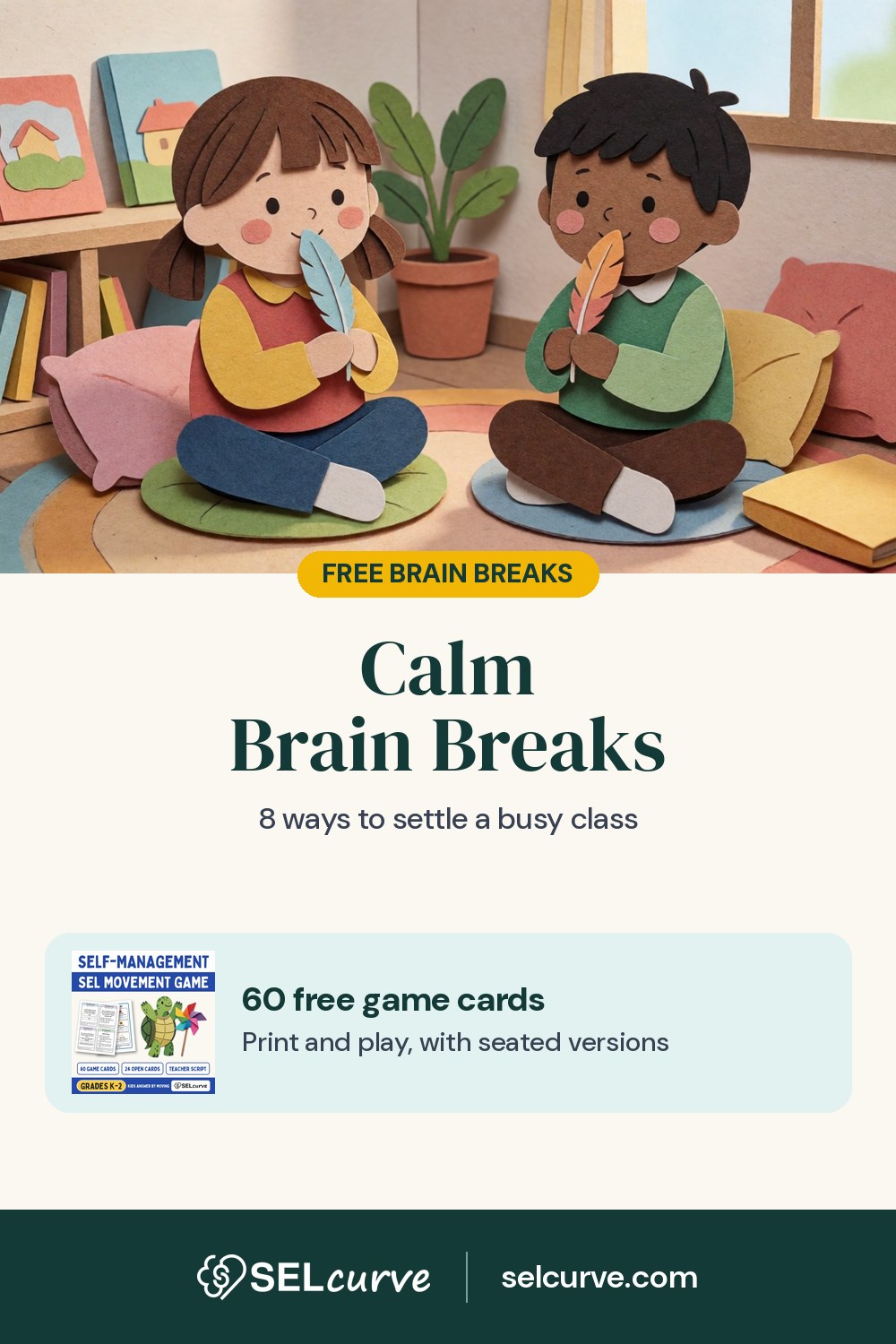
1. Feather Breath
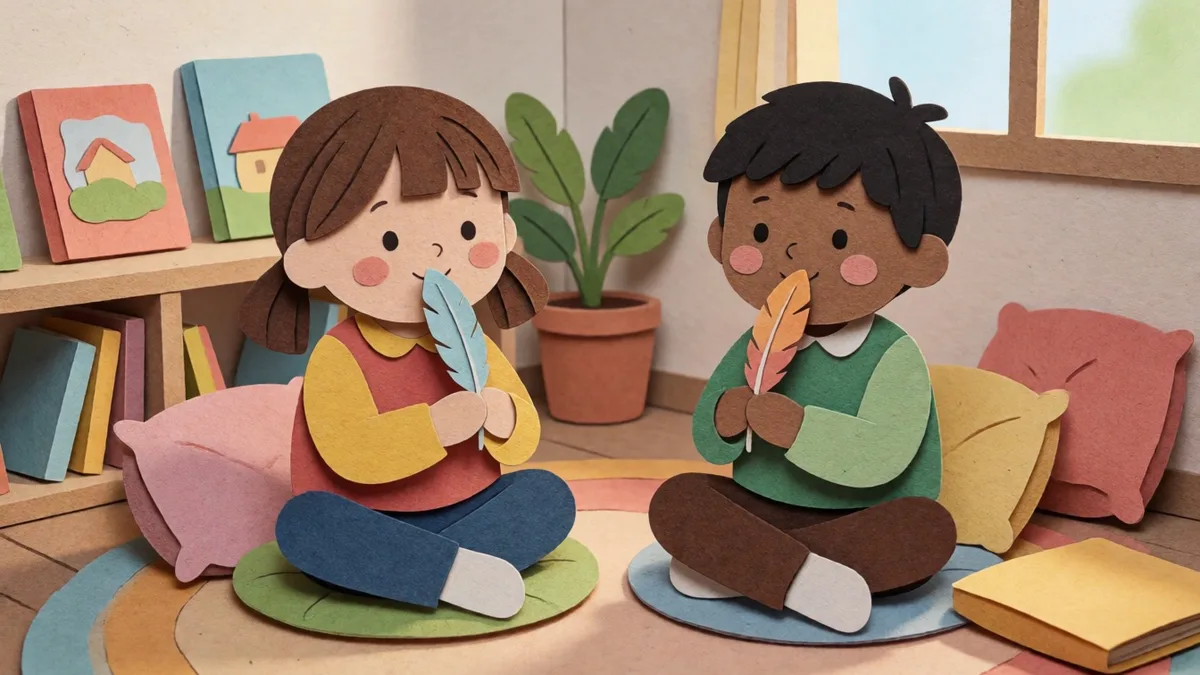
Children sit and hold a pretend feather on their hand. They breathe in slowly, then blow out so softly that the feather only wiggles. Three times, then hands rest in laps. A slow, soft breath out works anywhere, even at a desk. Takes 1 minute. Calm.
2. Marching Band
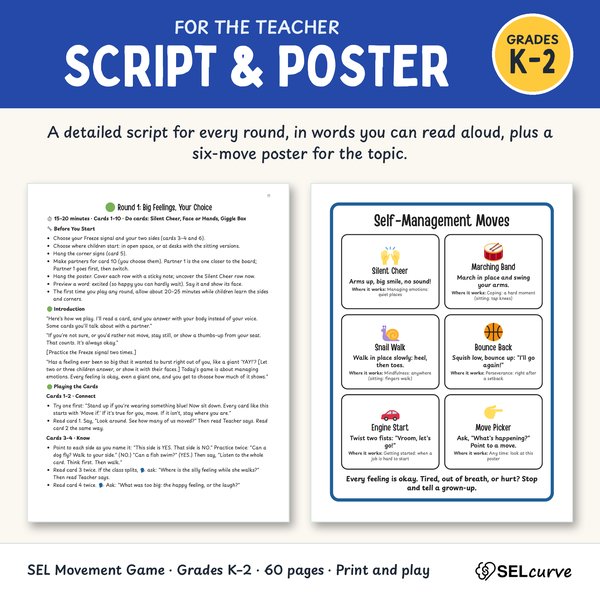
Everyone marches in place and swings their arms like a band: loud steps first, then soft steps, then “slower… slower… stop.” Ask, “How does your body feel?” Starting with big movement and slowing down is easier for wiggly children than going straight to still. Takes 2 minutes. Lively, then calm. Seated: tap your knees.
3. Tool Swap
Partners face each other. Partner 1 shows a calm-down tool (a stretch, a hum or a slow breath), and Partner 2 copies it. Then Partner 2 shows a different tool, and Partner 1 copies. Now each child knows a tool they didn’t try before. Takes 2 minutes. Calm.
4. Did It Help? Yes or No
Use two sides of the room for YES and NO. Read: “Humming helps a kid feel better, but he’s still a bit grumpy. Did it help?” (Yes: a little better still counts.) Then: “A kid’s glue won’t stick, so he crumples his whole picture. Did that help him?” (No. A calm-down tool is safe and kind, and it helps.) Takes 2 minutes. Medium energy. Seated: thumbs up or down.
5. Pick a Calm Corner
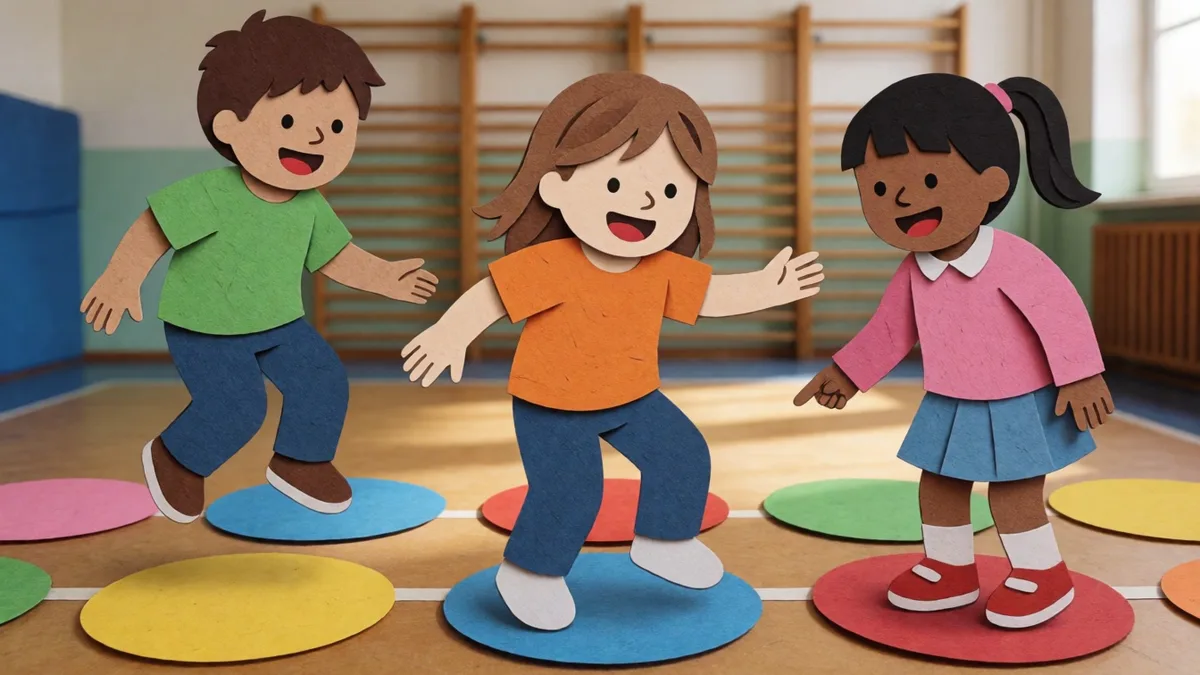
Hang four corner signs: three slow breaths, hop five times in place, hum a song in your head, or sit by the grown-up. Read a frustrating moment (“A kid gets the last sand table turn, right before you”) and children walk to the tool they’d try. Every corner is a good answer. Takes 3 minutes. Medium energy.
6. Melting Snowman
Children stand tall and stiff like a snowman. As you describe the sun coming out, they slowly melt: head droops, shoulders drop, knees bend, until they’re a puddle on the floor. Then they rest for five seconds. Takes 1 to 2 minutes. Calm. Seated: melt down into your chair.
7. Quiet Counting
Children silently count things they can see in the room: three blue things, two round things, one thing that is soft. Thinking about the room moves attention away from a big feeling. Takes 1 minute. Calm.
8. Turtle Time
Children curl up like a turtle in its shell (head down, arms around knees), take two slow breaths inside, then slowly peek out. It’s a good one when a class is overexcited, and it works at desks with heads resting on folded arms. Takes 1 minute. Calm.
When to use a calm brain break
- Right after recess, lunch or PE.
- Before a quiet task: reading, writing, a test.
- After an exciting event, like an assembly or a class party.
- When the room gets loud and nobody is listening, including to you.
- At the end of the day, so children leave settled.
Inside the free calm-down round
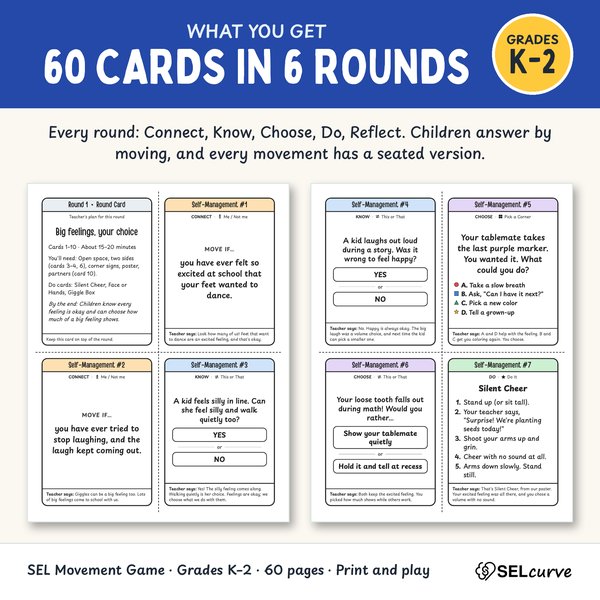
Breaks 1 to 5 come from Round 2 of the free Self-Management Brain Breaks for grades K–2, called “Tools for hard moments.” By the end, children know a coping tool is safe and kind and helps, and can try three kinds. Play the 10 cards in one sitting (about 15 to 20 minutes) or use one card to settle the class after lunch. You read every card aloud. Three of them:
Teacher says: Your body helped you feel better. Things we do to get through hard moments are called coping tools.
Teacher says: Yes! A tool can help even when some of the feeling stays. A little better still counts.
Teacher says: Hard moments happen. If one tool doesn’t help, try another kind. Still too big? A grown-up can help.
The full free game also covers big feelings, noticing right now, keeping going and getting started, plus a final round for the whole school day. The 24 open practice cards let you add your class’s own hard moments.
Pair it with a feelings game from the free SEL resources: children who can name a feeling find it easier to pick a tool.
More free self-management resources
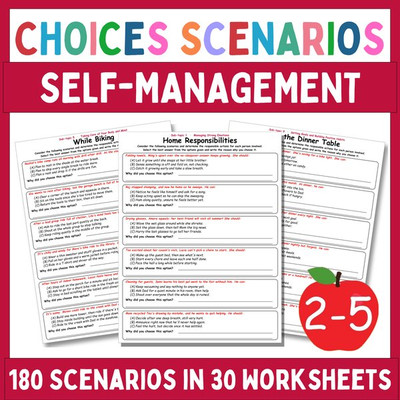 Free Self-Management Worksheets — Multiple-Choice ScenariosGrades 2–5 · Print + digitalFREE
 Free Self-Management Scenario Cards — Printable & DigitalGrades 2–6 · Print + digitalFREE
 Free Self-Management Conversation Cards — Morning Meeting QuestionsGrades 2–8 · Print + digitalFREE
Browse all free SEL resources.
Frequently asked questions
What is a calm brain break?
A short break, usually one to three minutes, that lowers the energy in the room instead of raising it: slow breathing, slow movement, or a quiet focus game. It helps children settle before the next task.
What are good calming brain breaks for kindergarten?
Feather Breath, Melting Snowman and Turtle Time all work with five-year-olds: simple, physical and quiet. Start big and slow down, instead of asking for stillness right away.
How do I teach coping skills to young children?
Teach a few kinds of tools (breathe, move, think, be near someone), practice them when children are calm, and remind them: if one tool doesn’t help, try another kind.
What if a calm brain break makes my class sillier?
Start with movement and slow it down (Marching Band), use a freeze signal, and model the slow pace yourself. Silliness usually means the break started too still.
Are the calm brain breaks quiet the whole time?
No. Some cards are lively on purpose, like Marching Band, so children practice moving from busy to calm. Every move has a seated version, and the free set adds 24 open practice cards to its 60 game cards.
More SEL ideas